What’s New in the India-UK Science and Technology Partnership Dashboard?
Synopsis
On November 4, Professor Ajay Kumar Sood and Dr David Warren Smith unveiled the pilot version of the IN-UK-STP dashboard, a comprehensive tool mapping 143 collaborative projects between India and the UK. This innovative dashboard aims to enhance decision-making and align priorities in science and technology, fostering a stronger bilateral partnership.
Key Takeaways
143 bilateral projects mapped since 2018.
Enhances decision-making and aligns priorities.
Aligns with Sustainable Development Goals .
Strengthens the India-UK Technology Security initiative .
Supports the India-UK Research and Innovation Corridor .
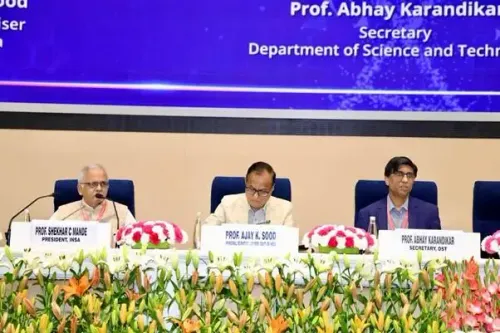
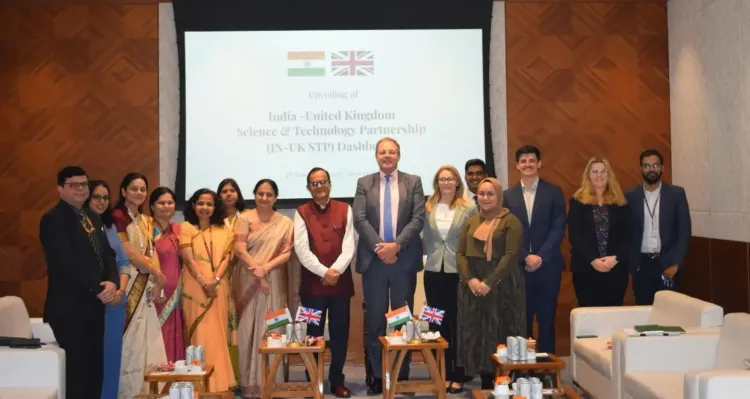
New Delhi, Nov 4 (NationPress) Professor Ajay Kumar Sood, the Principal Scientific Adviser (PSA) to the Government of India, along with Dr David Warren Smith, the National Technology Adviser to the UK, introduced the pilot version of the India-United Kingdom Science and Technology Partnership (IN-UK-STP) dashboard on Tuesday.
This pilot version, collaboratively developed by the Office of the PSA and the British High Commission in India, encompasses 143 bilateral projects that have been jointly supported and executed by various stakeholders from both India and the UK since 2018.
The dashboard effectively maps these projects based on funding values, implementing partners, and funding agencies from both nations, as stated by the Office of the Principal Scientific Adviser to the Government of India.
Furthermore, the project mapping aligns with the goals of the India-UK Science and Innovation Council (SIC), the 17 Sustainable Development Goals (SDGs), and various key areas of technology collaboration, providing insights into the strategic alignment and synergy with high-level bilateral priorities.
Professor Sood noted that several recent milestones in the bilateral partnership, including the India-UK Technology Security (TSI) initiative and the bilateral trade agreement, would significantly benefit from the insights offered by this dashboard.
He emphasized that the dashboard is a vital tool for decision-makers on both sides, assisting in aligning priorities, identifying gaps, and understanding the evolving trajectory of the partnership to create a lasting impact on both societies.
Scientific Secretary Dr. Parvinder Maini underscored the IN-UK-STP dashboard's role as an evidence-based policy tool.
She highlighted the successful collaboration with various ministries and departments from both the Government of India and the UK, which acted as a catalyst for advancing this initiative effectively.
Dr. Smith acknowledged the comprehensive efforts made to highlight the depth of India-UK S&T partnerships through this dashboard initiative.
He remarked that the insights and analytics derived from the dashboard would contribute significantly to shaping the recently announced India-UK Research and Innovation Corridor (RIC).
Point of View
I believe that the unveiling of the IN-UK-STP dashboard is a pivotal moment for India-UK relations. This initiative underscores the importance of scientific collaboration and strategic alignment in addressing global challenges, reinforcing our commitment to fostering innovation and development.
NationPress
1 Oct 2026
Frequently Asked Questions
What is the purpose of the IN-UK-STP dashboard?
The IN-UK-STP dashboard serves as a comprehensive mapping tool for bilateral projects between India and the UK, enhancing decision-making, aligning priorities, and identifying gaps in the partnership.
How many projects are covered by the dashboard?
The dashboard covers a total of 143 bilateral projects that have been jointly supported and implemented since 2018.
Who were the key figures involved in the dashboard's unveiling?
The dashboard was unveiled by Professor Ajay Kumar Sood, the Principal Scientific Adviser to the Government of India, and Dr David Warren Smith, the National Technology Adviser to the UK.
What are the strategic goals aligned with the dashboard?
The dashboard aligns with the goals of the India-UK Science and Innovation Council (SIC), the 17 Sustainable Development Goals (SDGs), and key areas of technology cooperation.
What impact is expected from the dashboard?
The dashboard is expected to provide insights that will influence decision-making, enhance collaboration, and strengthen the India-UK Research and Innovation Corridor (RIC).