Achieving Viksit Bharat: The Imperative of Science-Policy Collaboration, Says Principal Scientific Adviser
Synopsis
In a recent address, Principal Scientific Adviser Prof. Ajay K. Sood highlighted the critical need for strong collaboration between science and policy to achieve Viksit Bharat. The importance of interdisciplinary research and communication in Indian languages was emphasized to ensure inclusivity and societal benefits.
Key Takeaways
Collaboration between science and policy is vital for Viksit Bharat.
Integrated approaches in research and innovation are necessary.
Communication in Indian languages enhances public engagement.
Empowering women scientists is crucial for inclusive development.
Evidence-based policymaking is essential for national progress.
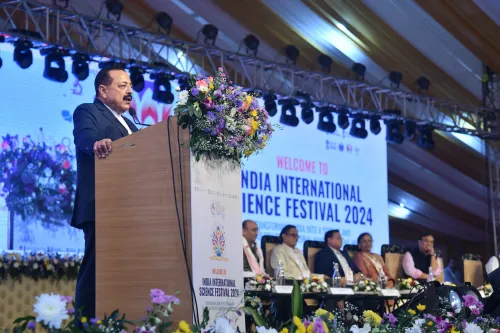
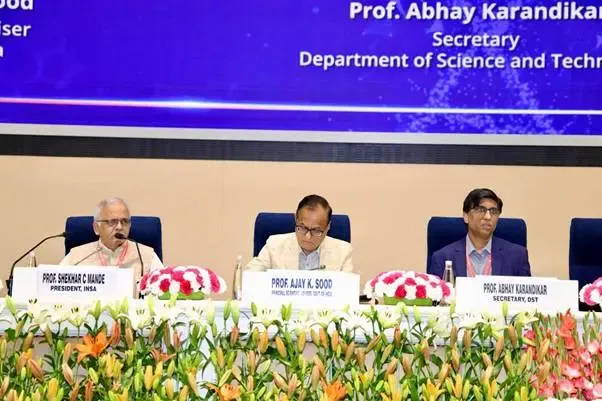
New Delhi, Feb 28 (NationPress) The effective collaboration of science and policy is vital to actualizing the vision of Viksit Bharat, stated Prof. Ajay K. Sood, the Principal Scientific Adviser to the Indian Government, during a speech on Saturday.
He addressed the National Science Day Celebration–2026 at Vigyan Bhawan, where the theme was "Women in Science Catalysing Viksit Bharat."
According to Prof. Sood, fields including aerospace, defense, critical metals, advanced materials, and digital communication require unified institutional initiatives and ongoing research funding.
He emphasized that the science-policy interface is crucial for transforming scientific prowess into national capabilities.
He pointed out the necessity of integrated strategies in both emerging and strategic fields, asserting that research, innovation, and policy frameworks must function in harmony.
“The future growth of India will hinge on developing homegrown technological expertise, fostering interdisciplinary collaboration, and ensuring that research outputs are effectively leveraged for societal gains,” Sood added.
Furthermore, he stressed the importance of disseminating scientific knowledge in Indian languages to enhance public engagement and inclusivity in science.
Prof. Abhay Karandikar, Secretary of the Department of Science and Technology (DST), remarked that India's scientific policy should facilitate both pioneering research and innovations that can be effectively implemented.
He mentioned that DST is dedicated to bolstering interdisciplinary research and institutional partnerships while enhancing capacity in emerging technologies.
Additionally, he noted that developments led by science must ensure that laboratory discoveries are efficiently translated into practical applications.
Prof. Karandikar also highlighted the need to empower researchers, particularly women scientists, and to cultivate inclusive research environments to sustain national advancement.
He stated that policy initiatives should accelerate innovation while guaranteeing equitable access to scientific progress across various regions and sectors.
During a panel discussion, Prof. Shekhar C. Mande, President of the Indian National Science Academy, underscored the necessity for continuous dialogue between scientists and policymakers.
He asserted that evidence-based policymaking must be underpinned by robust scientific research and expertise, with closer collaboration between academia and government being essential for realizing Viksit Bharat.
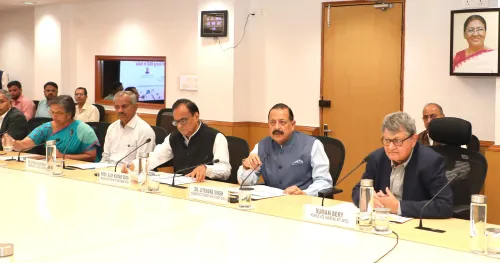
The event convened policymakers, scientists, researchers, and academicians to deliberate on how India’s scientific ecosystem can better align with national development objectives.
Point of View
We can ensure that scientific advancements translate into tangible societal benefits, particularly as we strive for a Viksit Bharat.
NationPress
5 Oct 2026
Frequently Asked Questions
Why is science-policy coordination important?
Strong science-policy coordination is crucial for converting scientific knowledge into practical applications that benefit society and support national objectives.
What sectors need enhanced collaboration?
Key sectors such as aerospace, defense, critical metals, and digital communication require coordinated efforts and sustained funding.
How can science communication be improved?
By promoting science communication in Indian languages, public engagement can be enhanced, making science more accessible and inclusive.
What role do women scientists play in this vision?
Empowering women scientists is essential for fostering inclusive research ecosystems that contribute to sustained national progress.
What was the theme of the National Science Day Celebration?
The theme for this year was 'Women in Science Catalysing Viksit Bharat,' highlighting the role of women in scientific advancement.