Why Did Sensex and Nifty Close Lower Amidst Metal and IT Stock Pressures?
Synopsis
The Indian equity markets faced a downturn on February 5, ending a three-day winning streak. This article explores the reasons behind the declines in Sensex and Nifty, highlighting sector performances and market sentiment amidst global uncertainties.
Key Takeaways
Sensex fell by 503 points, closing at 83,313 .
Nifty declined by 113 points, ending at 25,642 .
Broader market indices experienced significant losses.
Sector performance was largely negative, with metals suffering the most.
Market sentiment remains cautious amidst global uncertainties.
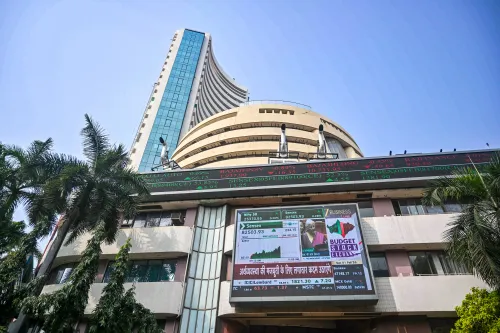
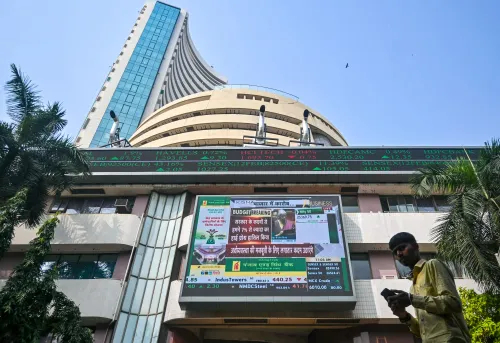
Mumbai, Feb 5 (NationPress) The Indian equity markets witnessed a downward trend on Thursday, marking the end of a three-day winning streak. Investors remained cautious, seeking clarity on global macroeconomic developments and the trends in foreign institutional investments.
At the close, the Sensex dropped by 503 points, or 0.60 percent, finishing at 83,313. The Nifty fell by 113 points, or 0.52 percent, to end at 25,642.
The broader indices also recorded significant losses, with the Nifty Midcap 100 index decreasing by 0.28 percent, while the NSE Smallcap 100 experienced a decline of 1.29 percent.
Most sectoral indices were in the red, with the Nifty PSU bank being the sole gainer at a rise of 0.38 percent. The metals sector suffered the largest loss, down by 1.02 percent, while the Nifty IT and auto sectors each fell over 0.50 percent.
Analysts noted that trading activity was selective and stock-specific. There was modest interest in export-oriented and select cyclical stocks, although profit-taking in recent outperformers led to a subdued benchmark performance.
Market observers pointed out that the Bank Nifty continued to trade below the rising trend line and the intraday VWAP zone of 60,150–60,180, indicating a weak short-term structure and a lack of bullish momentum.
The Indian rupee fluctuated within a range against the US dollar, trading at 90.32 per USD on Thursday, reflecting a balanced demand-supply scenario amid steady global cues.
Investors are also looking for more clarity regarding the ongoing US–Iran negotiations.
The Nifty 50 index remained in a tight consolidation phase, struggling to maintain momentum on either side. After an early dip, the index found support in the 25,580–25,600 range, which proved to be a consistent demand area during the session, according to analysts.
The short-term outlook appears sideways to mildly weak, with expectations that the index will fluctuate between 25,580 and 25,750 unless a significant breakout or breakdown occurs with volume.
aar/na
Point of View
I emphasize the importance of understanding market dynamics. The recent dip in Sensex and Nifty highlights ongoing global uncertainties. Investors should remain vigilant, adapt their strategies, and keep an eye on global developments that could impact local markets. We stand firm in providing timely, accurate updates to keep our audience informed.
NationPress
11 Oct 2026
Frequently Asked Questions
What caused the decline in Sensex and Nifty?
The decline was attributed to pressures from metal and IT stocks, profit-taking, and cautious investor sentiment amidst global uncertainties.
How did the broader market indices perform?
The broader market indices also fell, with the Nifty Midcap 100 dropping 0.28% and the NSE Smallcap 100 declining 1.29%.
What is the short-term outlook for the Nifty 50 index?
The short-term outlook is sideways to mildly weak, with expectations of fluctuations between 25,580 and 25,750 unless a significant breakout occurs.