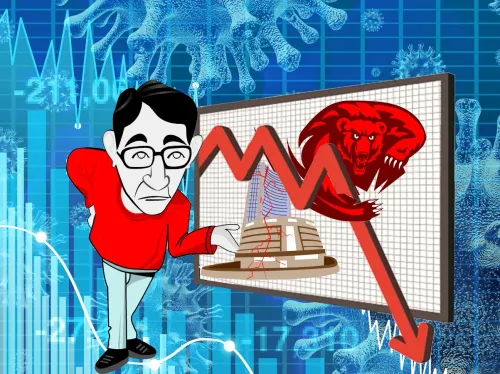
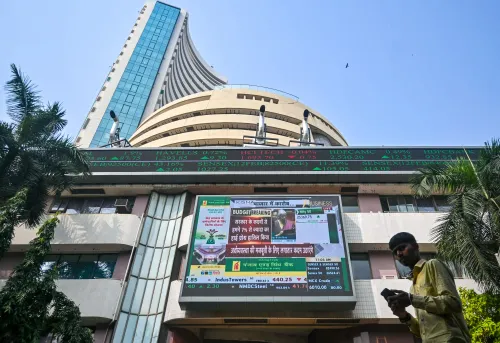
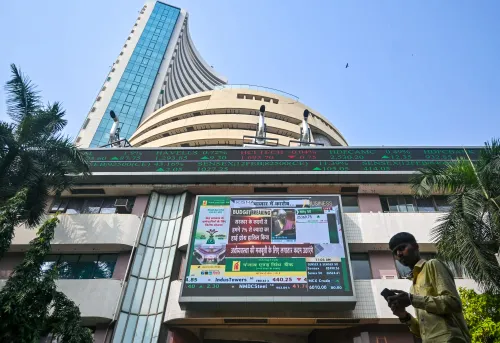
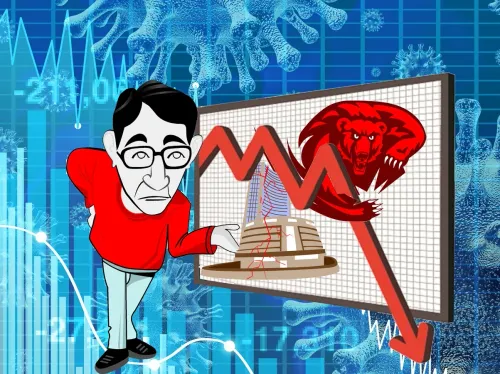
Indian Stock Indices Fall Over 1% Due to FII Selling and Global Weakness

Synopsis
On February 27, Indian stock markets tumbled over 1% amid significant FII selling and negative global trends. The Sensex and Nifty posted major losses, with heightened volatility and geopolitical tensions influencing investor sentiment. Analysts caution that near-term market direction will hinge on global developments and economic data.
Key Takeaways
Indian stock markets fell over 1% on February 27.
Heavy FII selling contributed to the declines.
Most sectors ended in the red, with Realty suffering the most.
Increased volatility indicated cautious investor sentiment.
Geopolitical tensions and economic data are influencing market direction.
Mumbai, Feb 27 (NationPress) The Indian stock indices experienced significant declines on Friday, driven by substantial selling from foreign institutional investors (FIIs) and negative cues from global markets.
As the trading session concluded, the Sensex plummeted by 961 points, or 1.17 percent, ending at 81,287. Meanwhile, the Nifty index suffered a loss of 317.90 points, or 1.25 percent, closing at 25,178.
The Nifty Midcap 100 index mirrored the benchmark's performance with a drop of 1.10 percent, while the NSE Smallcap 100 recorded a similar decline of 1.10 percent. The Nifty Next50 index fell by 1.30 percent.
Most sectoral indices ended in the negative territory, with exceptions being IT, media, and consumer durables. The Nifty Realty index was the largest loser, down by 2.26 percent, followed by the auto sector, which fell 1.86 percent. Both Nifty Metal and FMCG sectors slipped by 1.69 percent.
The overall market breadth reflected a bearish sentiment, with only 1,515 stocks advancing against 2,300 stocks that declined. The Bank Nifty index fell by 1.08 percent.
Volatility increased, as indicated by the India VIX, which hovered around 2.6 percent, signaling heightened caution among traders as the indices remained under pressure.
Market analysts noted that stalled progress in US-Iran nuclear discussions has escalated concerns regarding tensions in the Middle East. Additionally, uncertainties surrounding artificial intelligence persist, despite selective buying in domestic IT stocks following recent corrections.
The Indian Rupee traded slightly weaker, depreciating by 0.02 percent to reach 90.98 against the US dollar.
The Nifty index decisively broke the critical support level of 25,350, traversing a key open interest-rich zone and nearly filling the gap from the previous rally driven by US-India tariffs, indicating a noticeable shift in short-term sentiment, according to analysts.
Interestingly, IT stocks demonstrated relative resilience amid the overall decline, showing modest gains even as the sector faced structural pressures following corrections exceeding 20 percent in February, as mentioned by market participants.
Heightened volatility, geopolitical anxieties, and cautious positioning ahead of significant macroeconomic indicators kept investors on the defensive. The prevailing sentiment was distinctly risk-averse, with near-term direction likely dependent on global events, foreign fund movements, and forthcoming economic data, analysts concluded.
Point of View
It's clear that the current market downturn reflects broader global concerns and specific regional challenges. The significant FII sales and the geopolitical landscape are critical factors that investors must consider. Our focus remains on providing accurate insights that empower our readers to navigate these turbulent times.
NationPress
24 Sept 2026
Frequently Asked Questions
Why did the Indian stock markets decline sharply?
The decline was primarily due to heavy selling by foreign institutional investors (FIIs) and adverse global market conditions.
What were the closing figures for Sensex and Nifty?
The Sensex closed at 81,287, down by 961 points, while the Nifty ended at 25,178, down by 317.90 points.
Which sectors were the hardest hit?
The Nifty Realty sector was the major loser, down 2.26%, followed by auto and metal sectors, both losing 1.69%.
What does the increased India VIX indicate?
The elevated India VIX suggests heightened volatility and caution among traders as market pressures persist.
How is the Rupee performing against the Dollar?
The Indian Rupee traded slightly weaker, losing 0.02% to reach 90.98 against the US Dollar.