Why Did Indian Stock Markets Open Lower Amid Weak Global Cues?
Synopsis
The Indian stock markets faced a downturn as global cues remained weak, leading to significant declines in heavyweight stocks. Experts suggest cautious trading strategies amidst the volatile climate. What does this mean for investors? Read on for more insights.
Key Takeaways
Indian stock markets opened lower amid weak global cues.
Sensex and Nifty indices both experienced declines.
Heavyweight stocks faced significant selling pressure.
Support and resistance levels are critical for future movements.
Cautious trading strategies are recommended by experts.
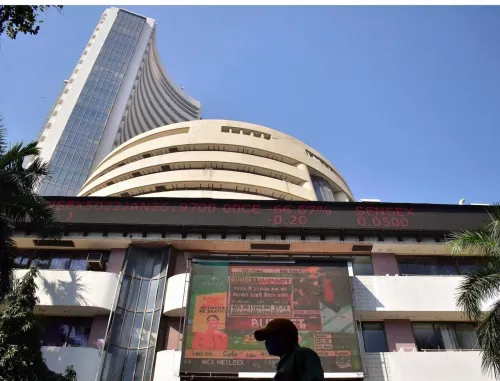
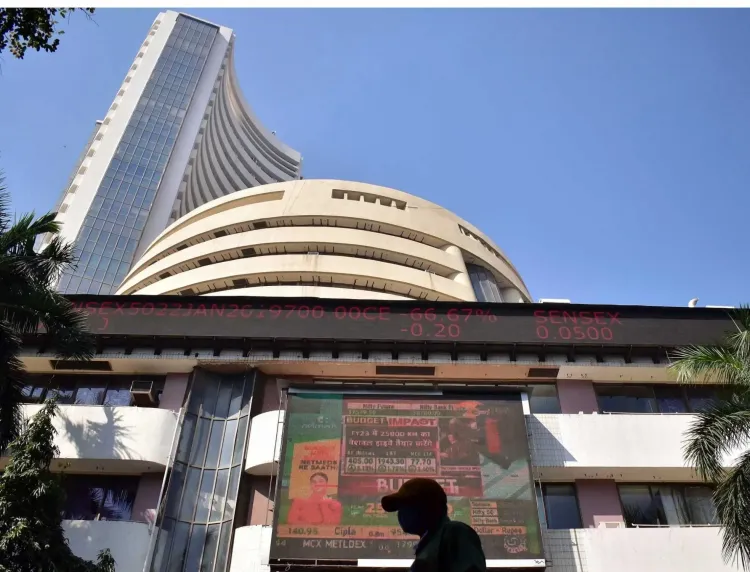
Mumbai, Dec 15 (NationPress) The Indian stock markets commenced the day on a negative note on Monday, influenced by a lackluster global market environment that impacted investor confidence.
In the initial trading session, the Sensex dropped nearly 280 points, settling around 84,989, registering a decline of approximately 0.33 percent. The Nifty index also opened lower, trading close to 25,966, down 81 points or 0.31 percent.
Market analysts shared insights on the technical outlook, noting that support levels are positioned around 25,850–25,900.
"On the upside, resistance levels are identified at 26,150–26,200, which represents a significant barrier for any substantial recovery. A decisive close above 26,200 is essential to restore bullish momentum and pave the way toward 26,500. Until that occurs, the index is expected to remain range-bound with a negative bias," market experts remarked.
During the opening session, many heavyweight stocks faced pressure. Notable declines were observed in shares of Mahindra & Mahindra, Trent, Bharti Airtel, NTPC, Bajaj Finserv, Power Grid, Sun Pharma, Kotak Mahindra Bank, Infosys, TCS, Titan, Maruti Suzuki, and Bajaj Finance, with losses reaching up to 1.4 percent.
Conversely, only a select few stocks managed to remain positive, including Asian Paints, Bharat Electronics (BEL), Hindustan Unilever (HUL), and UltraTech Cement, which were the lone gainers on the benchmark index.
The broader market sentiment mirrored caution, with the Nifty MidCap index declining by 0.40 percent, while the Nifty SmallCap index fell by 0.15 percent in early trading.
Sector-wise analysis indicated that realty stocks experienced the most significant selling pressure, as the Nifty Realty index fell by 0.8 percent. The auto and pharmaceutical sectors also reported losses, with the Nifty Auto and Nifty Pharma indices each declining by around 0.6 percent.
"In light of the current situation, traders are advised to adopt a cautious buy-on-dips strategy near support levels, accompanied by tight stop-loss strategies," experts advised.
"It is prudent to avoid aggressive long positions until key resistance levels are decisively surpassed, while partial profit booking during pullbacks is wise in this volatile and range-bound environment," they concluded.
Point of View
I recognize the importance of remaining informed in fast-moving markets. This downturn in the Indian stock markets reflects broader global trends, prompting investors to act judiciously. It's critical to balance caution with opportunity in today's environment.
NationPress
30 Sept 2026
Frequently Asked Questions
What caused the decline in Indian stock markets?
The decline was influenced by weak global market cues, impacting investor sentiment.
What are the key support and resistance levels for Nifty?
Support levels are around 25,850–25,900, while resistance levels are identified at 26,150–26,200.
Which stocks were the top losers at the opening?
Top losers included Mahindra & Mahindra, Trent, Bharti Airtel, and Bajaj Finance.
What trading strategy do experts recommend?
Experts suggest a cautious buy-on-dips approach near support levels with tight stop-losses.
Is the market expected to remain volatile?
Yes, the market is likely to remain range-bound with a negative bias in the near term.