Are Korea Zinc and the U.S. Teaming Up to Invest in a Critical Metals Refinery?
Synopsis
Korea Zinc and the U.S. government are moving forward with plans for a joint investment in a critical metals refinery in the southeastern U.S., aiming to enhance the supply chain for essential metals like antimony and germanium, amidst rising global competition.
Key Takeaways
Korea Zinc and the U.S. government are investing $6.8 billion in a critical metals refinery.
The refinery aims to produce essential metals like antimony and germanium .
Location selected after evaluating 60 candidates in the southeastern U.S.
This initiative responds to Chinese export restrictions on rare earths.
The partnership highlights the importance of securing resources for national security.
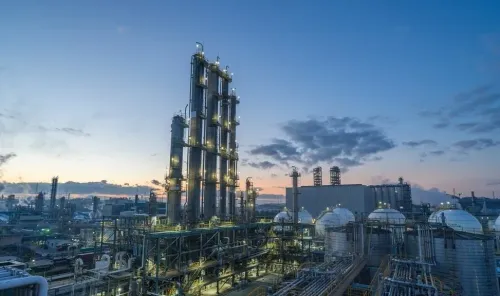
Seoul, Dec 15 (NationPress) Korea Zinc and the U.S. government are aiming to collaborate on a substantial investment of approximately 10 trillion won (around $6.8 billion) to establish a critical metals refinery in the southeastern United States, as reported by sources on Monday.
The proposed partnership, which is anticipated to be formalized during Korea Zinc's board of directors meeting later today, involves a joint venture (JV), as indicated by sources from both government and industry, according to Yonhap news agency.
The U.S. is reportedly advocating for the development of this facility and is likely to contribute around 2 trillion won alongside American defense firms in the JV with Korea Zinc Inc., officials disclosed.
The two parties have preliminarily chosen a major city in the southeastern U.S. for the plant after assessing 60 potential locations.
This forthcoming refinery is intended to act as a U.S. base for the supply and production of essential metals, such as antimony and germanium.
This initiative arises as the U.S. government strives to address Chinese restrictions on the export of rare earth elements and critical metals.
The plan follows Korea Zinc Chairman Choi Yoon-beom's announcement in August regarding a strategic metals alliance with the U.S. during his visit, which coincided with President Lee Jae Myung's inaugural summit with U.S. President Donald Trump.
During that visit, Korea Zinc entered a memorandum of understanding with U.S. defense giant Lockheed Martin Inc. to invest approximately 140 billion won to develop a germanium-producing facility in South Korea.
In a related effort, South Korea is set to officially inaugurate a rare metals cooperation centre in Mongolia this week to bolster the industrial value of its rare earth metals reserves, as announced by Seoul's industry ministry.
This centre aims to conduct research on rare earth metals found in Mongolia, including tungsten, molybdenum, and lithium, while also providing technical training in processing and refining to enhance the value of Mongolia's rare metal resources, according to the ministry.
Point of View
The collaboration between Korea Zinc and the U.S. government to establish a critical metals refinery is a strategic move that underscores the importance of securing essential resources for national security and economic stability. This venture not only promises to bolster the U.S. supply chain but also reinforces international partnerships in critical sectors.
NationPress
24 Sept 2026
Frequently Asked Questions
What is the purpose of the Korea Zinc and U.S. government investment?
The investment aims to construct a critical metals refinery in the southeastern U.S. to enhance the supply chain for essential metals like antimony and germanium.
How much is Korea Zinc and the U.S. government investing?
They are looking to invest approximately 10 trillion won, which is around $6.8 billion.
What prompted this joint investment?
The joint investment is part of efforts to respond to Chinese export restrictions on rare earths and critical metals.
Where will the refinery be located?
The refinery's location is tentatively decided in a major city in the southeastern U.S. after reviewing 60 candidate sites.
What other initiatives are being undertaken in relation to rare metals?
Alongside this investment, South Korea is launching a rare metals cooperation centre in Mongolia to enhance the value of its rare earth metals reserves.