How Did India’s Domestic Air Traffic Increase 7% in November Amid IndiGo Challenges?

Synopsis
In November 2025, India's domestic air traffic rose by 7% year-on-year to 15.2 million, driven by festive demand. Despite this boost, operational disruptions at IndiGo and weather-related challenges impacted performance metrics. Explore how these factors shaped the aviation landscape in India during this period.
Key Takeaways
Domestic air traffic rose by 7% YoY in November 2025.
IndiGo faced operational challenges impacting its market share.
SpiceJet and Air India Group gained market share amidst disruptions.
Passenger Load Factors improved for major airlines.
Predictions indicate a decline in aviation fuel prices in January 2025.
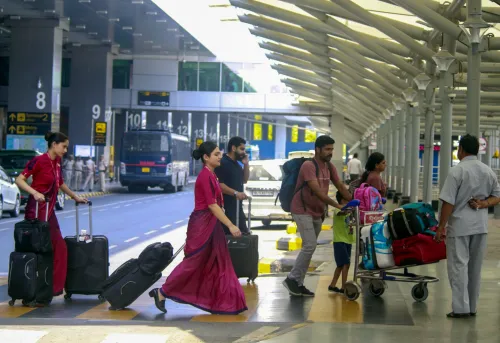
New Delhi, Dec 30 (NationPress) India’s domestic air passenger numbers surged by 7 percent year-on-year (YoY), reaching 15.2 million in November 2025, largely fueled by the festive season demand, according to a report released on Tuesday. However, momentum appeared to wane as the month progressed.
Emkay Global Financial Services noted that operations began to normalise by mid-December 2025, allowing passenger volumes to stabilise, despite weather-related disruptions impacting On-Time Performance (OTP) and contributing to cancellations.
Recent daily trends for December 2025 show a stagnant YoY growth, primarily due to operational issues at IndiGo during the first half of the month, the report stated.
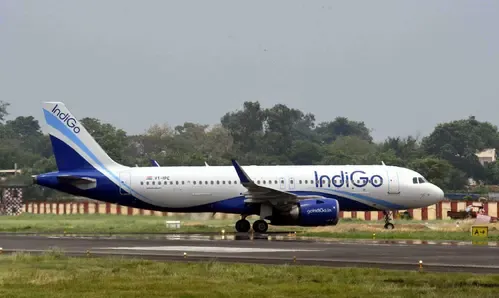
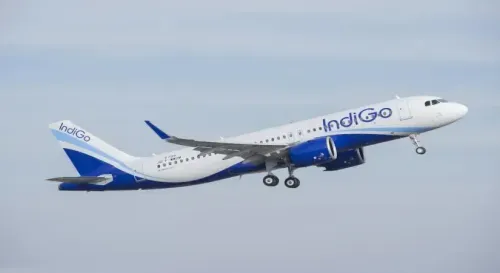
IndiGo encountered a series of disruptions ranging from weather conditions to software issues, along with the enforcement of Flight Duty Time Limitation (FDTL) regulations, causing its market share to decrease by 200 basis points month-on-month, settling at 63.6 percent in November 2025.
Conversely, SpiceJet experienced a rise of 110 basis points to 3.7 percent market share, bolstered by additional slots, fleet growth, and increased available seat kilometres in the winter schedule. Meanwhile, the Air India Group's market share increased by 100 basis points to 26.7 percent.
The overall Passenger Load Factor (PLF) improved across major airlines in November 2025, with the Air India Group showing the most significant increase of 10.2 percent.
IndiGo and SpiceJet reported PLFs of 88.7 percent and 87.7 percent, respectively, while Akasa achieved a high of 93.8 percent.
Cancellations displayed a mixed trend, with IndiGo noting the highest cancellation rate at 1.57 percent, an increase from 0.48 percent month-on-month.
On-time performance declined due to weather challenges, with IndiGo’s OTP dropping to 69 percent from 84.1 percent, and the Air India Group’s OTP fell to 69.1 percent from 79.3 percent, while SpiceJet recorded the lowest OTP at 48.4 percent.
In light of the current decrease in refining cracks and falling crude oil prices, predictions for aviation turbine fuel prices in January 2025 suggest a decline of 5-6 percent month-on-month from the current rate of Rs 99.7 per litre in Delhi, as forecasted by the firm.
Point of View
It's clear that while the increase in passenger traffic is a positive sign for India's aviation sector, the operational issues faced by major airlines underline the need for robust management strategies. Emphasizing a proactive approach to addressing disruptions will be essential to sustain this growth trajectory.
NationPress
26 Sept 2026
Frequently Asked Questions
What led to the rise in air traffic in November?
The increase in air traffic was primarily driven by festive season demand, which typically sees a surge in passenger numbers.
How did IndiGo's challenges affect its market share?
IndiGo's market share declined by 200 basis points to 63.6% due to various operational disruptions, including weather and FDTL regulations.
Which airline saw a significant increase in market share?
SpiceJet's market share increased by 110 basis points to 3.7%, thanks to fleet expansion and additional slots.
What impact did weather disruptions have on airlines?
Weather disruptions led to a decrease in On-Time Performance across major airlines, affecting passenger satisfaction and operational efficiency.
What are the predictions for aviation fuel prices?
Forecasts suggest that aviation turbine fuel prices may decline by 5-6% month-on-month in January 2025 due to lower crude oil prices.