Does the Arrest of Top ISIS Terrorist Highlight Pakistan's Links to Terror Groups?
Synopsis
The arrest of ISIS affiliate Mehmet Goren has reignited serious allegations against Pakistan for harboring terrorist groups. As tensions rise in the region, this incident raises questions about the ongoing nexus between Pakistan and ISIS-K, posing severe implications for regional stability.
Key Takeaways
Mehmet Goren ’s arrest raises serious questions about Pakistan’s involvement with ISIS-K .
The Taliban has accused Pakistan of harboring terrorists, complicating regional dynamics.
Evidence suggests ISIS-K operates within Pakistan , impacting stability in the region.
International response to these allegations could shape future relations.
Ongoing tensions highlight the need for vigilance against terrorism.
Washington, Jan 7 (NationPress) The recent capture of a high-ranking member of an ISIS affiliate, Mehmet Goren, has once again sparked allegations against Pakistan for allegedly offering sanctuary to terror organizations. Goren, known by the alias 'Yahya', was apprehended by Turkey's National Intelligence Organization during a covert operation near the Afghanistan-Pakistan border in December last year. He is accused of orchestrating suicide attacks and facilitating the operations of the Islamic State Khorasan Province (ISIS-K).
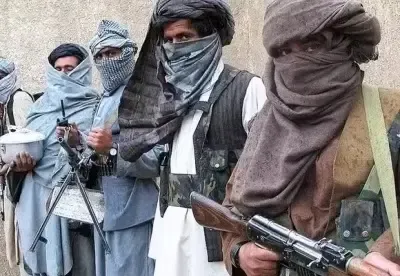
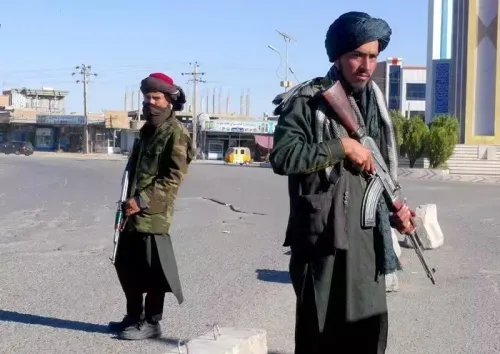
Following the arrest, a spokesman for the Taliban, Zabihullah Mujahid, issued an audio statement accusing Pakistan of sheltering ISIS terrorists, asserting that the Taliban has long observed their activities and even shared intelligence that contributed to these operations. Senior research fellow at the Middle East Media Research Institute (MEMRI), Anna Mahjar-Barducci, highlighted these claims in an opinion piece for The New York Sun.
Mujahid described ISIS as a 'sinister phenomenon' and cautioned against using safe havens to harm any nation, echoing concerns that Pakistan serves as a refuge for ISIS operatives, which not only undermines Taliban leadership but also poses a threat to countries like India. While Taliban comments regarding ISIS in Pakistan warrant careful interpretation, they cannot be easily dismissed, according to Mahjar-Barducci.
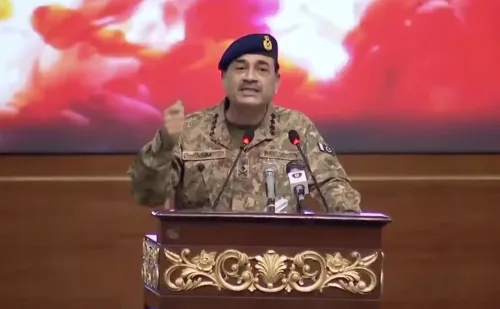
Regional analysts have consistently pointed to evidence linking Pakistan with ISIS-K. Reports indicate that ISIS-K members find shelter in regions of Pakistan such as Khyber Pakhtunkhwa and Balochistan, where training camps and recruitment networks reportedly operate with varying degrees of state tolerance or support.
Over the years, evidence of Pakistan’s ties to ISIS-K has been accumulating. In April 2024, Afghan authorities detained Tajik recruits who were reportedly trained in Quetta, Pakistan, before being sent to conflict zones. The Taliban's foreign minister, Mawlawi Amir Khan Muttaqi, suggested that three neighboring countries support ISIS-K in different ways—one providing recruits, another facilitating transit, and a third offering planning, training, and funding—widely interpreted as implicating Pakistan.
In March 2024, Naseem Baloch, chairman of the Baloch National Movement, claimed during a UN meeting that ISIS camps in Balochistan operate under the supervision of the Pakistani army. A video featuring a founding member of ISIS-K, Abdul Rahim Muslim Dost, indicated that Pakistan's Inter-Services Intelligence (ISI) provided financial support for Hafiz Saeed Khan, the emir of ISIS-K until his death in 2016.
The 2020 arrest of Aslam Farooqi, ISIS-K’s chief and a Pakistani national, by Afghan forces further revealed the group's connections to Pakistan’s ISI. A senior Afghan official referred to ISIS-K as a demonic offspring of Pakistan’s ISI.
In her opinion piece in The New York Sun, Mahjar-Barducci noted that social media and activist accounts amplify these allegations, with posts claiming that ISIS training camps in Mastung, Balochistan, are under military protection. Local protests in Mastung in 2024 condemned the Pakistani state for facilitating the presence of ISIS in the region.
The capture of Mr. Goren comes amid escalating regional tensions. On October 9, 2025, Pakistani aircraft targeted Tehreek-e-Taliban Pakistan positions in Kabul while Afghan Foreign Minister Amir Khan Muttaqi was visiting India, coinciding with New Delhi's decision to reopen its embassy in Kabul.
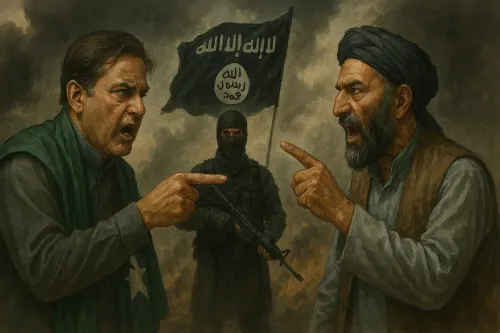
Reports, confessions, and intelligence assessments indicate that the nexus involving Pakistan presents significant threats to regional stability, as safe havens in Pakistan furnish ISIS-K with operational depth, redundancy, and access to broader recruitment networks.
Point of View
It is vital to approach this matter with a nuanced perspective. The allegations against Pakistan regarding its ties to terrorism necessitate thorough investigation. The implications of such claims extend beyond national borders, affecting regional stability and international relations.
NationPress
26 Sept 2026
Frequently Asked Questions
Who is Mehmet Goren?
Mehmet Goren is a senior official of an ISIS affiliate organization, recently arrested by Turkey's National Intelligence Organization.
What are the allegations against Pakistan?
Pakistan is accused of providing safe havens to terrorist groups, including ISIS-K, facilitating their operations and recruitment.
How has the Taliban responded to these allegations?
The Taliban has accused Pakistan of harboring ISIS terrorists and has claimed to monitor their activities closely.
What implications do these events have for regional stability?
The ongoing nexus between Pakistan and ISIS-K poses significant risks to regional stability and security, affecting neighboring countries.