How RSETI Transforms Lives: Rural Women Establish Footwear Industry in the Hills?
Synopsis
Witness how the Rural Self Employment Training Institute empowers women in the hills of Uttarakhand to create their own footwear industry. This inspiring story highlights the role of self-help groups and small-scale industries in transforming lives and boosting local economies.
Key Takeaways
RSETI training empowers women to become entrepreneurs.
Women are creating a sustainable footwear industry in their villages.
Self-help groups provide essential support for business growth.
Local fairs serve as vital marketing platforms.
Small industries can curb rural migration.
Rudraprayag, Jan 8 (NationPress) In addition to agriculture, horticulture, and animal husbandry, there are significant prospects for self-employment in the hills through small and cottage industries.
A remarkable instance of this can be observed in Jawari village of the Jakholi development block in Uttarakhand's Rudraprayag district.
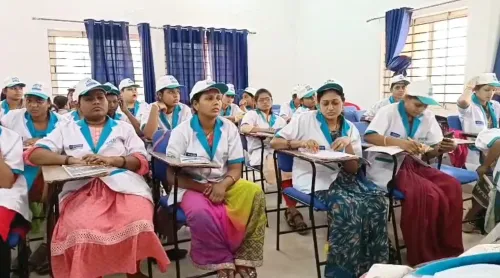
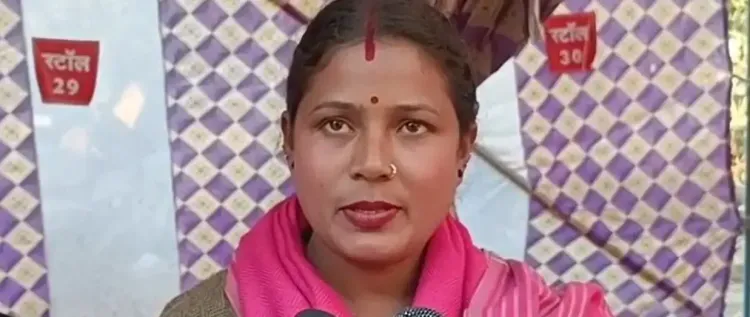
In this village, Saraswati Devi, after undergoing training at the Rural Self Employment Training Institute (RSETI) managed by the Central Bank of India, secured a loan with the assistance of a women's self-help group and launched a small footwear manufacturing unit in her locality.
Through this initiative, she is crafting various kinds of slippers and shoes, which are experiencing a strong demand in the local market.
Saraswati Devi mentioned that she balances this enterprise alongside her household duties, with her husband's support.
Despite facing resource constraints, the initial outcomes have been very promising, resulting in a consistent increase in the family's income.
The footwear she produces is marketed through women's self-help groups by establishing stalls at local fairs, benefiting not only Saraswati Devi but also other women linked to the group.
Members from the self-help group are showcasing their products at various events like the Rudraprayag Cooperative Fair, Jakholi Mahotsav, Silgarh Mahotsav, and now the Rudranath Mahotsav.
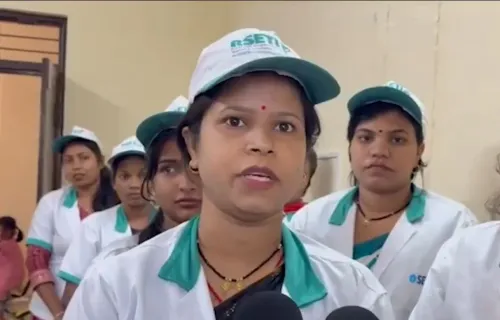
Sangeeta Kaprawan, a participant of the Gaura Devi group, stated that they create diverse products based on seasonal demand and market trends.
A small slipper manufacturing unit has also been set up in Jakhadi village, with products being sold at block- and district-level fairs.
She added that their slippers are quite popular, noting that on the very first day of the cooperative fair in Rudraprayag, they sold out all their stock.
Another woman affiliated with the group informed the media that after receiving training in slipper production from RSETI, she bought the necessary machines and materials, establishing a small factory at home.
Functioning as a small-scale industrial unit, she dedicates three to four hours daily to her work and is able to reach the market through local fairs.
She also mentioned that the Rudraprayag Sahkarita Mela provided them with an excellent marketing opportunity, leading to consistent sales at local fairs.
These small-scale and cottage industries initiated by local women illustrate that if such initiatives are promoted in the hills, they can not only generate new job opportunities but also play a significant role in reducing migration from mountainous areas.
Point of View
The initiatives taken in Uttarakhand showcase the resilience and creativity of women in rural areas. By leveraging training and support, they are not only improving their livelihoods but also contributing to local economies. The success of these small industries highlights the importance of empowering women in every aspect of society.
NationPress
26 Sept 2026
Frequently Asked Questions
How are women benefiting from self-help groups?
Women are benefiting from self-help groups by gaining access to loans, training, and marketing opportunities, which enable them to start and manage their own businesses.
What products are being produced by these women?
The women are producing various types of footwear, including slippers and shoes, which are in high demand in their local markets.
What impact do these small industries have on the community?
These small industries create job opportunities, boost local economies, and help curb migration from rural areas.
Where can I find these products?
The products are sold at local fairs and through stalls set up by women's self-help groups in various events.