Will India's inflation remain low in FY27? A new report reveals insights.
Synopsis
India's inflation outlook for FY27 looks promising as robust grain reserves and low oil prices contribute to a stable economic environment. A recent HSBC report suggests potential rate cuts by the RBI could occur if growth falters. This analysis sheds light on the factors influencing inflation and economic growth in the coming year.
Key Takeaways
India's inflation forecast for FY27 remains benign.
Low oil prices and strong grain supplies are key factors.
RBI may consider further rate cuts if growth falters.
November CPI inflation was 0.7 percent year-on-year.
Gold prices significantly impact core inflation metrics.
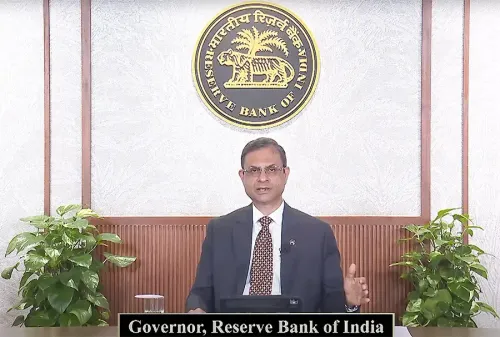
New Delhi, Dec 16 (NationPress) Robust grain reserves, reduced oil prices, and persistent factors driving core disinflation are anticipated to keep India's inflation levels moderate in FY27, as outlined in a recent report. HSBC Global Investment Research highlighted that 'we do not foresee additional RBI repo rate reductions, but the risks are skewed towards more easing should growth fall short.'
The Consumer Price Index (CPI) inflation for November registered at 0.7 percent year-on-year, aligning with market expectations. Although there was a month-on-month increase of 0.4 percent, the annual figures remained subdued, attributed to the base effect.
When excluding gold, the headline CPI remained in deflation, recording -0.1 percent in November compared to -0.6 percent previously.
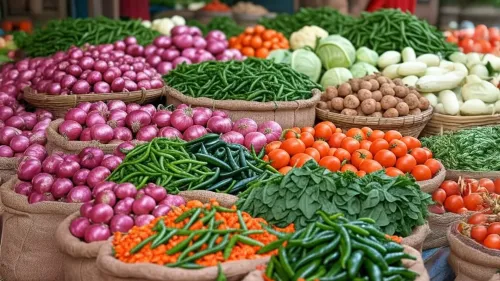
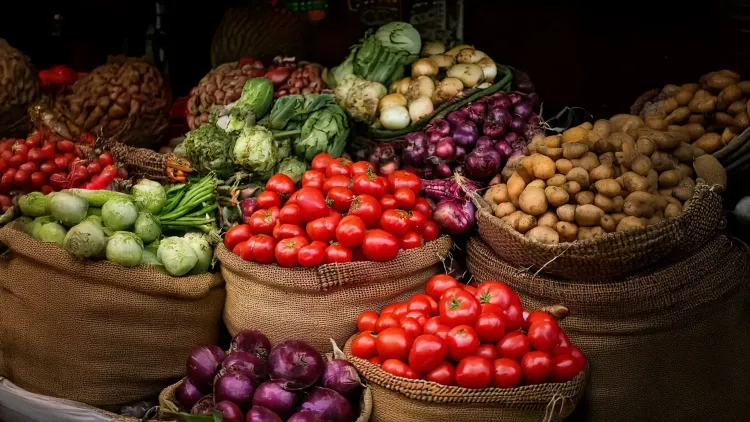
“Food prices have continued their deflation trend for the third consecutive month in annual terms. Sequentially, food prices increased by 0.5 percent month-on-month after two months of decline. Prices of vegetables surged after two months of falling, along with an uptick in protein item prices like eggs, meat, and fish,” the report stated.
“Gold prices kept core inflation elevated. With a CPI basket weight of 1.1 percent and a 59 percent increase in November, gold alone contributed approximately 63 basis points to CPI inflation. Our preferred definition of core (excluding food, energy, housing, and gold) remained steady at 3.2 percent year-on-year in 3Q25, now falling to 2.5 percent in November,” the report detailed.
Following a sharp decline in October, November goods inflation stayed moderate.
The report further stated that substantial cereal production, well-stocked granaries, and winter disinflation are expected to help control food inflation in the near term.
“Moreover, it’s not solely about declining food prices. The high base from last year is likely to keep CPI inflation subdued for the upcoming months. Global oil prices are also low, and more affordable imports from China are anticipated to maintain soft core inflation over an extended period,” it noted.
The Reserve Bank of India (RBI) has reduced its H1 FY27 inflation forecast by 50 basis points, revising it from 4.5 percent to 4 percent.
“However, our predictions are 50 basis points lower than the RBI's (at 3.5 percent). Should we be correct, and the RBI makes further downward adjustments to inflation, there would be room for additional easing should growth necessitate it,” the report concluded.
Point of View
I believe this report underscores a critical moment for India’s economy. With inflation projected to remain low, it provides a unique opportunity for policymakers to consider strategies that stimulate growth without the immediate pressure of rising prices. We must continue to monitor these trends closely.
NationPress
13 Oct 2026
Frequently Asked Questions
What factors are contributing to low inflation in India for FY27?
Key factors include well-stocked granaries, low oil prices, and ongoing core disinflation drivers.
Is the RBI expected to cut rates further?
The report suggests that additional rate cuts by the RBI may occur only if economic growth does not meet expectations.
What was the CPI inflation rate in November?
The CPI inflation rate for November was recorded at 0.7 percent year-on-year.
How do gold prices affect inflation?
Gold prices contribute significantly to core inflation, with a weight of 1.1 percent in the CPI basket and a notable increase noted in November.
What impact will high cereal production have on food inflation?
High cereal production and well-stocked granaries are expected to keep food inflation in check in the near future.