How do India and Ethiopia Foster Their Warm Relationship?
Click to start listening
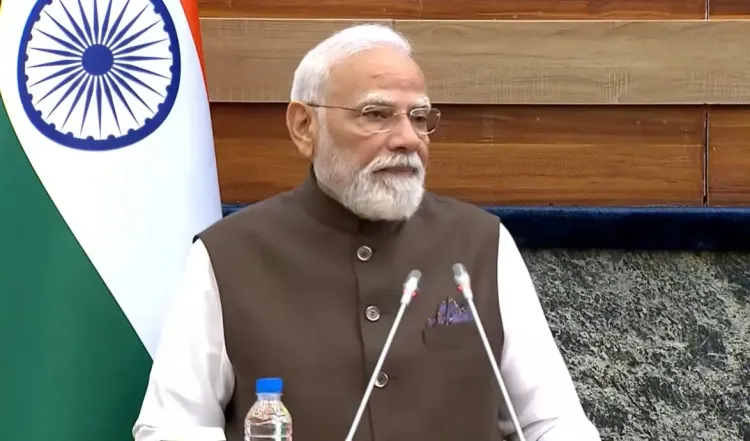
Synopsis
Prime Minister Narendra Modi praises the enduring ties between India and Ethiopia, highlighting historical connections and modern partnerships during his address in Addis Ababa. He emphasizes shared values, educational exchanges, and future strategic cooperation, marking a significant evolution in bilateral relations. This partnership aims to secure economic growth and sustainable development for both nations.
Key Takeaways
- India and Ethiopia share deep historical ties.
- Indian educators have significantly impacted Ethiopian education.
- The Adwa Victory Monument symbolizes resilience and inspiration.
- Both nations are committed to a strategic partnership for growth.
- India's support during the COVID-19 pandemic illustrates global responsibility.
Addis Ababa, Dec 17 (NationPress) Celebrating the relationship between India and Ethiopia, Prime Minister Narendra Modi remarked on Wednesday that both nations experience a shared warmth in climate and spirit. He highlighted how the people began crafting a new chapter in bilateral relations even before formal diplomatic ties were established.
While speaking to the Joint Session of the Ethiopian Parliament, PM Modi acknowledged the significant role of Indian educators in Ethiopia's development.
He emphasized that the bond between India and Africa has expanded significantly during his tenure, with over 100 exchanges of visits between Heads of State and Government.
"India and Ethiopia share warmth in climate as well as in spirit. Nearly 2000 years ago, our ancestors forged connections across vast waters. Merchants sailed the Indian Ocean with spices, cotton, coffee, and gold, exchanging not just goods but also ideas, stories, and ways of life. Ports like Adulis and Dholera served as bridges between civilisations," he expressed.
In contemporary times, PM Modi noted that the bilateral relationship entered a new chapter when Indian soldiers fought alongside Ethiopians for liberation in 1941.
"Our formal diplomatic relations were established shortly after India gained independence. However, even before the establishment of embassies, our communities were already collaborating," he stated.
"Thousands of Indian teachers arrived in Ethiopia, imparting knowledge to children from Addis Ababa to Bahirdar. They endeared themselves to Ethiopian hearts. Today, many Ethiopian parents fondly remember the Indian teachers who shaped their children's futures. Likewise, Ethiopian students traveled to India seeking knowledge and friendship, returning home as architects of modern Ethiopia," he added.
He expressed that India is privileged to be chosen as a reliable partner for developing Ethiopia's foreign ministry's data center.
Recalling the COVID-19 pandemic, PM Modi remarked, "During that challenging time, despite limited resources, we viewed it as our sacred duty to assist humanity. India supplied medicines and vaccines to over 150 countries, and it was a point of pride to provide Ethiopia with more than 4 million doses of vaccine."
He reiterated that both nations are vibrant and diverse democracies, stating, "As democracies, we appreciate that democracy is a way of life and a journey shaped by debate and disagreement, always grounded in the rule of law and the people's will. Our constitutions embody this spirit."
"India's constitution commences with ‘We The People of India’, while Ethiopia's resonates with ‘We The Nations, Nationalities and the People of Ethiopia’, conveying a shared message: our destiny is in our hands," he remarked.
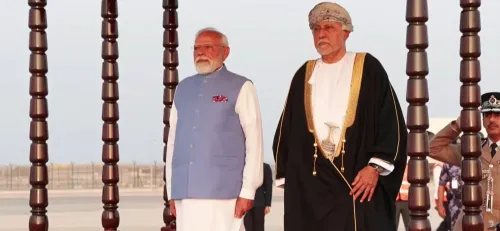
Earlier in the day, he laid a wreath at the Adwa Victory Monument, calling it a lasting reminder of Ethiopia's victory and its inspiration for the colonised world in their quest for dignity and freedom.
PM Modi and Ethiopian Prime Minister Abiy Ahmed Ali have decided to elevate their bilateral relationship to a strategic partnership, enabling collaboration in technology, innovation, mining, sustainability, and clean energy.
"Today, Indian enterprises are among the largest foreign investors in Ethiopia, with over USD 5 billion invested across various sectors including textiles, manufacturing, agriculture, and healthcare, creating over 75,000 local jobs. Yet, our partnership holds more potential, which is why Prime Minister Dr. Abiy Ahmed and I made a significant decision yesterday to elevate our relationship to a strategic partnership," he stated.
"This will unlock economic potential through cooperation in technology, innovation, mining, sustainability, and clean energy. It will also secure our people’s future through collaboration in food security, health security, and capacity building," he added.
Furthermore, he mentioned that both nations will enhance trade and investment cooperation, as well as defence and security ties. As developing countries, "we have much to learn from and offer each other."
PM Modi concluded by stating that agriculture is central to both India and Ethiopia, remarking, "It sustains our farmers and connects tradition with innovation. Together, we can advance the development of better seeds, irrigation systems, and soil health technology."
"With climate change impacting rainfall and crop cycles, we can share knowledge on climate-resilient farming, from dairy farming to farm mechanisation, ensuring we assist our farmers effectively," he added.
Point of View
It's essential to recognize the significance of international relations, particularly between India and Ethiopia. The warmth and spirit shared between these nations, rooted in history and evolving through mutual respect and collaboration, highlight a path towards growth and sustainable development. Such partnerships are crucial for fostering global peace and economic stability.
NationPress
17/12/2025
Frequently Asked Questions
What historical ties exist between India and Ethiopia?
India and Ethiopia share a history of trade and cultural exchange dating back nearly 2000 years, where merchants exchanged goods and ideas across the Indian Ocean.
How has India supported Ethiopia in education?
Thousands of Indian teachers have traveled to Ethiopia, impacting the education of many children and helping shape the future of the nation.
What is the significance of the Adwa Victory Monument?
The Adwa Victory Monument serves as a symbol of Ethiopia's fight for dignity and freedom, inspiring nations across the globe.
What are the future plans for India-Ethiopia relations?
India and Ethiopia plan to elevate their relationship to a strategic partnership, focusing on technology, innovation, and sustainable development.
How has India contributed during the COVID-19 pandemic?
India supplied over 4 million vaccine doses to Ethiopia and provided medical assistance to more than 150 countries during the pandemic.