Are There Efforts to Distort History and Exonerate Treason? Bangladesh Media Speaks Out
Synopsis
Bangladesh’s historical narratives are being manipulated to exonerate treasonous actions and target India. An opinion piece highlights alarming claims from Jamaat-e-Islami leaders, as the nation commemorates the Martyred Intellectuals Day. The piece explores significant historical revisionism and its implications for Bangladesh-India relations.
Key Takeaways
Manipulation of Historical Narratives: Ongoing attempts to distort history in Bangladesh to absolve treason.
Martyred Intellectuals Day: Commemorates the sacrifice of over 1,000 intellectuals during the Liberation War.
International Relations: Rising tensions between Bangladesh and India due to conflicting narratives.
Political Dynamics: The influence of groups like Jamaat-e-Islami in shaping public discourse.
Need for Truth: Importance of historical accuracy in fostering national identity and unity.
New Delhi, Dec 17 (NationPress) Even after 54 years since the founding of Bangladesh, there are evident attempts to fabricate and manipulate historical accounts to clear certain groups of their treasonous actions while casting blame on India, as highlighted in an opinion article published in a Dhaka-based newspaper on Wednesday, December 17.
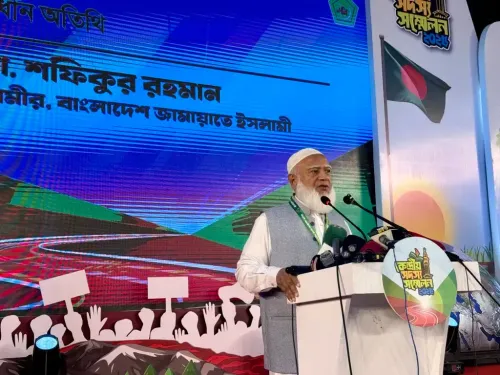
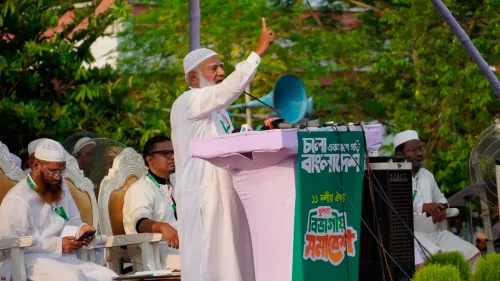
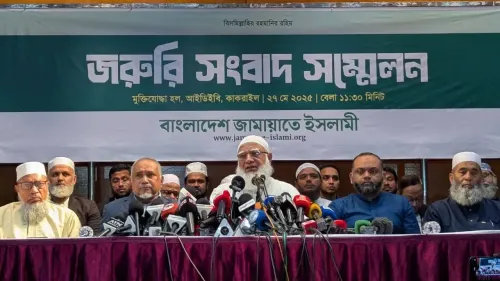
Described as a “deceptive manipulation of established historical truths,” the article from the Daily Star referenced a recent assertion by Jamaat-e-Islami Secretary General Mia Golam Porwar, who alleged that it was India that had orchestrated the assassination of the nation’s intellectuals on December 14, 1971.
In Bangladesh, the day is commemorated as Martyred Intellectuals Day, honoring the over 1,000 intellectuals who were murdered by the then-occupying Pakistani military during the country’s Liberation War.
The day is observed with numerous memorial events, such as wreath-laying ceremonies, and is approached with deep reverence and sorrow throughout the nation.
In contrast, Porwar claimed that it was part of a “well-orchestrated conspiracy by the Indian army and intelligence agencies.”
The Daily Star piece stated: “With their newfound influence in the post-2024 landscape, some Jamaat-e-Islami leaders are attempting to overturn a firmly established narrative.”
Moreover, the article indicated that Porwar’s associate from Chittagong further skewed the narrative by asserting that “someone else utilized the name of the Pakistan army to execute the killings,” implicating India among the potential suspects.
The publication dismissed such revisions, stating: “To fabricate a narrative that absolves the coalition of forces responsible for nine months of unimaginable brutality against our citizens is absurd.”
On the same day, the Ministry of External Affairs (MEA) summoned Bangladesh High Commissioner M. Riaz Hamidullah, voicing their apprehensions regarding security threats to the Indian High Commission in Dhaka.
Earlier this week, Hasnat Abdullah, a leader of Bangladesh’s National Citizen Party (NCP), made threats to isolate India's Northeast states, referred to as the Seven Sisters, in a declaration offering shelter to insurgents amid claims of purported “destabilization” of Bangladesh.
Following the MEA's concerns, reports indicated that a group was halted by police while attempting to march towards the Indian High Commission in Dhaka, intending to voice various demands, including the return of deposed Prime Minister Sheikh Hasina and others who fled during and after the July uprising last year.
Notably, former Prime Minister Sheikh Hasina has been sentenced to death over alleged atrocities during her administration.
Numerous other news pieces and commentaries claim that the interim administration led by Mohammad Yunus in Bangladesh has shown signs of accommodating Islamist factions.
This includes policy modifications, deregulation, and a favorable atmosphere for extremist groups. Major indicators consist of the lifting of bans on radical elements, public appointments, pardons, rises in sectarian violence, and shifts in official rhetoric.
Point of View
It is crucial to recognize the importance of historical accuracy in shaping national identity. The ongoing distortion of historical facts to absolve certain groups of their actions during Bangladesh's Liberation War is alarming. We must uphold truth and integrity in our narratives to foster unity and resilience in our society.
NationPress
2 Oct 2026
Frequently Asked Questions
What are the claims made by Jamaat-e-Islami leaders?
Jamaat-e-Islami leaders, particularly Mia Golam Porwar, have claimed that it was India that orchestrated the killings of intellectuals in 1971, attempting to shift blame and distort historical facts.
What is Martyred Intellectuals Day?
Martyred Intellectuals Day is observed in Bangladesh to honor the over 1,000 intellectuals who were murdered by the Pakistani military during the Liberation War.
What has the Ministry of External Affairs done in response?
The Ministry of External Affairs summoned the Bangladesh High Commissioner to express concerns about security threats to the Indian High Commission in Dhaka.
How has the interim administration in Bangladesh been perceived?
The interim administration led by Mohammad Yunus has been criticized for accommodating Islamist groups, with allegations of policy shifts and a permissive atmosphere for hardline actors.
What are the implications of these historical distortions?
The distortions of history not only threaten the integrity of national narratives but also have the potential to impact diplomatic relations and national unity.