Is the Pakistan Government Violating Protesters' Rights Against Imran Khan Supporters?
Synopsis
Amnesty International has condemned the Pakistani government for its aggressive tactics against peaceful protesters outside Adiala Jail, highlighting serious violations of human rights in the treatment of Imran Khan supporters. This article delves into the implications of these actions and the call for adherence to international standards.
Key Takeaways
Use of force against peaceful protests is condemned by human rights organizations.
Denial of court-ordered visits to Imran Khan raises legal and ethical concerns.
International human rights standards require respect for peaceful assembly.
UN Special Rapporteur calls for compliance with detention standards.
Violations of human rights must be addressed by authorities.
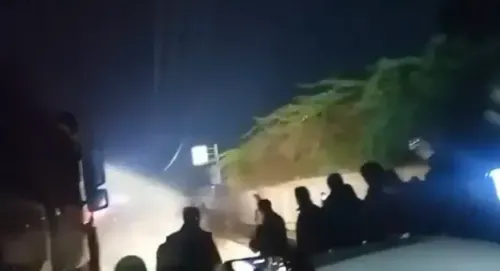
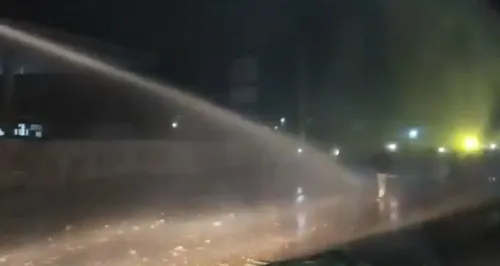
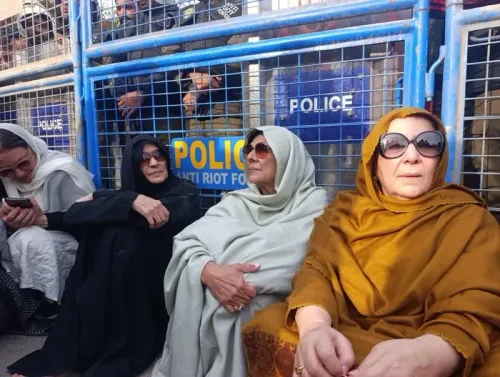
Islamabad, Dec 17 (NationPress) The recent actions of Pakistani authorities, characterized by the aggressive deployment of high-pressure water cannons against peaceful demonstrators outside Adiala Jail in Rawalpindi, represent a blatant infringement on the right to peaceful assembly, as stated by Amnesty International on Wednesday.
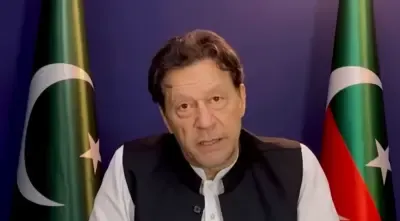
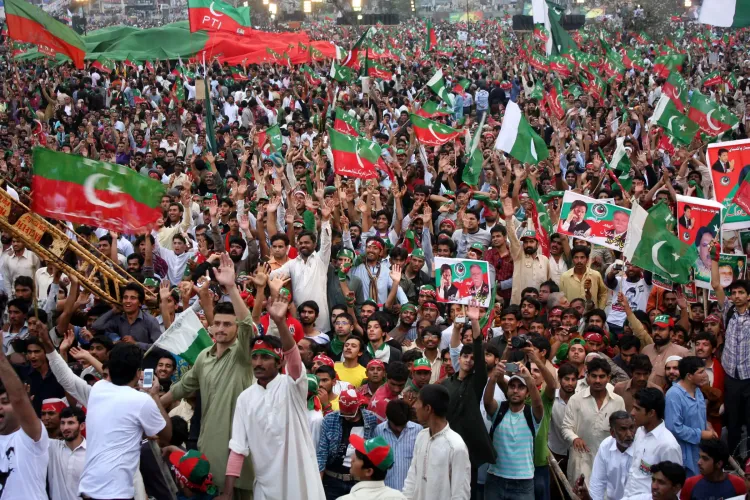
The demonstrators were protesting the ongoing denial of court-sanctioned visits to Imran Khan, the leader of Pakistan Tehreek-e-Insaf (PTI) and former Prime Minister, who is currently incarcerated at Adiala Jail.
According to the human rights group, a peaceful sit-in held outside the jail was once again forcibly dispersed on Tuesday night using water cannons, which participants claimed contained chemical irritants. Amnesty International emphasized that international human rights standards permit the use of water cannons solely in cases of severe public disorder and widespread violence.
In condemning the incident, Amnesty International asserted that the Pakistani authorities must uphold the public's right to engage in peaceful protest and cease the excessive and punitive application of force.
“These actions provoke serious concerns regarding the safety of peaceful demonstrators and the authorities' disregard for court orders. Recently, the UN Special Rapporteur on Torture criticized Khan’s prolonged isolation of 23 hours a day in poor conditions, labeling it as unlawful and a form of psychological torture under international law,” it remarked.
The rights organization pointed out that obstructing visits from family and legal representatives breaches Pakistan’s obligations under international human rights agreements, including the International Covenant on Civil and Political Rights (ICCPR) and essential due process protections. Referring to the United Nations’ Nelson Mandela Rules, it stressed that the denial of family contact cannot be employed as a disciplinary or punitive tactic.
Amnesty International urged the Pakistani government to promptly reinstate Imran Khan’s access to his family and legal counsel in accordance with international human rights legislation, ensuring that detention conditions adhere to global norms and standards.
Last week, the UN Special Rapporteur called on the Pakistani government to take immediate and effective measures to address concerns regarding the “inhumane and undignified” detention conditions faced by Imran Khan, warning that they could be tantamount to torture and other forms of degrading treatment.
“I urge Pakistani authorities to guarantee that Khan's detention conditions fully align with international standards,” stated UN Special Rapporteur on Torture, Alice Jill Edwards.
“Since being moved to Adiala Jail on September 26, 2023, Imran Khan has reportedly endured excessive solitary confinement, being isolated for 23 hours daily in his cell, with severely limited access to the outside world. His cell is also under constant surveillance by cameras,” she added.
Point of View
I affirm that the Nation always stands for human rights and the rule of law. The systematic suppression of peaceful protests in Pakistan raises critical questions about the state of democracy and civil liberties in our nation. We must advocate for the rights of every individual, regardless of their political affiliations.
NationPress
9 Oct 2026
Frequently Asked Questions
What actions have Pakistani authorities taken against Imran Khan supporters?
Pakistani authorities have used high-pressure water cannons to disperse peaceful protesters outside Adiala Jail, violating their right to peaceful assembly.
What does Amnesty International say about these actions?
Amnesty International condemned the use of force against peaceful protesters and highlighted serious violations of human rights standards.
Who is Imran Khan and why are people protesting?
Imran Khan is the former Prime Minister of Pakistan and the leader of PTI, and people are protesting due to his ongoing detention and denial of court-ordered visits.
What are the UN's concerns regarding Imran Khan's detention?
The UN has raised concerns about Khan's prolonged solitary confinement and the inhumane conditions he faces, which could amount to torture.
What should the Pakistani authorities do according to human rights organizations?
Human rights organizations are urging the authorities to restore Khan's access to family and legal counsel and ensure that detention conditions comply with international standards.