Does Pakistan's Ideological Narrative Drive Minority Persecution and Regional Instability?
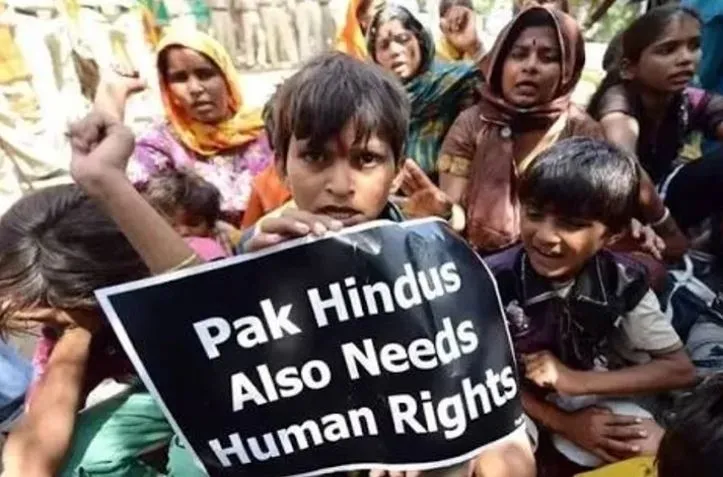
Synopsis
The recent report unveils the troubling dynamics of minority persecution in Pakistan. It argues that political rhetoric is manipulated to maintain ideological narratives that lead to regional instability. This stark contradiction between identity and reality raises significant concerns about the future of peace in the region.
Key Takeaways
Minorities in Pakistan face systemic persecution.
Hindus are often framed as 'the other' in political discourse.
Anti-India sentiment is politically exploited.
Historical sites and cultural heritage are under threat.
True peace requires dismantling ideological narratives.
Islamabad/New Delhi, Dec 17 (NationPress) A recent report highlights the persecution of minorities in Pakistan, notably how Hindus are consistently portrayed as the 'other'. This manipulation of Islam and anti-India sentiment for political advantage underscores the deep contradictions in the nation's identity.
The report asserts that true stability in the region can only emerge by addressing and dismantling these deeply rooted ideological narratives; otherwise, achieving peace will remain a challenge.
“Pakistan’s ongoing critique of India’s internal matters stems not from genuine concern for minorities but from an ideological stance that necessitates India as a civilizational enemy. This perspective, rooted in the Two-Nation Theory and bolstered by the military-clergy alliance, perpetuates radicalization, justifies proxy warfare, and consolidates elite control. While attempting to portray itself as the protector of Islam, Pakistan simultaneously stifles dissent, targets minorities, and erases non-Islamic cultural heritage,” detailed the International Centre for Peace Studies based in New Delhi.
“The anti-India narrative serves as a political instrument rather than a moral position. Achieving lasting regional stability necessitates confronting and dismantling these entrenched ideological frameworks that foster animosity,” it emphasized.
The report illustrates a vast disparity between Pakistan’s self-styled religious identity and the actual situation on the ground. While Islamabad accuses India of minority discrimination, its own treatment of minorities reveals ongoing persecution.
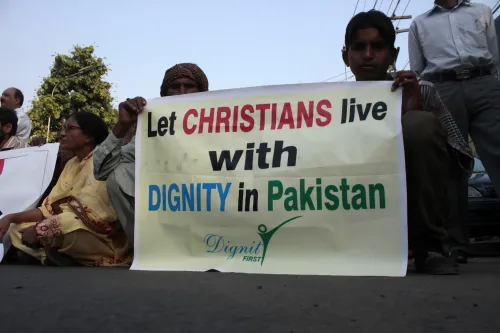
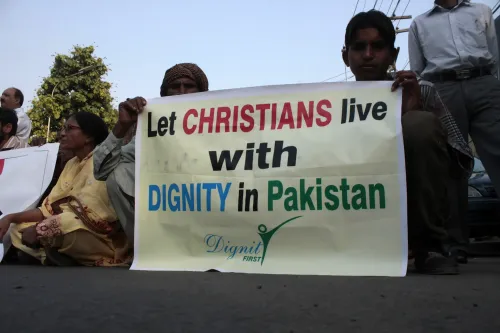
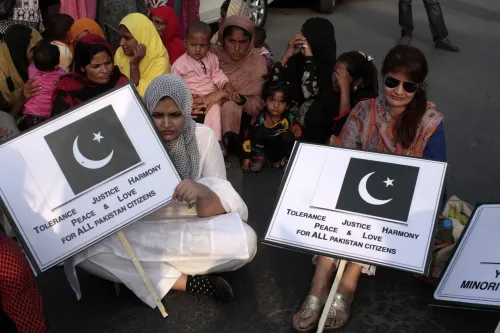
According to the Lahore-based Centre for Social Justice, there were 344 documented blasphemy cases in 2024. From 2021 to 2024, at least 421 minority women and girls—predominantly Hindus and Christians, with 71% being minors—faced forced conversion.
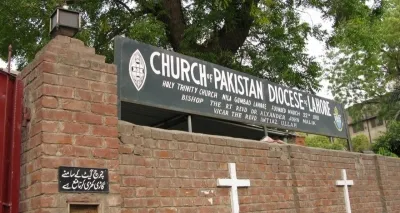
“In 2023, civil society organizations counted 193 assaults on minority properties, including homes, businesses, churches, temples, and Ahmadi mosques. The Human Rights Commission of Pakistan (2023/24) reported incidents of mob violence, desecrated Ahmadi graves, arbitrary arrests, and increasing insecurity for minority communities. The destruction of Hindu heritage starkly reveals this hypocrisy,” the report noted.
“In July 2023, two temples in Sindh were desecrated within just 24 hours—the 150-year-old Mari Mata Temple in Karachi was demolished, and another small temple used by the Bagri community in Kashmore was targeted with rocket launchers. In 2021, a century-old temple in Teri, Khyber Pakhtunkhwa, was set ablaze by a mob. A Supreme Court commission in 2021 confirmed widespread neglect and encroachment on historic Hindu sites such as Katas Raj Mandir and Prahlad Mandir,” it highlighted.
Emphasizing that of the 428 Hindu temples that existed in 1947, fewer than two dozen are still functioning today, the report concludes that Pakistan’s claims of protecting minorities ring hollow amid the violence, fear, and systematic cultural erasure they experience.
Point of View
It is crucial to recognize the weight of these findings. The persistent persecution of minorities in Pakistan cannot be overlooked, and the implications for regional stability are profound. We must advocate for transparency and accountability to foster a more inclusive society.
NationPress
2 Oct 2026
Frequently Asked Questions
What are the main findings of the report?
The report highlights the persecution of minorities in Pakistan, particularly Hindus, and critiques the political manipulation of Islamic narratives and anti-India sentiments.
How has the situation for minorities in Pakistan changed over the years?
The report indicates a significant increase in cases of persecution, forced conversions, and attacks on minority properties, contributing to an environment of fear.
What is the Two-Nation Theory?
The Two-Nation Theory is an ideological framework that posits Muslims and Hindus as distinct nations, which has historically influenced Pakistan's national identity and political narratives.