Pakistan minority persecution: UN urged to act beyond rhetoric in 2026
Synopsis
Years of UN warnings have not shielded Pakistan's religious minorities from forced conversions, blasphemy-law abuse, and state-backed discrimination. With the VOPM and USCIRF both escalating their assessments in 2026, the central question is no longer whether the crisis is real — it is whether the international community has the political will to move from statements to consequences.
Key Takeaways
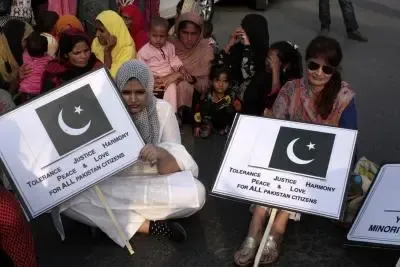
The UN and global rights bodies have been urged to move beyond rhetoric on Pakistan's persecution of religious minorities, as of June 2026 .
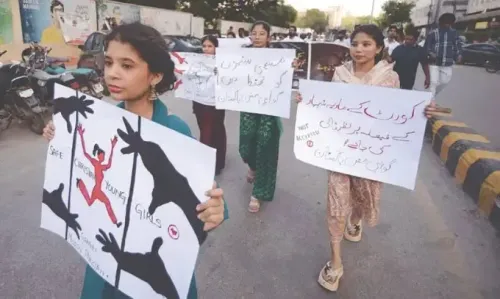
Forced conversions and marriages of Christian , Hindu , and Sikh girls — some as young as 13 — remain a documented concern flagged by the UN High Commissioner for Human Rights .
The Ahmadiyya community faces ongoing state-backed discrimination and social hostility in Pakistan.
The US Commission on International Religious Freedom (USCIRF) has maintained Pakistan's designation as a Country of Particular Concern (CPC) .
The Voice of Pakistan Minority (VOPM) described the situation as a 'glaring indictment of both national failure and global indifference.' The report calls on the Commonwealth of Nations , the UN, and other bodies to enforce accountability, warning that silence 'emboldens perpetrators.'
The United Nations and global human rights bodies must move decisively beyond cautious statements and hold Pakistan accountable for the systematic persecution of its religious minorities, according to a report published in Modern Tokyo Times. Despite years of warnings and formal recommendations, meaningful change in Pakistan remains elusive as of 2026, the report states.
Key Concerns Still Unresolved
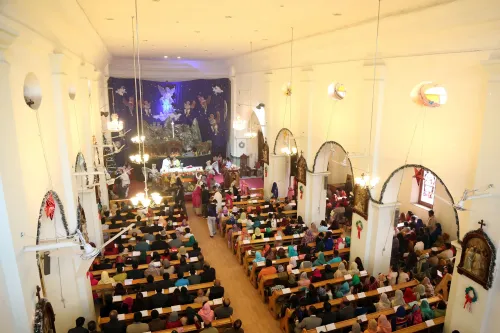
Among the most pressing issues documented is the forced conversion and marriage of Christian, Hindu, and Sikh girls and women. The Ahmadiyya community continues to face what the report describes as systematic religious discrimination backed by state structures. Christian churches and other non-Muslim places of worship have also been subjected to attacks across the country.
International bodies have for years criticised Pakistan over a range of human rights violations — including the sale and sexual exploitation of children, violence against women, misuse of blasphemy laws, and forms of modern slavery linked to bonded labour, the report noted. These concerns, first raised by UN experts several years ago following investigations into vulnerable communities in Pakistan, remain equally relevant in 2026.
What the UN Has Said
The UN High Commissioner for Human Rights had previously stated being 'deeply troubled' to learn that girls as young as 13 were being kidnapped from their families, trafficked far from home, forced to marry men sometimes twice their age, and compelled to convert to Islam — all in violation of international human rights law.
The UN has repeatedly urged Pakistan to legislate against forced conversions, forced and child marriages, kidnapping, and trafficking, and to uphold the rights of women and children. According to the report, those calls have not translated into enforceable protections on the ground.
Voices From Rights Organisations
Last month, the Voice of Pakistan Minority (VOPM) warned that escalating persecution of religious minorities in Pakistan is no longer a 'quiet crisis' but a 'glaring indictment of both national failure and global indifference.' The organisation noted that year after year, reports reflect the same pattern: 'targeted violence, systemic discrimination, and a justice system that too often turns away from those most in need of protection.'
Citing the latest findings from the US Commission on International Religious Freedom (USCIRF), the VOPM stated that the report reinforced a 'long-known reality' — that Pakistan remains a place 'where faith can become a fatal liability.' The organisation noted that Pakistan's continued designation as a Country of Particular Concern (CPC) is 'not merely bureaucratic language — but a reflection of lived fear, shattered families, and silenced voices.'
Forced Conversions: A Recurring Pattern
The VOPM highlighted what it described as a 'more disturbing pattern' of forced conversions and marriages involving Christian girls across Pakistan, some barely in their teens. 'These are not isolated incidents — they form a recurring narrative of abduction, coercion, and legal erasure,' the organisation stated. Families are frequently left with nothing more than an official declaration that their daughter now belongs to another faith and another household, it added.
What the International Community Must Do
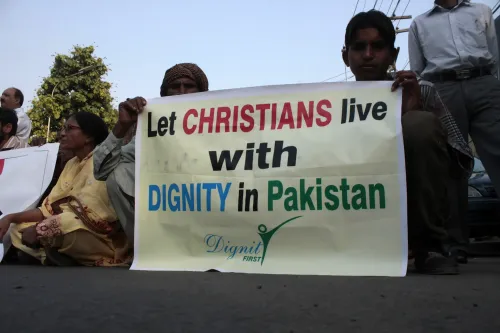
The Modern Tokyo Times report called on international organisations — including the Commonwealth of Nations, the UN, and global human rights bodies — to move beyond timidity and selective outrage, arguing that 'silence only emboldens those who perpetrate abuses.' It stated that Pakistan must guarantee equal protection under the law for all citizens regardless of religion, sect, ethnicity, gender, or sexuality, and that failure to do so 'should carry consequences, just as other nations that engage in systematic discrimination face international scrutiny and pressure.'
With Pakistan's CPC designation renewed and rights organisations escalating their warnings, pressure on multilateral bodies to convert statements into concrete action is expected to intensify through the remainder of 2026.
Point of View
Multi-decade failure. The UN has logged the same concerns for years: forced conversions, blasphemy-law abuse, Ahmadiyya persecution, bonded labour. That these findings repeat verbatim in 2026 signals institutional inertia, not a lack of information. The USCIRF's CPC designation carries symbolic weight but limited enforcement leverage, and the Commonwealth's silence on a member state's religious persecution is a credibility gap that grows harder to ignore. The real test is whether multilateral bodies are willing to attach material consequences — trade, diplomatic, or financial — to Pakistan's record, or whether 'concern' remains the ceiling of ambition.
NationPress
22 Sept 2026
Frequently Asked Questions
What is the state of religious minority persecution in Pakistan in 2026?
According to a report in Modern Tokyo Times and findings from the Voice of Pakistan Minority (VOPM), religious minorities in Pakistan continue to face forced conversions, blasphemy-law abuse, state-backed discrimination, and violence against places of worship in 2026. The situation is described as deteriorating despite years of international warnings.
Which communities are most affected by persecution in Pakistan?
Christian, Hindu, and Sikh women and girls are disproportionately affected by forced conversions and marriages. The Ahmadiyya community faces systematic state-backed religious discrimination. Muslim minority sects also face social hostility, according to the report.
What has the UN said about forced conversions in Pakistan?
The UN High Commissioner for Human Rights has stated being 'deeply troubled' that girls as young as 13 are being kidnapped, trafficked, forced into marriages with men sometimes twice their age, and compelled to convert to Islam. The UN has repeatedly urged Pakistan to legislate against these practices, but enforcement remains absent.
What is Pakistan's Country of Particular Concern (CPC) designation?
The Country of Particular Concern (CPC) designation is assigned by the US Commission on International Religious Freedom (USCIRF) to nations with severe violations of religious freedom. Pakistan has retained this designation, which the VOPM describes as reflecting 'lived fear, shattered families, and silenced voices' rather than mere bureaucratic classification.
What are rights groups demanding from the international community?
Rights groups and the Modern Tokyo Times report are calling on the UN, the Commonwealth of Nations, and global human rights bodies to move beyond statements and impose real consequences on Pakistan. They argue that silence and selective outrage embolden perpetrators and undermine the credibility of universal human rights commitments.