UN Experts Raise Alarm Over Forced Conversions of Minority Women in Pakistan
Synopsis
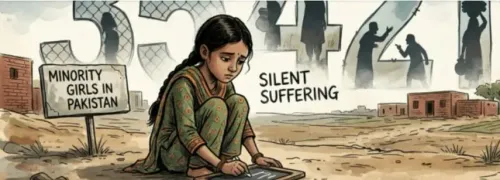
UN human rights experts have revealed that in 2025, 75% of forced conversion victims in Pakistan are Hindu and 80% of cases occur in Sindh — exposing a systemic pattern of religiously targeted abuse against minority women and girls that Pakistani authorities have consistently failed to prosecute.
Key Takeaways
The United Nations experts flagged systematic forced religious conversions and abductions of minority women and girls in Pakistan in an April 23, 2025 statement.
In 2025 , 75% of forced conversion victims in Pakistan are Hindu and 25% are Christian , according to UN findings.
Nearly 80% of all reported incidents occur in Sindh province , with girls aged 14 to 18 being the most targeted demographic.
UN experts accused Pakistani law enforcement of routinely dismissing complaints from victims' families and failing to prosecute perpetrators, enabling a climate of impunity.
The UN has demanded Pakistan raise the minimum marriage age to 18 , criminalise forced conversion as a standalone offence, and enforce human trafficking and sexual violence laws.
Experts warned that gender inequality, poverty, social exclusion , and religious intolerance are root causes that the Pakistani government has systematically failed to address.
Geneva, April 23: United Nations human rights experts have sounded a grave alarm over the systematic abduction, forced religious conversion, and coerced marriages targeting women and girls from minority communities in Pakistan, warning that an entrenched culture of impunity is enabling these violations to persist unchecked across the country. The experts issued their warning on April 23, 2025, calling on Islamabad to take urgent and concrete action.
Scale and Pattern of Forced Conversions in 2025
According to the UN experts, in 2025, approximately 75 per cent of women and girls subjected to forced conversion through marriage in Pakistan were Hindus, while the remaining 25 per cent were Christians. These figures paint a stark picture of religiously targeted persecution against non-Muslim communities.
Nearly 80 per cent of all reported incidents occurred in Sindh province, Pakistan's southern heartland, which has long been home to a significant Hindu minority population. Girls aged between 14 and 18 years were identified as the primary targets, though experts noted that some cases involved even younger victims — a deeply troubling indicator of child rights violations running in parallel.
Systemic Discrimination and Climate of Impunity
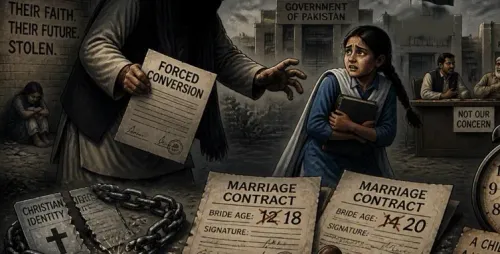
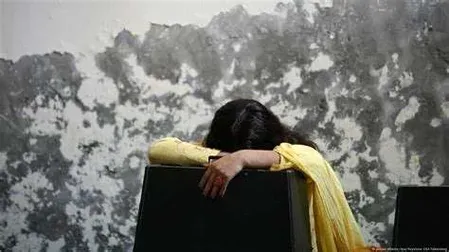
The UN experts described the scale and persistence of these abuses as evidence of systemic discrimination against non-Muslim women and girls across Pakistan. They noted that victims are coerced into converting to Islam to marry Muslim men, often under conditions of physical and sexual abuse, exploitation, and severe psychological trauma.
"These women and girls endure a continuous sense of terror, face coercion and are deprived of their freedom of religion or belief and autonomy under patriarchal and political pressures. This must stop," the experts stated emphatically.
Women and girls from economically marginalised backgrounds face heightened vulnerability, the experts noted, as poverty and social exclusion compound the risks they already face as religious minorities. The resulting trauma — including social stigma, displacement, and loss of identity — has long-lasting consequences for survivors and their families.
Critically, the experts flagged that law enforcement authorities frequently dismiss complaints filed by victims' families, fail to investigate or prosecute cases in a timely manner, and often neglect to properly verify the age of victims — effectively shielding perpetrators from accountability.
Key Demands Placed Before Pakistani Authorities
The UN experts issued a set of firm recommendations to the Government of Pakistan, urging immediate legislative and enforcement action. These include:
- Raising the minimum age of marriage to 18 across all provinces and territories without exception.
- Criminalising forced religious conversion as a distinct and standalone criminal offence under Pakistani law.
- Strictly enforcing existing laws on human trafficking and sexual violence.
- Ensuring prompt, impartial, and effective investigation into all allegations, in line with recommendations from UN treaty bodies.
- Providing comprehensive, gender-responsive support services for survivors, including safe shelters, legal aid, psychological counselling, and reintegration programmes.
The experts also called for child-centric protection mechanisms, recognising that a significant proportion of victims are minors who require specialised care and legal protection beyond what standard adult survivor frameworks provide.
Root Causes: What Pakistan Has Failed to Address
The UN experts were unsparing in their assessment of the Pakistani government's failure to tackle the structural drivers of this crisis. They cited gender inequality rooted in patriarchal norms, poverty, social exclusion, discrimination against religious minorities, religious intolerance, and rampant impunity as the core root causes that have gone unaddressed.
"Any change of religion or belief must be genuinely free from coercion, and marriage must be based on full and free consent, which is not legally possible when the victim is a child," the experts stated, reaffirming the foundational principles of international human rights law.
This condemnation comes amid a broader pattern of international concern over Pakistan's treatment of religious minorities, including Hindus, Christians, Ahmadis, and Sikhs. Human Rights Watch, Amnesty International, and multiple UN Special Rapporteurs have repeatedly flagged Pakistan's failure to protect minority communities, particularly women and girls, from religiously motivated violence and coercion.
Broader Implications and What Comes Next
The statement from UN experts carries significant diplomatic weight. Pakistan, which regularly faces scrutiny during its Universal Periodic Review (UPR) at the UN Human Rights Council, will now face renewed pressure to demonstrate legislative and enforcement progress on minority rights.
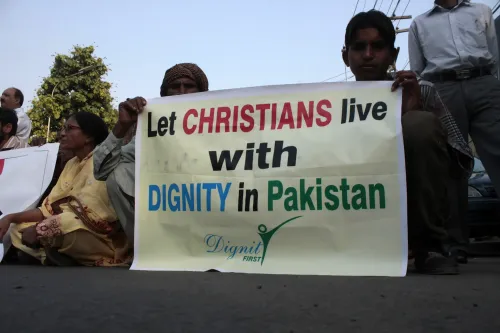
For the Hindu and Christian minority communities in Sindh and across Pakistan, this international spotlight offers a rare moment of visibility — but advocates warn that without binding legal reforms and genuine political will from Islamabad, the pattern of abductions and forced conversions is likely to continue. "Freedom of religion or belief and equality must be ensured for all without discrimination," the experts concluded, in a message directed squarely at Pakistan's political and judicial establishment.
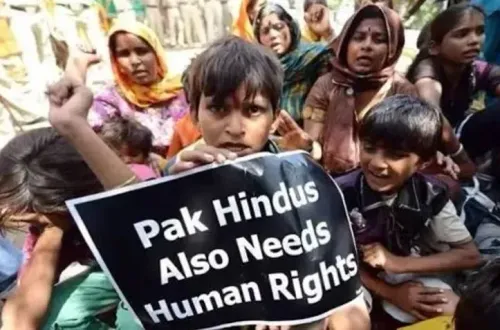
The international community, including India, which has consistently raised the issue of persecution of Pakistani Hindus at multilateral forums, is expected to cite this UN statement in upcoming diplomatic engagements. Civil society organisations are also likely to push for these findings to be referenced in Pakistan's next UPR cycle.
Point of View
80% in Sindh, girls as young as 14. Yet Pakistan's response has followed a familiar script — legislative inaction, law enforcement complicity, and diplomatic deflection. The deeper irony is that Pakistan positions itself as a champion of Muslim rights globally, even as it systematically fails to protect the religious freedom of its own non-Muslim citizens. India, which has long raised this issue at multilateral forums, now has powerful UN-endorsed ammunition — but the real test is whether international pressure can translate into ground-level accountability in Karachi and Hyderabad.
NationPress
19 Sept 2026
Frequently Asked Questions
What did UN experts say about forced conversions in Pakistan in 2025?
UN experts expressed serious concern that forced religious conversions and abductions of minority women and girls are widespread and systemic in Pakistan. In 2025, they reported that 75% of victims are Hindu and 25% are Christian, with 80% of cases occurring in Sindh province.
Which communities are most affected by forced conversions in Pakistan?
Hindu and Christian women and girls are the primary victims of forced religious conversions in Pakistan. Hindus account for approximately 75% of cases, while Christians make up the remaining 25%, according to UN experts.
Why is Sindh province highlighted in the UN report on Pakistan?
Sindh province accounts for nearly 80% of all forced conversion incidents in Pakistan, making it the epicentre of this human rights crisis. The region has a significant Hindu minority population that has historically faced religious persecution and social marginalisation.
What actions has the UN demanded from Pakistan to stop forced conversions?
The UN experts have urged Pakistan to raise the minimum marriage age to 18, criminalise forced religious conversion as a distinct offence, enforce anti-trafficking laws, and provide comprehensive support services including shelters and legal aid for survivors.
Has Pakistan taken any action to address forced conversions of minorities?
According to UN experts, Pakistan has not taken adequate measures to address the root causes of forced conversions, including gender inequality, poverty, and religious intolerance. Law enforcement agencies have frequently been criticised for dismissing victims' complaints and failing to prosecute perpetrators.