Pakistan blasphemy laws: Decade of minority persecution under scrutiny
Synopsis
A Brussels-based report in the European Times lays bare how Pakistan's blasphemy laws — not just extremist mobs — are the primary instrument of minority persecution. From a Hindu teacher jailed on a fabricated accusation to a Christian mechanic on death row since 2017, the cases reveal a legal framework that critics say is structurally weaponised against Christians, Hindus and Ahmadis.
Key Takeaways
A European Times report from Brussels documents how Pakistan's blasphemy laws have persecuted religious minorities — Christians , Hindus , and Ahmadis — over the past decade, with cases continuing into 2026 .
Hindu teacher Notan Lal was sentenced to life imprisonment in 2022 after a student reportedly fabricated a blasphemy accusation against him.
Christian mechanic Ashfaq Masih , imprisoned since 2017 , was sentenced to death in 2022 on blasphemy charges he maintains were motivated by personal disputes.
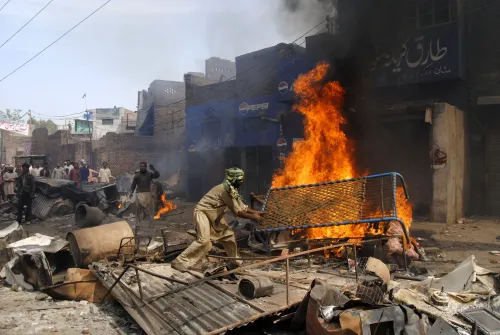
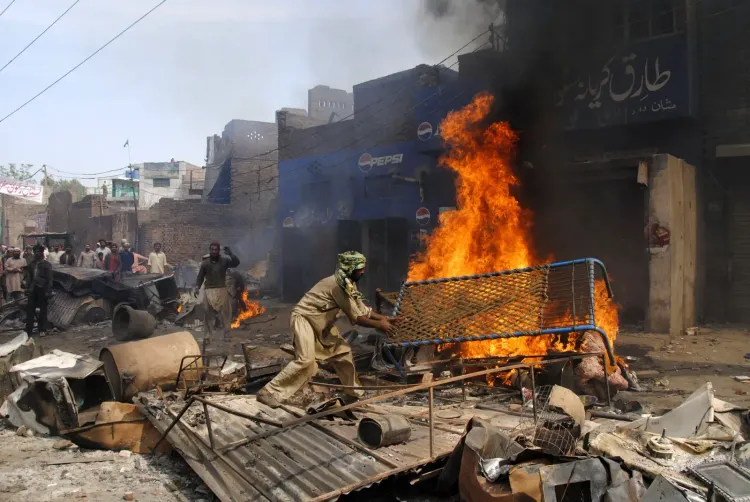
In February 2023 , a mob lynched a man at a police station in Nankana Sahib ; in August 2023 , hundreds attacked a Christian settlement in Jaranwala , burning churches and homes.
The report contrasts Pakistan's state-religion framework with India's secular Constitution, which guarantees freedom of conscience without designating an official religion.
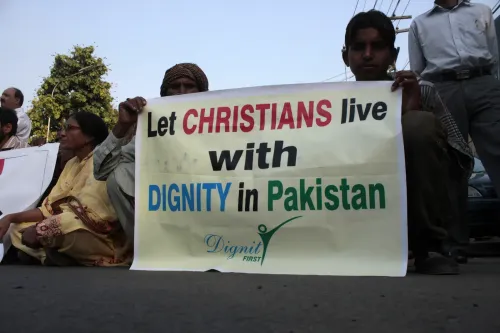
A detailed report published by the European Times has placed Pakistan's blasphemy laws under fresh international scrutiny, documenting how religious accusations backed by criminal statute have devastated the lives of Christians, Hindus, and Ahmadis across the country over the past decade, with cases continuing to emerge in 2026. According to the report, such accusations can originate as whispered allegations and escalate into imprisonment, death sentences, or mob violence outside family homes.
How the Legal Framework Enables Persecution
The report, assessed from Brussels, argues that the threat to religious minorities in Pakistan does not stem solely from non-state extremists — it is embedded in the country's own legal architecture. Pakistan's constitutional designation of Islam as the state religion coexists with criminal blasphemy provisions and explicit legislative restrictions targeting Ahmadis, effectively criminalising how that community identifies and practises its faith.
'Pakistan's legal framework itself contains provisions that criminalise religious expression and, in the case of Ahmadis, restrict how a community can identify and practise its faith,' the European Times report stated. It contrasted this with India's constitutional model, which describes the country as a secular democratic republic with no official state religion, and guarantees freedom of conscience and the right to profess, practise and propagate religion.
Cases That Illustrate the Human Cost
The report documented several cases that, it said, illustrate how blasphemy accusations are repeatedly weaponised to settle personal scores, property disputes and social hostilities. In 2022, Hindu teacher Notan Lal was sentenced to life imprisonment after a student accused him of insulting Prophet Muhammad. The student reportedly later admitted to fabricating the charge after being reprimanded by the teacher.
In a separate 2022 case, Christian bicycle mechanic Ashfaq Masih was sentenced to death on accusations of making blasphemous remarks. Masih, who had been imprisoned since 2017, maintained that personal and financial disputes motivated the accusation, according to the report.
Mob Violence Beyond the Courtroom
The consequences, the report emphasised, extend well beyond judicial proceedings. In February 2023, a mob stormed a police station in Nankana Sahib and lynched a man detained on blasphemy allegations. In August 2023, hundreds of people attacked a Christian settlement in Jaranwala after two Christians were accused of desecrating the Quran — churches, homes and a cemetery were reportedly vandalised or set ablaze.
'The consequences extend beyond courtrooms,' the report stated, describing the violence as part of a broader pattern of communal escalation triggered by blasphemy accusations across Pakistan.
India–Pakistan Constitutional Contrast
The European Times report drew a pointed comparison between the two neighbouring nations' legal frameworks. It noted that India's Constitution does not make adherence to any single religion a prerequisite for citizenship, and places religious freedom within a secular legal order in which no faith is designated as the religion of the state.
'That difference matters most when faith becomes contested. In Pakistan, the blasphemy framework can place the criminal law directly at the centre of a religious accusation, while in India, the constitutional model places religious freedom within a secular legal order in which no faith is designated as the religion of the State,' the report concluded.
International and Human Rights Implications
The report's release from Brussels adds to a growing body of international documentation on Pakistan's blasphemy framework. Human rights observers have long argued that the laws — particularly Sections 295-B and 295-C of the Pakistan Penal Code — carry a structural bias that leaves religious minorities acutely vulnerable to false accusations with life-altering consequences. The cases of Notan Lal and Ashfaq Masih are among dozens that critics say demonstrate the laws' susceptibility to misuse. With cases continuing to surface in 2026, pressure on Islamabad from international bodies is unlikely to ease.
Point of View
Trial and death sentence before any mob even gathers, the framework itself is the threat. The cases of Notan Lal and Ashfaq Masih are not outliers; they are the system working as written. International scrutiny from Brussels adds diplomatic weight, but without domestic reform of Sections 295-B and 295-C, the cycle of accusation, imprisonment and mob violence is unlikely to break. The India comparison in the report is pointed — and will inevitably be read through a geopolitical lens — but the core human rights argument stands independent of it.
NationPress
10 Oct 2026
Frequently Asked Questions
What are Pakistan's blasphemy laws and why are they controversial?
Pakistan's blasphemy laws — primarily Sections 295-B and 295-C of the Pakistan Penal Code — criminalise insults to Islam and its Prophet, carrying penalties up to death. They are controversial because, according to human rights reports, they are frequently misused to settle personal disputes, target religious minorities, and trigger mob violence, with accusation alone often sufficient to cause arrest and social harm.
Who are the minority communities most affected by Pakistan's blasphemy laws?
Christians, Hindus and Ahmadis are the communities most documented as victims of blasphemy accusations in Pakistan. The European Times report notes that Ahmadis face the additional burden of laws that explicitly restrict how they identify and practise their faith, making their legal vulnerability unique even within the broader minority context.
What happened to Hindu teacher Notan Lal and Christian mechanic Ashfaq Masih?
Hindu teacher Notan Lal was sentenced to life imprisonment in 2022 after a student accused him of insulting Prophet Muhammad — a charge the student reportedly later admitted was fabricated after being reprimanded. Christian mechanic Ashfaq Masih was sentenced to death in 2022 on blasphemy charges; imprisoned since 2017, he has maintained the accusation was driven by personal and financial disputes.
What mob violence has followed blasphemy accusations in Pakistan?
In February 2023, a mob stormed a police station in Nankana Sahib and lynched a man detained on blasphemy allegations. In August 2023, hundreds attacked a Christian settlement in Jaranwala after two Christians were accused of desecrating the Quran, vandalising or burning churches, homes and a cemetery, according to the European Times report.
How does India's constitutional framework differ from Pakistan's on religious freedom?
India's Constitution describes the country as a secular democratic republic with no official state religion, guaranteeing freedom of conscience and the right to profess, practise and propagate religion. Pakistan, by contrast, designates Islam as the state religion and maintains criminal blasphemy provisions alongside explicit legal restrictions on the Ahmadi community — a structural difference the European Times report argues places Pakistani minorities in a fundamentally more precarious legal position.