Should the US Address Pakistan's Blasphemy Law Abuses?
Synopsis
The USCIRF is urging the US to take action against Pakistan's blasphemy laws, which have been linked to violence against minorities. As criticisms mount, the call for reform has never been more pressing. Will the US respond to this plea?
Key Takeaways
USCIRF calls for the repeal of Pakistan's blasphemy law.
The law fuels violence against religious minorities .
Incidents of mob violence and wrongful imprisonment are on the rise.
The TLP has been a significant contributor to this violence.
International pressure may be required for reform.
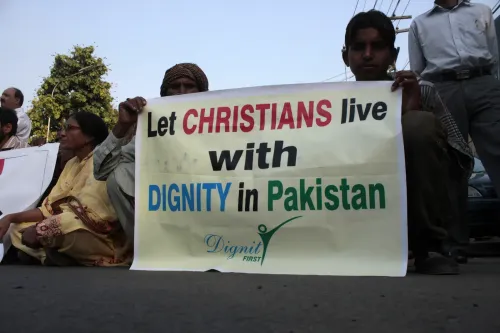
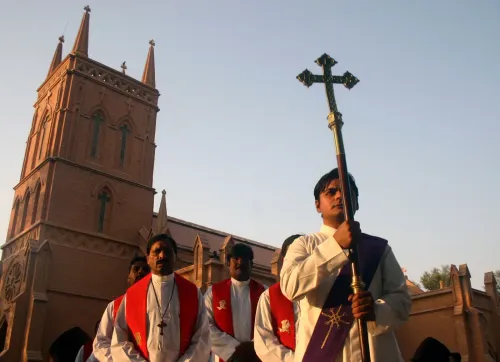
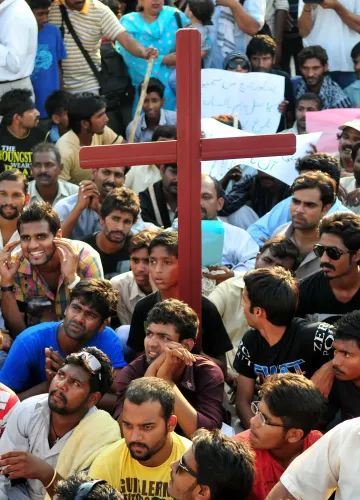
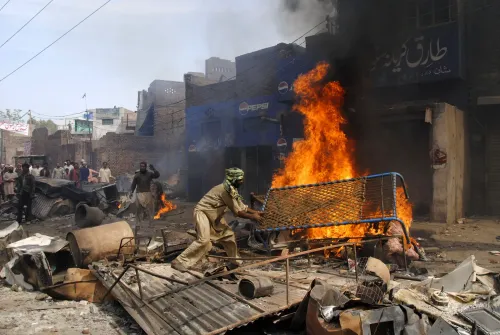
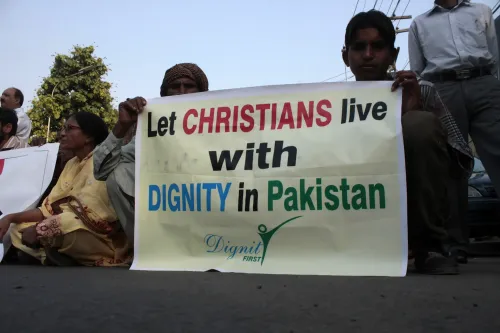
Washington, Dec 3 (NationPress) The U.S. Commission on International Religious Freedom (USCIRF) has called on the Trump Administration to collaborate with Pakistan to either amend or abolish its blasphemy law. The commission warns that this law plays a significant role in fostering mob violence, wrongful imprisonment, and escalating threats to Christians, Ahmadiyya Muslims, and other religious minorities.
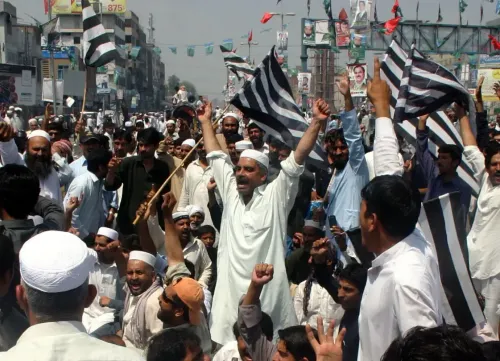
This renewed appeal comes after Pakistan's recent prohibition of the Tehreek-e-Labbaik Pakistan (TLP), a radical group infamous for inciting violent crowds under the pretext of defending blasphemy laws.
The USCIRF stated that the TLP has “stirred violent mobs to intimidate and attack religious minorities, even advocating for the death penalty for those who breach blasphemy laws.”
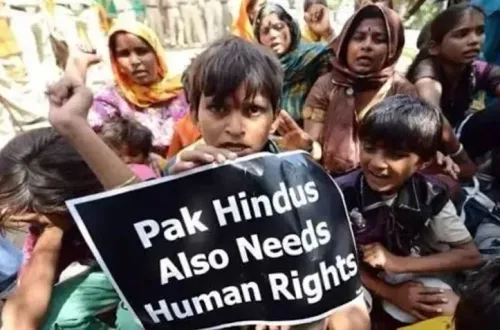
The commission highlighted that these activities have long jeopardized Pakistan's non-Muslim communities and Ahmadis, who are legally barred from identifying as Muslims within the nation. Such mobilization has cultivated an environment where often unverified accusations can ignite neighborhood riots or targeted killings.
“Holding accountable those responsible for violating religious freedoms is a fundamental aspect of Freedom of Religion or Belief (FoRB),” stated USCIRF Vice Chair Asif Mahmood. “Using violence or incitement against religious minorities is never a valid route for political or civic engagement. Individuals masquerading as political party members or activists must face consequences for calling for violence.”
In addition to the legal repercussions associated with blasphemy accusations, the USCIRF underscored the severe social ramifications of a system where allegations are frequently utilized as weapons. It noted that Pakistani citizens have employed blasphemy accusations “to resolve personal disputes,” often resulting in “extrajudicial killings and mob violence that disproportionately affect religious minorities.”
The commission has urged Washington to explore a binding agreement with Islamabad under the International Religious Freedom Act (IRFA), advocating for specific corrective actions. These actions include the release of individuals imprisoned for blasphemy, curtailing abuses linked to vigilante groups, and ultimately repealing the nation’s blasphemy laws.
“Currently, those charged with blasphemy often endure lengthy sentences on death row or in solitary confinement,” remarked Commissioner Meir Soloveichik. “We implore the Trump Administration to engage with Pakistani authorities to facilitate the release of those accused of blasphemy and to hold accountable those who partake in vigilante violence.”
The USCIRF’s 2025 Annual Report recommended that the U.S. State Department redesignate Pakistan as a Country of Particular Concern (CPC) due to its “systematic, ongoing, and egregious” violations of religious freedom. This designation places a country among the most severe violators worldwide and may trigger diplomatic or economic pressure mechanisms.
The commission also referenced a comprehensive country update released in September, which noted “increasing assaults on religious minorities” and a deteriorating climate for communities that already encounter structural discrimination and political marginalization.
Pakistan’s blasphemy law—especially Section 295-C, which carries a death penalty—has faced ongoing condemnation from global rights advocates for many years. Although Pakistan has yet to execute the provision, numerous accused individuals remain on death row. Many others have suffered assaults or been killed by mobs prior to their cases reaching the judiciary.
Point of View
It is vital to highlight the implications of Pakistan's blasphemy laws on its religious minorities. The USCIRF's call to action serves as a crucial reminder of the ongoing struggles faced by these communities and the role of international pressure in addressing such violations.
NationPress
3 Oct 2026
Frequently Asked Questions
What is the blasphemy law in Pakistan?
The blasphemy law in Pakistan, particularly Section 295-C, penalizes any derogatory remarks against the Prophet Muhammad with a death sentence, leading to significant misuse and social consequences.
What is the significance of the USCIRF's report?
The USCIRF's report highlights the severe violations of religious freedom in Pakistan and urges the U.S. government to hold Pakistan accountable, potentially affecting diplomatic relations.