Is Bangladesh Facing a Crisis with Defamation Laws?
Click to start listening
Synopsis
The Nagorik Coalition has raised urgent concerns regarding the misuse of defamation laws in Bangladesh, specifically targeting satire and social media creators. Voices of dissent are being suppressed, challenging the fundamental rights of freedom of expression and the democratic fabric of the nation. The call for action emphasizes the need for legal protections and accountability.
Key Takeaways
- Nagorik Coalition raises concerns over misuse of defamation laws.
- Legal actions against satire and social media creators threaten freedom of expression.
- Call for the government to implement protective measures.
- Criticism highlights the need for accountability and dialogue.
- Expatriate journalists voice concerns over suppression of free speech.
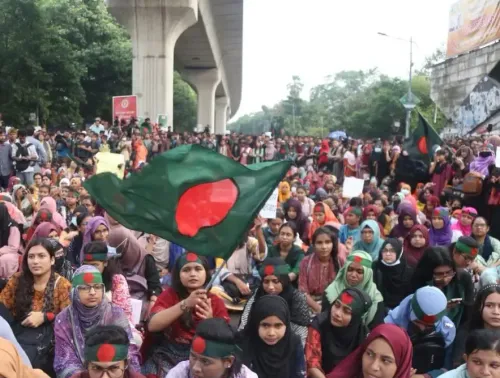
Dhaka, Dec 3 (NationPress) The civil society network in Bangladesh, known as Nagorik Coalition, has raised alarming concerns regarding the purported misapplication of defamation and harassment allegations aimed at satire platforms and social media influencers within the nation, according to local news sources.
In a statement released yesterday, the coalition highlighted that police had recently taken on various cases initiated by Abu Shadik Kayem, the Vice President of the Dhaka University Central Students' Union (DUCSU), which target Earki, a political satire platform, as well as meme sites, cartoonists, and individual content creators.
Criticizing the actions of the DUCSU Vice President, the coalition labeled these actions as “ill-considered, intolerant, and immature,” stressing that such measures tarnish not only the student organization but also the broader reputation of Dhaka University, as reported by the leading newspaper, The Daily Star.
“These allegations represent a direct challenge to freedom of expression and breach the essential rights guaranteed by the Constitution,” the coalition stated.
It emphasized that no democratic society can categorize satire, cartoons, critiques, and opinions as criminal offenses unless they provoke violence.
“Utilizing the law to instill fear or quash dissent erodes civic dignity and the principles of democracy,” the statement further asserted.
The coalition contended that freedom of expression and the right to critique are fundamental pillars of any liberated society. They cautioned that the misuse of defamation laws jeopardizes accountability, hampers democratic dialogue, and places an excessive strain on the judiciary.
The coalition demanded the immediate retraction of what it termed as “harassing or excessively reactionary” legal actions and urged Bangladeshi authorities to ensure protective measures for content creators, students, and critics.
They also called on the interim government led by Muhammad Yunus to adopt a definitive stance on safeguarding free expression, fostering dialogue and civil remedies, and reinforcing constitutional commitments towards justice, transparency, and human rights.
Earlier in July, a collective of 88 expatriate journalists, writers, researchers, and rights activists voiced grave concerns regarding the “ongoing torture of journalists and suppression of free speech” in Bangladesh under the Yunus-led interim administration.
In a joint statement, this group claimed that since August 5, journalists in the nation have suffered unimaginable torture, noting that such occurrences have “frustrated and disheartened” them.
Point of View
It's vital to recognize the delicate balance between maintaining societal respect and upholding freedom of expression. The ongoing situation in Bangladesh highlights the urgent need for legal frameworks that protect against misuse while ensuring accountability. The nation's future hinges on fostering an environment where dialogue and criticism can flourish.
NationPress
03/12/2025
Frequently Asked Questions
What are the concerns raised by the Nagorik Coalition?
The Nagorik Coalition has raised concerns about the misuse of defamation laws against satire pages and social media creators, which they believe undermines freedom of expression.
Who is Abu Shadik Kayem?
Abu Shadik Kayem is the Vice President of the Dhaka University Central Students' Union (DUCSU) and has been involved in filing cases against political satire outlets.
What impact do these legal actions have on freedom of expression?
These legal actions are seen as a direct attack on freedom of expression, potentially violating fundamental rights guaranteed by the Constitution.
What does the coalition demand from the government?
The coalition demands the withdrawal of harassing legal actions and urges the government to implement safeguards for content creators and critics.
How have expatriate journalists reacted to this situation?
A group of 88 expatriate journalists and activists expressed deep concern over the ongoing torture of journalists and suppression of free speech in Bangladesh.