Are Religious Minorities in Pakistan Facing Forced Conversions and Arbitrary Detentions?
Synopsis
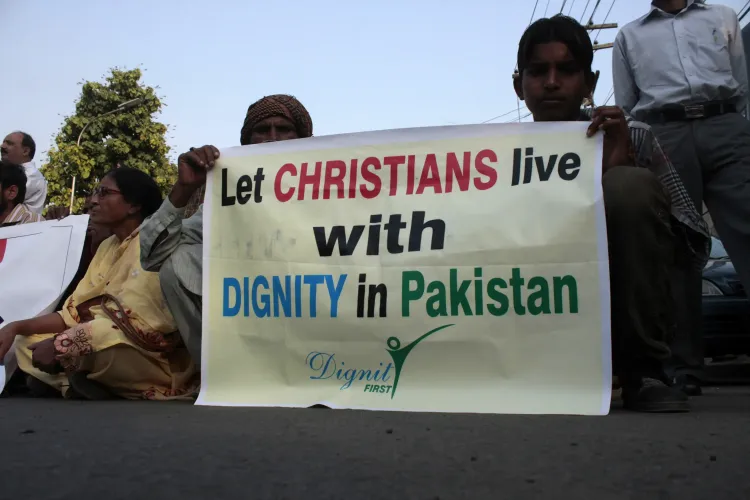
A recent report sheds light on the alarming plight of religious minorities in Pakistan, exposing systemic discrimination and ongoing violence against these communities. From forced conversions to arbitrary detentions, the situation is dire and requires urgent attention.
Key Takeaways
Religious minorities in Pakistan face systemic discrimination.
Numerous cases of forced conversions have been reported.
The culture of impunity allows for mob violence and targeted killings.
Only 37 out of 1,285 Hindu temples are functional.
International attention is needed to address these human rights violations.
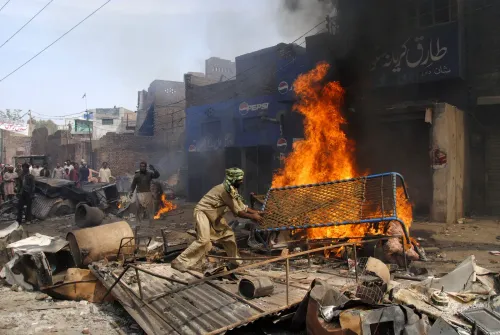
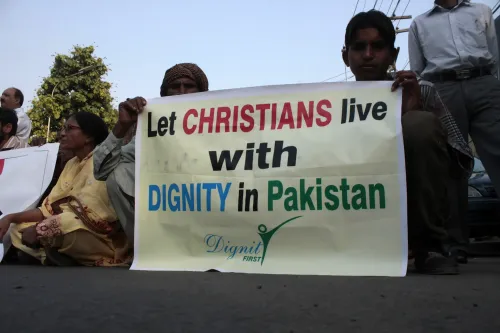
Colombo, Jan 7 (NationPress) Religious minorities in Pakistan are subjected to systematic discrimination and are often ensnared by false blasphemy accusations, mob violence, targeted killings, land appropriation, forced conversions, arbitrary detentions, and destruction of property, including their places of worship, according to a detailed report.
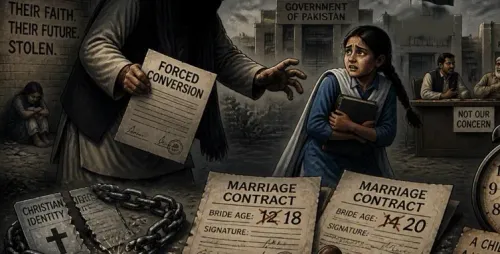
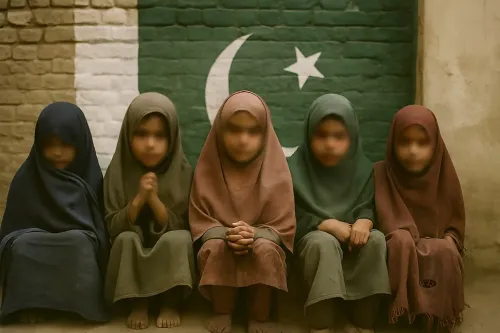
On December 26, 2025, a 15-year-old Hindu girl named Premi Bhil was abducted from the Sindh province, forcibly converted to Islam, and given the new name Kulsoom Sheikh. She was then married to a man over 30 years old who was already married. On December 6, 2025, armed men kidnapped a Hindu woman and her minor daughter from the Sher Shah area of Karachi, as reported by the Sri Lanka Guardian.
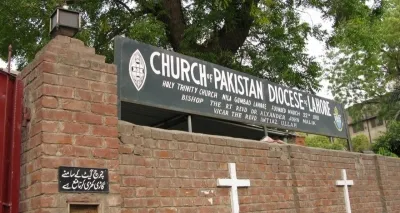
In a similar incident, on December 5, 2025, Pastor Kamran Salamat was shot dead by armed assailants in Punjab's Gujranwala. This marked the second targeted attack on Salamat, who had previously survived a shooting in September of the prior year.
On October 10, 2025, an Ahmadi place of worship, Bait-ul-Mehdi, was attacked during Friday prayers in Chinab Nagar, Punjab, injuring at least six worshippers. On August 8, 2025, a mob assaulted approximately 80 Christian families in Sahiwal, Punjab. Many victims subsequently faced accusations under the Anti-Terrorism Act and suffered police brutality.
A report from the US Commission on International Religious Freedom's Annual Report, 2025, highlighted that out of Pakistan's estimated population of 252 million, 96.5% identify as Muslim (85-90% Sunni and 10-15% Shia), leaving only 3.5% belonging to other religious communities such as Christians, Hindus, and Sikhs.
The report stated, "Religious minorities in Pakistan endure systemic discrimination and are victims of harassment, false blasphemy charges, physical assaults, lynchings, mob violence, targeted killings, land grabs, forced conversions, arbitrary detentions, and destruction of their properties, including places of worship and cemeteries."
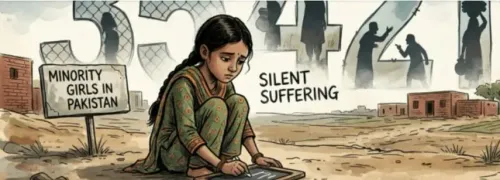
Between January 2021 and December 2024, 421 cases of abduction and forced conversion of minority girls and women were documented in Pakistan, as per the 'Human Rights Observer 2025' released by the UK's Centre for Social Justice (CSJ) in April of the previous year. Victims included 282 Hindu girls, 137 Christian girls, and 2 Sikh girls.
Numerous incidents of mob violence associated with blasphemy have occurred in Pakistan over the last decade, often resulting in the lynching of the accused. Notable incidents include the 2021 lynching of Priyantha Kumara Diyawadana, a Christian citizen of Sri Lanka, and the 2023 lynching of Muhammad Waris at a police station in Nankana. The lack of effective rule of law and the culture of impunity surrounding these lynchings foster a climate where such actions are perceived as normal.
The report further indicated, "Places of worship for minorities face neglect and destruction. A report presented to the Parliamentary Committee on the Minority Caucus revealed that out of 1,285 Hindu temples and 532 Sikh gurudwaras, only 37 remain functional, indicating a stark lack of active places of worship for minorities. Many temples and gurudwaras have been repurposed as schools, shops, restaurants, government offices, or private residences."
For instance, on April 12, 2024, a historic Hindu temple in the Landi Kotal Bazaar of Khyber Pakhtunkhwa Province was demolished to construct a commercial complex. Incidents of violence against places of worship are frequent; on January 3, 2020, a mob attacked Gurudwara Nankana Sahib, the birthplace of Guru Nanak and one of the holiest sites for Sikhs, threatening to destroy the site and rename it.
Point of View
It is imperative to acknowledge the alarming realities faced by religious minorities in Pakistan. The reported incidents of violence and discrimination reflect a broader issue of human rights violations that cannot be ignored. Our commitment to journalistic integrity compels us to report these injustices and advocate for the protection of all communities, ensuring that their voices are heard.
NationPress
2 Oct 2026
Frequently Asked Questions
What are the main issues faced by religious minorities in Pakistan?
Religious minorities in Pakistan face systemic discrimination, forced conversions, arbitrary detentions, mob violence, targeted killings, and destruction of property, including places of worship.
How many cases of forced conversion have been reported?
Between January 2021 and December 2024, there were 421 documented cases of abduction and forced conversion among minority girls and women in Pakistan.
What is the percentage of Muslims versus other religions in Pakistan?
Approximately 96.5% of Pakistan's population identifies as Muslim, while only 3.5% belong to other religious communities, such as Christians, Hindus, and Sikhs.
What is the response of the international community?
The international community has expressed concern over the treatment of religious minorities in Pakistan, urging for protective measures and greater accountability for human rights violations.
What can be done to help religious minorities in Pakistan?
Increased awareness, advocacy for human rights, and international pressure on the Pakistani government to uphold the rights of religious minorities are crucial steps towards change.