Is India Rejecting China's Infrastructural Changes in Shaksgam Valley?
Synopsis
India has firmly dismissed China's infrastructural projects in the Shaksgam Valley, reiterating its stance on the controversial 1963 agreement. With tensions rising, officials emphasize the importance of safeguarding national interests against any alterations to ground reality. This article delves into India's historical context and the ongoing geopolitical dynamics.
Key Takeaways
India rejects the legitimacy of the 1963 boundary agreement.
Shaksgam Valley is viewed as integral to India’s territorial claims.
India will take necessary actions to safeguard its interests.
Geopolitical dynamics between India, Pakistan, and China are complex and longstanding.
Recent developments highlight the need for strategic foresight in Indian diplomacy.
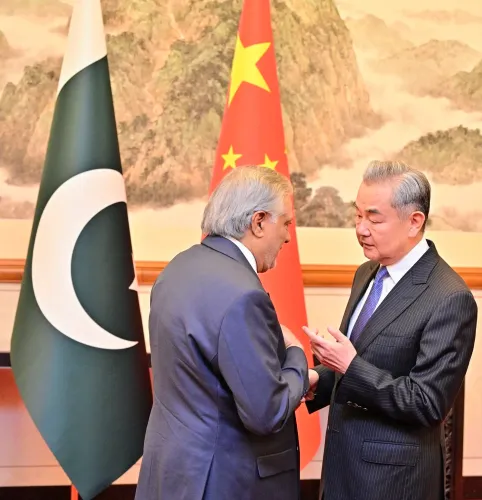
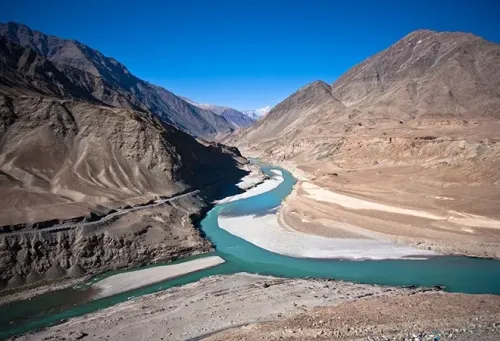
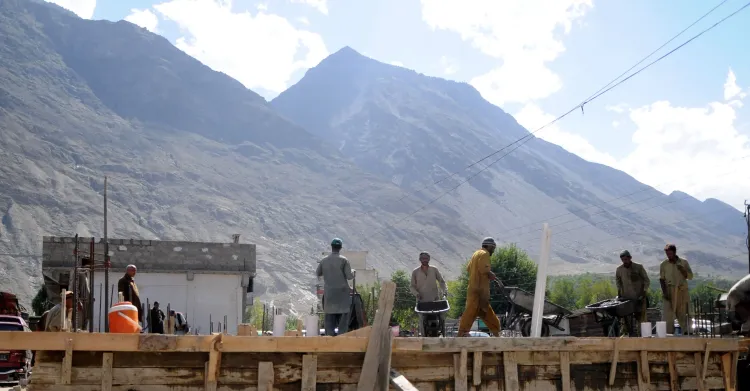
On January 9 (NationPress), India firmly dismissed the Chinese infrastructure development in the Shaksgam Valley within Pakistan-occupied Kashmir (PoK) that derives from the controversial China-Pakistan Boundary Agreement of 1963. The Indian government reiterated its intention to implement necessary measures to protect its interests in the region.
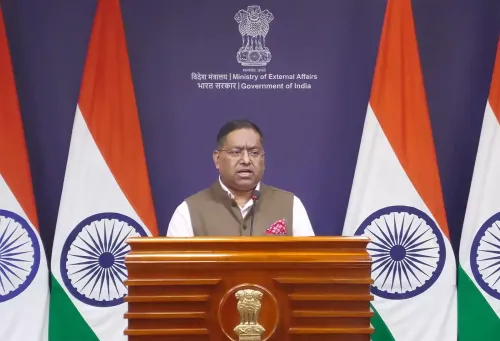
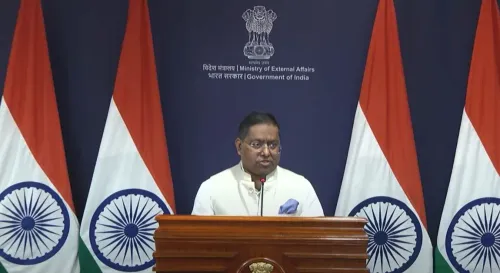
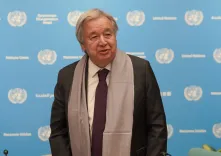
During a press conference in New Delhi, the spokesperson for the Ministry of External Affairs (MEA), Randhir Jaiswal, emphasized that India has never recognized the disputed China-Pakistan Boundary Agreement of 1963, under which Pakistan unlawfully attempted to transfer the territory to China.
“Concerning the Chinese infrastructure expansion via the CPEC and in the Shaksgam Valley, which we consider Indian territory, we have consistently maintained that this agreement is both illegal and invalid. We also do not acknowledge the China-Pakistan Economic Corridor (CPEC), which runs through Indian territory that is forcibly occupied by Pakistan,” Jaiswal stated.
In a broader context, External Affairs Minister Jaishankar remarked in July 2025 that the military, economic, and diplomatic alignment between Islamabad and Beijing has been a long-standing reality that Indian diplomacy must address decisively, not merely a recent escalation.
Jaishankar's comments aimed to counter immediate Parliamentary critiques while outlining a historical perspective of geopolitical convergence between India’s primary adversaries—a convergence that he claimed predates the current government and necessitates thoughtful reflection beyond partisan divides.
“Whoever brought up the 'two-front threat' must have missed their history lessons,” Jaishankar quipped, tracing events from Pakistan's cession of the Shaksgam Valley to China in 1963, through significant milestones like nuclear cooperation initiated by Bhutto in 1976, to the transfer of Gwadar in 2013 and the subsequent launch of the CPEC.
“We are receiving warnings now,” he noted, “but this collaboration has been ongoing for 60 years.”
Point of View
It is clear that the country's commitment to territorial integrity remains steadfast. The historical context of the Shaksgam Valley emphasizes the importance of diplomatic engagement while ensuring national security. As a national editor, I believe it is crucial to navigate these complex geopolitical challenges with both vigilance and strategic foresight.
NationPress
19 Sept 2026
Frequently Asked Questions
What is the significance of the Shaksgam Valley?
The Shaksgam Valley is a strategically important area claimed by India but controlled by Pakistan, making it a focal point of territorial disputes and geopolitical tensions.
What was the China-Pakistan Boundary Agreement of 1963?
The China-Pakistan Boundary Agreement of 1963 was an agreement between Pakistan and China that India considers illegal, as it involved the cession of territory claimed by India.
How does India plan to respond to China's actions in the region?
India has stated it reserves the right to take necessary measures to protect its interests and territorial claims in response to Chinese infrastructure developments.