Sonowal pays tribute to Punjab Kesari Lala Lajpat Rai on Punya Tithi
Synopsis
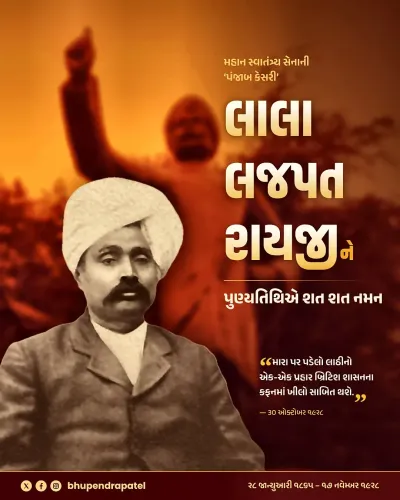
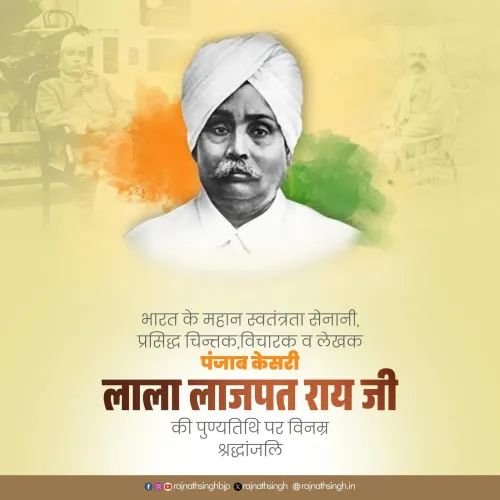
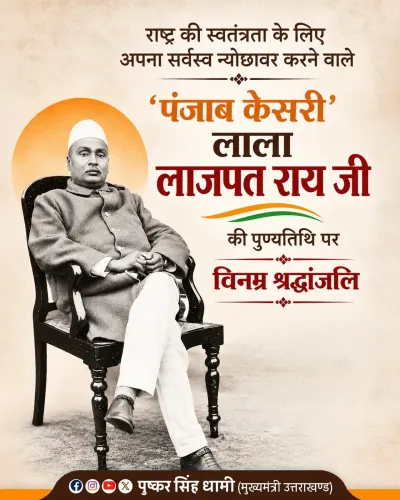
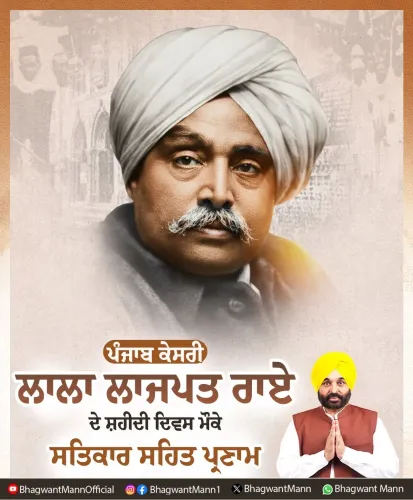
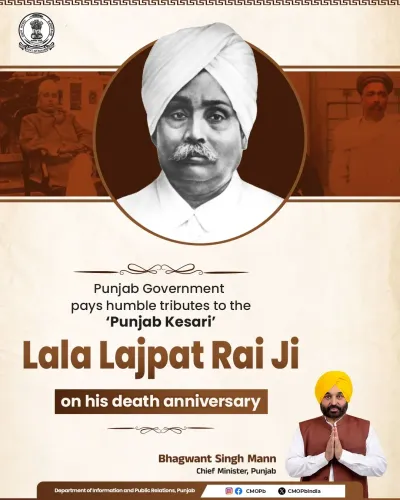
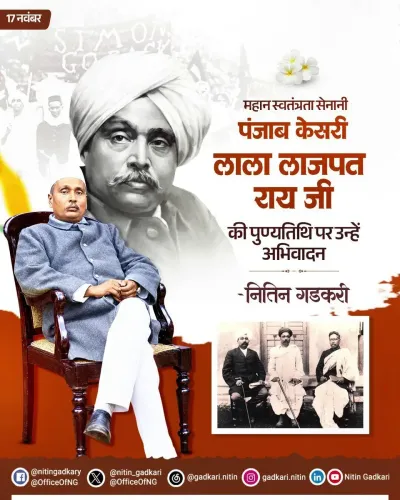
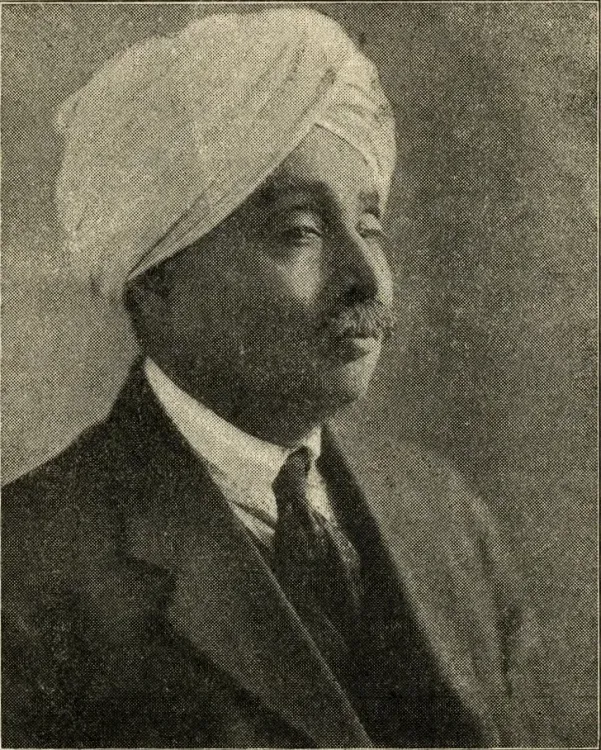
Union Minister Sarbananda Sonowal honoured Lala Lajpat Rai on his Punya Tithi, 17 November — the 98th anniversary of the Punjab Kesari's death from injuries sustained during the 1928 Simon Commission protests in Lahore.
Key Takeaways
Lala Lajpat Rai died on 17 November 1928 , from injuries sustained during a police lathi charge at a Simon Commission protest in Lahore .
Union Minister Sarbananda Sonowal paid tribute on the freedom fighter's Punya Tithi , calling his sacrifice an eternal inspiration for the nation.
Rai was known as Punjab Kesari (Lion of Punjab) and was a key figure in the Lal-Bal-Pal triumvirate that championed Swaraj .
He co-founded the Punjab National Bank in 1894 and served as president of the Indian National Congress in 1920 .
His death galvanised a generation of Indian revolutionaries, most notably Bhagat Singh .
Ninety-eight years after Lala Lajpat Rai gave his life for India's freedom, Union Ports and Shipping Minister Sarbananda Sonowal marked the freedom fighter's Punya Tithi (death anniversary) on Tuesday, 17 November 2026, saluting the man history remembers as Punjab Kesari — the Lion of Punjab.
Sonowal wrote: 'Remembering the great freedom fighter, Punjab Kesari Lala Lajpat Rai on his Punya Tithi. His courage, patriotism and supreme sacrifice for Maa Bharati will forever inspire generations to serve the nation.' The tribute anchors a figure who died on 17 November 1928 — not on a battlefield, but on a street in Lahore, from injuries inflicted by a police baton charge during protests against the Simon Commission.
The blow that shook a nation
When the all-British Simon Commission arrived in India in 1928 to review constitutional reforms, it was met with nationwide outrage over the exclusion of Indian voices. Lala Lajpat Rai led the protest march in Lahore on 30 October 1928. British police Superintendent James Scott ordered a lathi charge; Rai absorbed blows to his chest. 'Every blow struck on me is a nail in the coffin of the British Empire in India,' he declared. He died 17 days later on 17 November 1928, his words outlasting the empire he predicted.
His death ignited a chain reaction that would echo through the entire independence movement — most famously drawing a young Bhagat Singh into a path of radical resistance. The anger that followed Rai's death shaped a generation of revolutionaries who refused to wait.
A legacy stitched into the national fabric
Beyond the streets, Lala Lajpat Rai was a prolific writer, social reformer, and co-founder of the Punjab National Bank in 1894. He served as president of the Indian National Congress in 1920 and was a leading force in the Lal-Bal-Pal triumvirate — alongside Bal Gangadhar Tilak and Bipin Chandra Pal — that pushed for Swaraj (self-rule) decades before it arrived.
Indian political leaders, particularly from the BJP, routinely mark such anniversaries to highlight regional contributions to the freedom struggle and reinforce a shared national historical memory. Sonowal's post fits that pattern — but the man being remembered needs no embellishment. His story is simply that consequential.
On the anniversary of his death, the Lion of Punjab still roars.
Point of View
Pan-regional freedom-struggle lineage. Sonowal's tribute, on the exact death anniversary, signals deliberate calendar awareness rather than casual commemoration. The choice of Punjab Kesari is also notable: Rai bridges the moderate and radical wings of the freedom movement, making him a figure almost all political traditions can claim. That very universality makes such commemorations low-risk and high-dividend in terms of public resonance.
NationPress
17 Nov 2026
Frequently Asked Questions
When did Lala Lajpat Rai die and why?
Lala Lajpat Rai died on 17 November 1928 from injuries sustained during a police lathi charge in Lahore while he was leading protests against the British Simon Commission , which had no Indian members.
Why is Lala Lajpat Rai called Punjab Kesari?
Punjab Kesari , meaning 'Lion of Punjab', is a title given to Lala Lajpat Rai in honour of his fierce leadership, fearless opposition to British rule, and his central role in the freedom movement in the Punjab region.
What is the Lal-Bal-Pal triumvirate?
The Lal-Bal-Pal triumvirate refers to three leaders — Lala Lajpat Rai , Bal Gangadhar Tilak , and Bipin Chandra Pal — who championed aggressive Swaraj (self-rule) in the early 20th century and pushed the Indian National Congress toward a more assertive anti-colonial stance.
What did Sarbananda Sonowal say about Lala Lajpat Rai?
Union Minister Sarbananda Sonowal posted on X that Lala Lajpat Rai's 'courage, patriotism and supreme sacrifice for Maa Bharati will forever inspire generations to serve the nation,' marking his Punya Tithi on 17 November 2026 .
What was the Simon Commission and why did Indians protest it?
The Simon Commission was a 1927 British statutory committee sent to review India's constitution. Indians protested it because the commission had no Indian members , which was seen as a direct affront to Indian aspirations for self-governance.