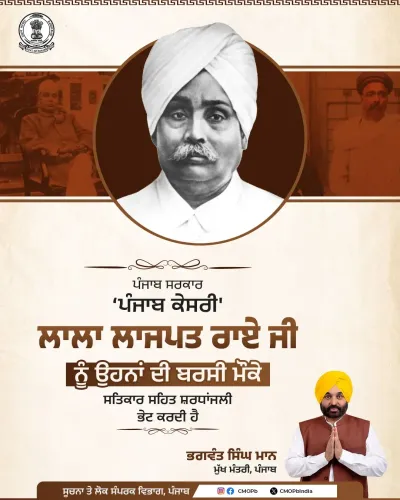
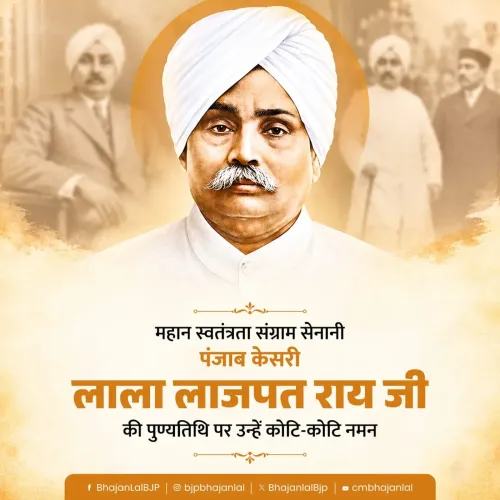
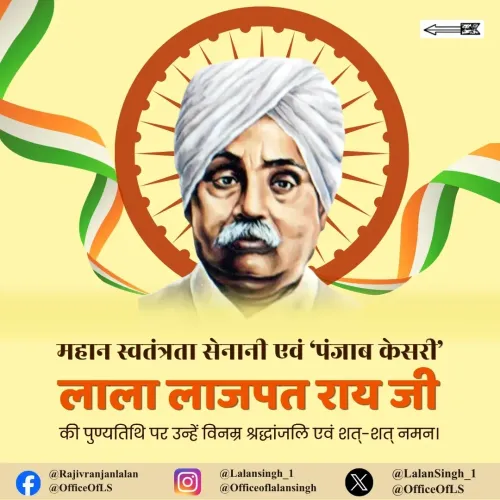
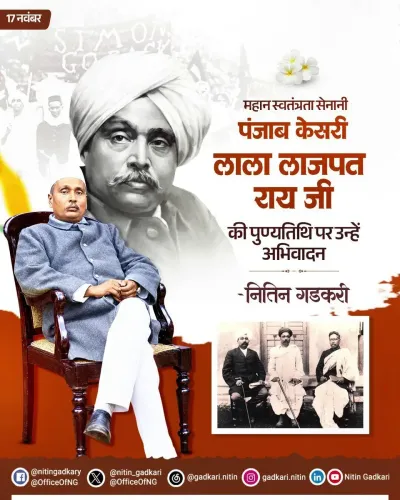
Rajnath Singh pays tribute to Lala Lajpat Rai on martyrdom anniversary
Synopsis
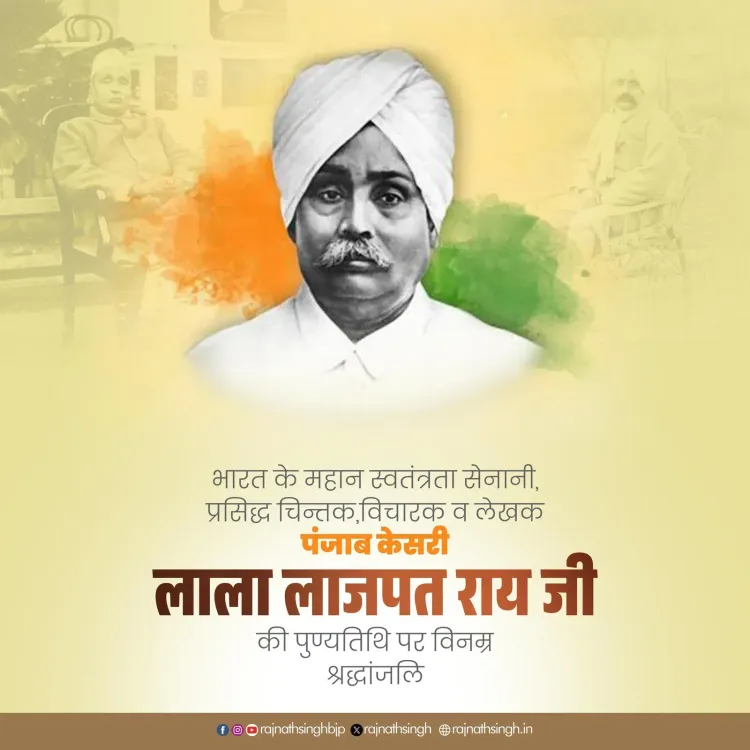
Union Defence Minister Rajnath Singh honoured Lala Lajpat Rai on his martyrdom day, 17 November, recalling the 'Punjab Kesari's' lifelong sacrifice for India's freedom, self-respect, and honour against British colonial rule.
Key Takeaways
Rajnath Singh posted a tribute to Lala Lajpat Rai on X on 17 November 2026 , the martyr's death anniversary.
Lala Lajpat Rai died on 17 November 1928 from injuries sustained in a lathi charge during protests against the Simon Commission in Lahore.
Singh praised Rai's 'indomitable courage, unshakeable patriotism, and supreme sacrifice' as a perpetual source of national inspiration.
Rai, known as Punjab Kesari (Lion of Punjab), was also the founder of Punjab National Bank and an international advocate for Indian independence.
His death in 1928 is widely credited with radicalising a new generation of freedom fighters, including Bhagat Singh .
Annual tributes to Rai on 17 November are observed across India's political spectrum, reflecting his status as a shared national icon.
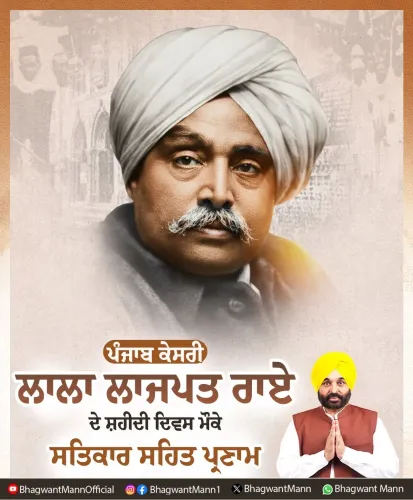
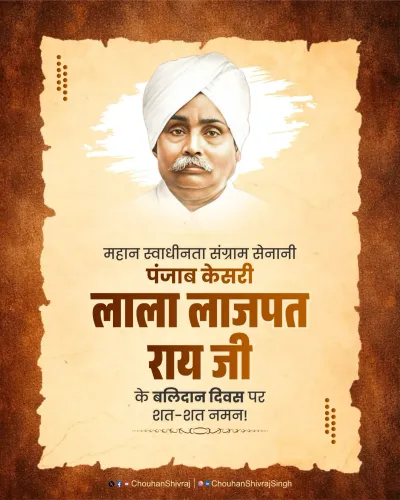
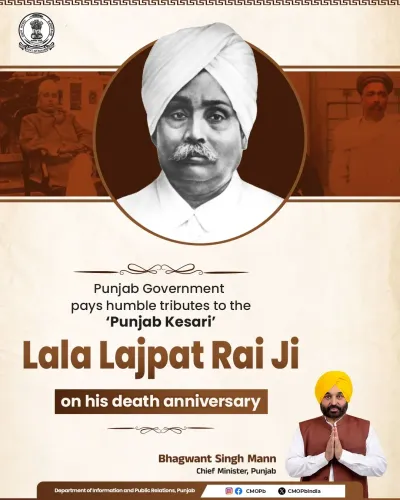
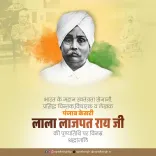
Nearly a century after a British police baton ended his life, Lala Lajpat Rai — the man Indians called Punjab Kesari, the Lion of Punjab — is remembered again on 17 November, the day he died in 1928 from injuries sustained in a lathi charge. Union Defence Minister Rajnath Singh marked the martyrdom anniversary with a heartfelt tribute on X, calling Rai's sacrifice an eternal source of inspiration for every Indian.
Singh wrote: 'Mahan swatantrata senani evam Punjab Kesari Lala Lajpat Rai ji ke balidan diwas par unhe vinamra shraddhanjali evam koti-koti naman' — offering humble homage and a crore-fold salutations to the great freedom fighter on his martyrdom day. He said Rai had dedicated his entire life to the nation's freedom, self-respect, and honour, and had fearlessly faced the brutality of British rule before making the ultimate sacrifice. 'His indomitable courage, unshakeable patriotism, and supreme sacrifice will forever inspire the people of this country,' Singh added.
The lathi charge that became a turning point
Lala Lajpat Rai was leading a non-violent protest march in Lahore on 30 October 1928 against the all-British Simon Commission, which had been formed to recommend constitutional reforms for India without a single Indian member on its panel. The colonial administration ordered a police crackdown, and Rai was struck repeatedly by batons. He died of his injuries on 17 November 1928, reportedly declaring beforehand that 'every blow struck at me is a nail in the coffin of the British Empire in India.' That declaration has echoed through Indian political memory ever since.
Rai's death galvanised the independence movement. It directly inspired revolutionaries — most famously Bhagat Singh and his associates — to avenge what they saw as the colonial state's murder of a beloved leader. The event sharpened the debate inside the freedom struggle about methods and urgency, and it remains one of the defining episodes of the late colonial period taught in Indian schools today.
A legacy etched across Punjab and beyond
Born in 1865 in what is now Haryana, Lala Lajpat Rai was not merely a protest leader. He founded the Punjab National Bank in 1894, wrote extensively on Indian nationalism and social reform, and was among the earliest Indian politicians to operate on an international stage — spending years in the United States lobbying for India's independence cause. The title Punjab Kesari (Lion of Punjab) was not bestowed by any government; it was earned through decades of unflinching confrontation with empire.
Tributes to Rai on 17 November are a fixture of Indian political life across party lines, reflecting the broad consensus that his sacrifice belongs to the nation rather than to any single ideological tradition. Singh's post this year follows that established pattern — but its language of 'self-respect' and 'supreme sacrifice' also resonates with the BJP's broader cultural emphasis on reclaiming the pride of the freedom struggle as a living inheritance.
Point of View
Particularly leaders who embody sacrifice against colonial power. The language of 'self-respect' and 'national honour' in his post aligns closely with the party's broader civilisational framing of Indian nationalism. At the same time, Lala Lajpat Rai commands reverence well beyond the BJP, making such tributes one of the rare moments of uncontested political consensus. The annual cycle of martyrdom remembrances also quietly reinforces a government's claim to moral continuity with the independence movement.
NationPress
17 Nov 2026
Frequently Asked Questions
Why is 17 November important for Lala Lajpat Rai?
17 November is the martyrdom anniversary of Lala Lajpat Rai, who died on this day in 1928 from injuries caused by a police lathi charge during protests against the Simon Commission in Lahore.
Who was Lala Lajpat Rai?
Lala Lajpat Rai (1865–1928) was a leading Indian independence activist known as 'Punjab Kesari' (Lion of Punjab). He was also a writer, social reformer, and co-founder of Punjab National Bank.
What was the Simon Commission and why did Indians protest it?
The Simon Commission was a 1927 British committee formed to review India's constitutional framework. Indians protested it because all seven of its members were British, with no Indian representation.
What did Rajnath Singh say about Lala Lajpat Rai?
Singh said Rai dedicated his entire life to India's freedom, self-respect, and honour, fearlessly faced British brutality, and made the supreme sacrifice — adding that his courage and patriotism would forever inspire Indians.
How did Lala Lajpat Rai's death affect the independence movement?
His death radicalised many young nationalists, most notably Bhagat Singh, who saw it as a state-sponsored killing and subsequently intensified revolutionary activities against British rule.