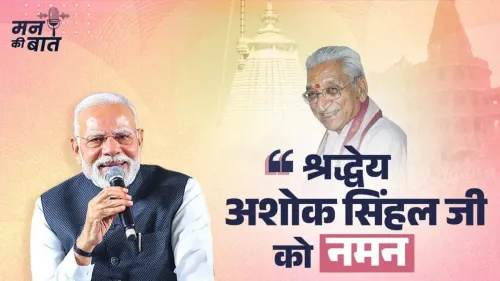
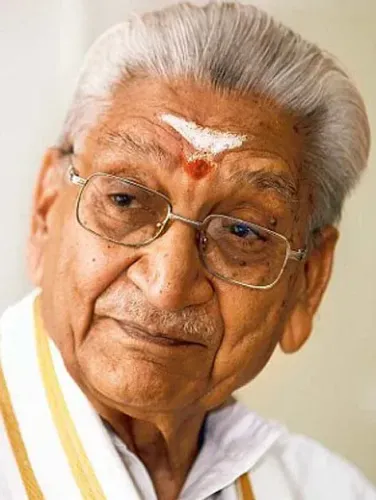
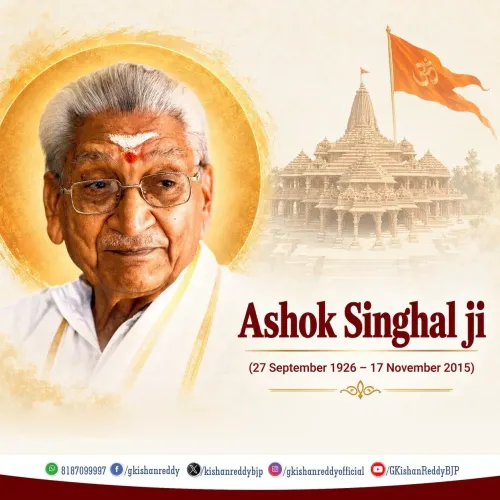
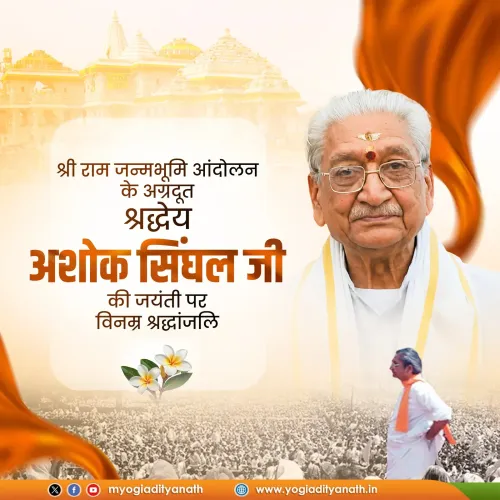
Rajnath Singh pays tribute to Ashok Singhal on death anniversary
Synopsis
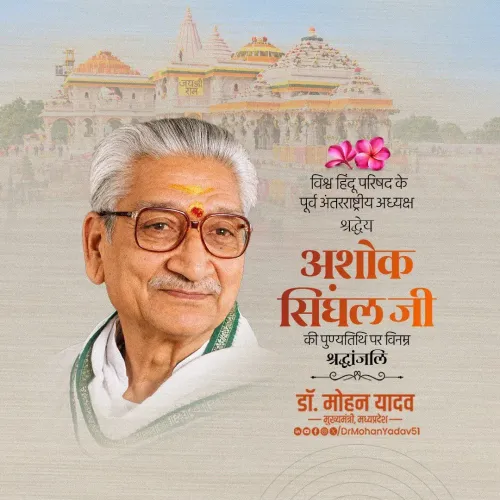
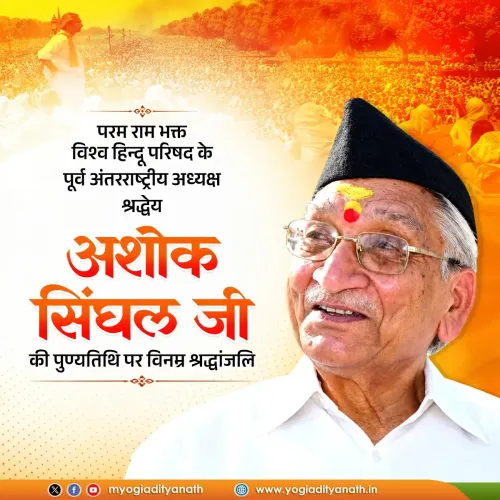
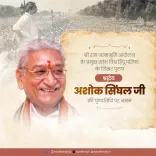
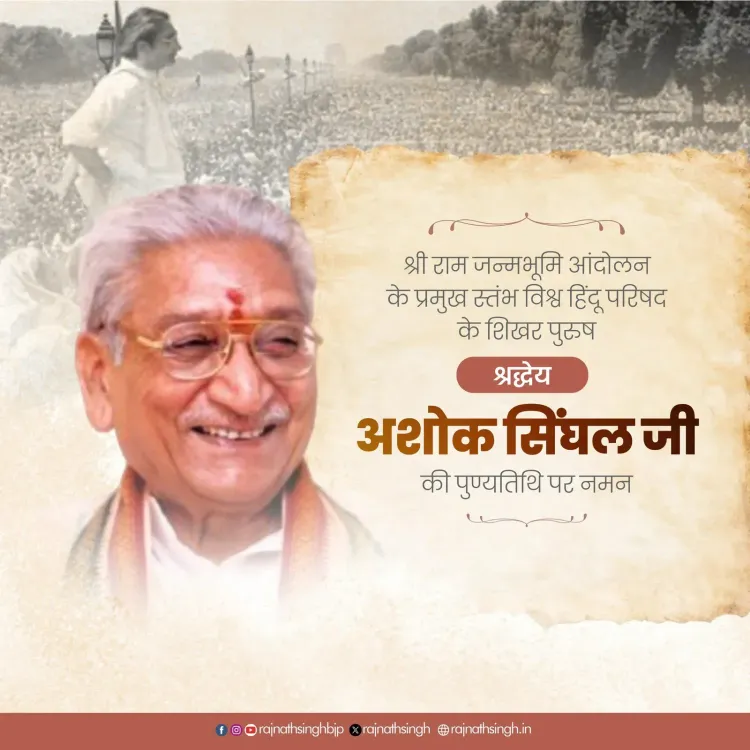
Union Defence Minister Rajnath Singh paid tribute to Ashok Singhal, former VHP international president, on his death anniversary, honouring his lifelong service to Indian culture and his central role in the Shri Ram Janmabhoomi movement.
Key Takeaways
Union Defence Minister Rajnath Singh paid tribute to Ashok Singhal on his death anniversary on November 17, 2026 .
Singhal served as the international president of the Vishva Hindu Parishad (VHP) , founded in 1964 .
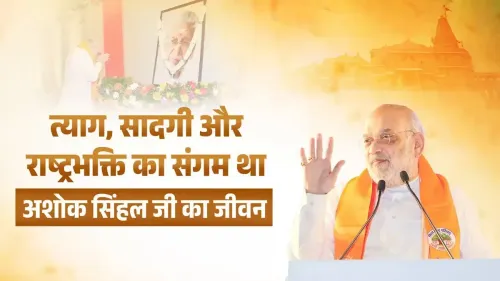
Singh credited Singhal with dedicating his life to enriching Indian culture and spreading its values.
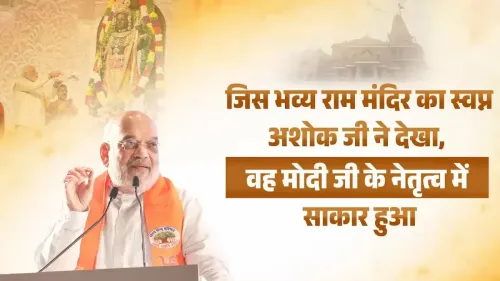
Singhal's role in the Shri Ram Janmabhoomi movement in Ayodhya was cited as a permanent part of Indian history.
Singh praised Singhal's patriotism, firm determination, and organisational skill .
A life devoted to culture, conviction, and a cause that reshaped modern India — Union Defence Minister Rajnath Singh on Tuesday, November 17, 2026, paid heartfelt tribute to Ashok Singhal, the former international president of the Vishva Hindu Parishad (VHP), on his death anniversary.
Writing in Hindi, Singh remembered Singhal as a figure who dedicated his entire life to enriching Indian culture and carrying its values to every corner of society. 'उन्होंने भारतीय संस्कृति को समृद्ध करने और उसके मूल्यों को जन-जन तक पहुँचाने के लिए अपना जीवन समर्पित किया' ('He dedicated his life to enriching Indian culture and spreading its values to every person'), Singh wrote.
Singhal's role in the Ram Janmabhoomi movement
At the centre of Singh's tribute was an acknowledgement of Singhal's defining political and religious legacy: his central role in the Shri Ram Janmabhoomi movement. The campaign, which gathered momentum through the 1980s and 1990s, sought the construction of a Ram temple at the site in Ayodhya believed to be the birthplace of Lord Rama. Singh declared that this contribution 'will always remain inscribed in Indian history.'
Singhal served as international president of the Vishva Hindu Parishad, the Hindu nationalist organisation founded in 1964 to promote Hindu cultural values globally. Under his leadership, the VHP became one of the most visible organisational forces behind the Ayodhya movement — a campaign that would go on to fundamentally alter the landscape of Indian politics and jurisprudence for decades.
A legacy of patriotism and organisational resolve
Singh described Singhal as a man known for patriotism, firm determination, and extraordinary organisational skill — qualities that defined his ability to mobilise mass sentiment around a cultural and religious cause at national scale. His ideas and ideals, Singh wrote, 'will continue to inspire coming generations to serve the nation and society.'
Such anniversary tributes by senior BJP leaders to figures associated with the Ram Janmabhoomi movement are a consistent feature of the party's commemorative calendar — a way of anchoring present governance to a longer ideological journey that the party considers foundational to contemporary India.
Point of View
Reinforcing the party's ideological lineage with the VHP-led campaign that preceded its rise to national dominance. For Rajnath Singh — who bridges the party's older Hindutva mobilisation era and its current governance identity — such tributes serve a dual function: honouring movement history while signalling continuity of values to the base. The specific invocation of Singhal's 'organisational skill' also reads as an implicit nod to the VHP's grassroots machinery, whose mass-mobilisation model the BJP itself studied and built upon.
NationPress
17 Nov 2026
Frequently Asked Questions
Who was Ashok Singhal?
Ashok Singhal was the former international president of the Vishva Hindu Parishad (VHP) and a central figure in the Shri Ram Janmabhoomi movement in Ayodhya, known for his role in mobilising mass support for the Ram temple cause.
What is the Vishva Hindu Parishad?
The Vishva Hindu Parishad (VHP) is a Hindu nationalist organisation founded in 1964 to promote and preserve Hindu cultural values in India and among the global Hindu diaspora.
What was Ashok Singhal's role in the Ram Janmabhoomi movement?
Ashok Singhal was one of the most prominent leaders of the Shri Ram Janmabhoomi movement, the campaign that sought the construction of a Ram temple at the site in Ayodhya believed to be Lord Rama's birthplace.
Why did Rajnath Singh pay tribute to Ashok Singhal?
Rajnath Singh paid tribute on Ashok Singhal's death anniversary, honouring his contributions to Indian culture and his historic role in the Ram Janmabhoomi movement.
What did Rajnath Singh say about Ashok Singhal?
Rajnath Singh said Singhal dedicated his life to enriching Indian culture, that his role in the Ram Janmabhoomi movement will remain inscribed in Indian history, and that his ideas will continue to inspire future generations.