Did Congress Institutionalise VIP Culture?
Synopsis
In a bold move, Assam's CM Himanta Biswa Sarma critiques the Congress for fostering a VIP culture that led to power shortages. He highlights significant reforms aimed at accountability and sustainability, including mandatory metering and solar energy initiatives. These changes promise a brighter future for Assam's governance.
Key Takeaways
Assam's government is eliminating VIP privileges for ministers.
Mandatory metering in government offices ensures transparency.
Solar energy is now powering the Assam Secretariat.
Power deficit has decreased from 15% to 4%.
Reforms emphasize accountability and sustainable governance.
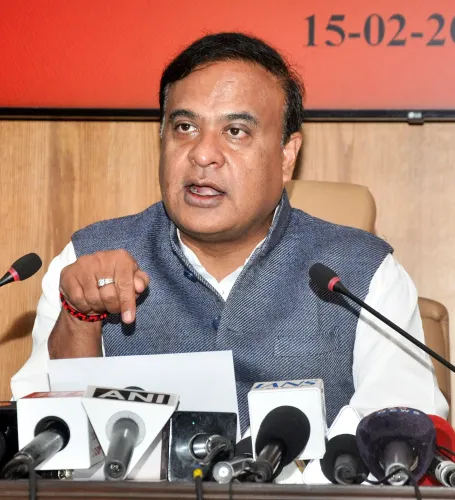
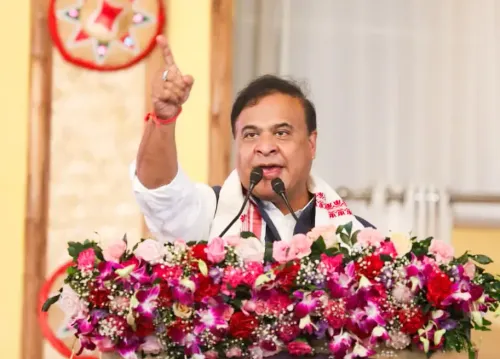
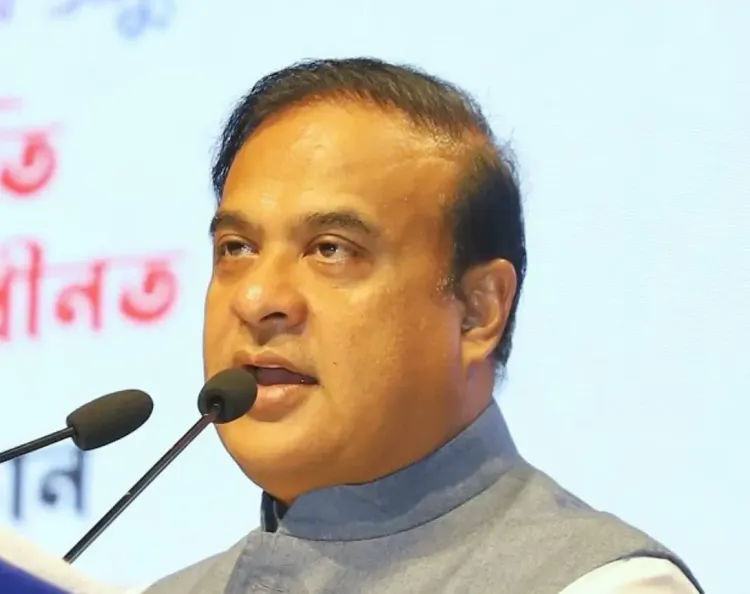
Guwahati, Dec 17 (NationPress) Assam Chief Minister Himanta Biswa Sarma on Wednesday launched a scathing critique of the former Congress-led administrations, accusing them of establishing a culture of VIP privileges, wastefulness, and entitlement politics that led the state into persistent power shortages and financial crises.
In a message on X, Sarma stated that his administration has embarked on a firm mission to abolish VIP privileges and enhance accountability in governance, especially in the energy sector.
“No longer will taxpayers cover ministers’ electricity bills; we will eliminate power wastage, significantly reduce power deficits, and transition towards a green future,” the Chief Minister emphasized, highlighting a total shift from prior practices.
Sarma contrasted the previous Congress regime with the current BJP-led government, claiming that Assam used to operate as a “government of entitlements,” where ministers and high-ranking officials received free electricity funded by taxpayers.
He noted that during that era, many government offices were not even equipped with meters, leading to unchecked consumption and a lack of accountability.
According to him, the Assam Secretariat alone incurred electricity costs nearing Rs 30 lakh each month under the former system, while the state grappled with a concerning power deficit of about 15 percent.
“This was the legacy we inherited — privilege for a select few and darkness for the majority,” Sarma remarked, criticizing the Congress for what he termed decades of mismanagement.
Emphasizing reforms initiated since 2016, the Chief Minister declared that his administration has dismantled VIP culture by requiring ministers and bureaucrats to pay their own electricity bills. Metering has now become mandatory in government offices, ensuring transparency and responsible energy usage.
Sarma also mentioned the implementation of an automatic power disconnection system after 8 PM in government offices to prevent unnecessary consumption. In a significant step towards sustainability, the Assam Secretariat is now completely powered by solar energy, saving the state nearly Rs 30 lakh every month.
“These reforms are not mere symbols; they embody our commitment to service, not entitlement,” the Chief Minister stated.
Thanks to these efforts, Assam’s power deficit has been sharply reduced to just 4 percent, he added.
Positioning these reforms within a broader political context, Sarma asserted that the BJP government is dedicated to governance marked by vision and discipline, in stark contrast to the Congress era, which he claimed normalized waste, privilege, and inefficiency at the expense of public welfare.
Point of View
The remarks by Assam's Chief Minister reflect a broader discourse on governance and accountability in India. The focus on dismantling VIP privileges aligns with growing public demand for transparency in politics. As the nation grapples with issues of efficiency and welfare, these reforms could serve as a model for other states, emphasizing the importance of responsible governance.
NationPress
22 Sept 2026
Frequently Asked Questions
What reforms has Assam's government implemented?
Assam's government has abolished VIP privileges for ministers, made electricity billing mandatory for government offices, and implemented a solar energy system in the Assam Secretariat.
What was the power deficit in Assam before the reforms?
Before the reforms, Assam faced a power deficit of approximately 15 percent.
How much was the Assam Secretariat's electricity bill monthly?
Under the previous system, the Assam Secretariat's electricity bill was nearly Rs 30 lakh each month.
What is the current power deficit in Assam?
Thanks to recent reforms, Assam's power deficit has been reduced to just 4 percent.
What is the significance of solar energy in Assam's reforms?
The transition to solar energy not only promotes sustainability but also saves the government nearly Rs 30 lakh monthly.