WIPO Chief Economist: India's innovation edge offers long-term optimism amid global turmoil
Synopsis
At Summer Davos in Dalian, WIPO's Chief Economist singled out India's innovation ecosystem as a rare bright spot in a turbulent global economy — even as he warned that India's oil dependence makes it vulnerable in the short term. The endorsement, from one of the world's foremost IP and innovation authorities, adds institutional weight to India's growth story at a moment when most middle-income economies are struggling.
Key Takeaways
Carsten Fink , Chief Economist at WIPO , called India's long-term economic outlook 'quite optimistic' at Summer Davos in Dalian, China .
India faces short-term headwinds from the Middle East conflict, primarily through higher crude oil and fertiliser prices due to its oil dependence.
Fink praised India's innovation ecosystem, noting it is growing at rates 'few other middle-income economies currently observe.' The global economy has shown 'reasonable resilience' despite geopolitical shocks, but the Strait of Hormuz and central bank responses remain key risk factors.
WIPO's Global Innovation Index has consistently ranked India among the fastest-rising innovation economies in recent years.
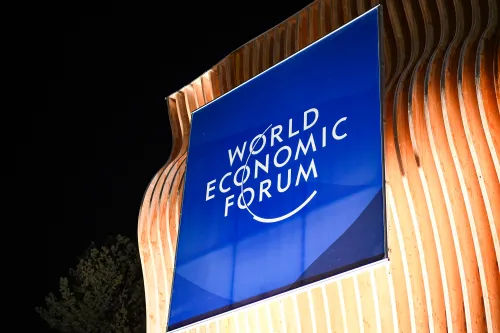
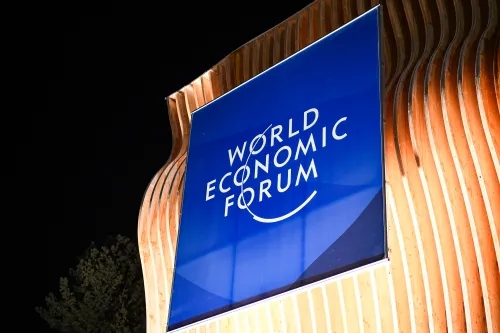
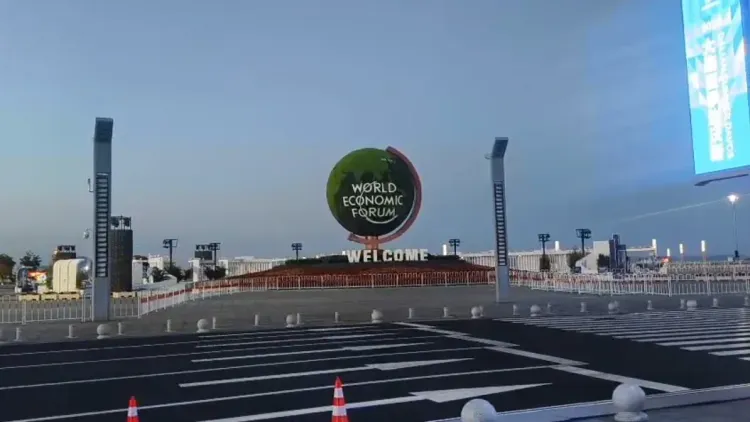
Carsten Fink, Chief Economist at the World Intellectual Property Organisation (WIPO), said on Tuesday that India's long-term economic outlook remains firmly positive, underpinned by a rapidly expanding innovation ecosystem and resilient economic fundamentals — even as geopolitical tensions and Middle East conflicts continue to roil global markets. Fink made the remarks on the sidelines of the World Economic Forum's Annual Meeting of the New Champions — popularly known as Summer Davos — held in Dalian, China.
Short-Term Pressures from the Middle East Crisis
Fink acknowledged that India faces near-term headwinds stemming from the ongoing Middle East conflict, primarily through elevated crude oil prices and the knock-on effect on essential commodities such as fertilisers. 'In the short term, the Indian economy is quite affected by the crisis and I think that has to do with the fact that the Indian economy is quite oil dependent,' he said.
He noted that the trajectory of the global economy over the coming months will hinge substantially on developments in the Middle East — particularly the flow of maritime traffic through the Strait of Hormuz and its bearing on commodity prices. Central bank responses to persistent inflation across major economies will also be a defining variable, he added.
India's Innovation Landscape: A Bright Spot
Despite these short-term shocks, Fink was emphatic about India's structural strengths. He highlighted the country's growing innovation capacity as a distinguishing factor, noting that India is expanding at rates 'few other middle-income economies currently observe.' According to Fink, the foundations for sustainable long-term growth are actively being laid through technological advancement and innovation-led dynamism.
'In the short run, certainly the Indian economy faces challenges. But in the long run, there are reasons to be quite optimistic,' he said. This comes amid broader global concerns about slowing growth, with India remaining one of the few large economies still posting robust expansion figures.
Global Economy Shows Resilience, But Risks Persist
Fink offered a measured assessment of the world economy overall, describing it as 'reasonably resilient despite this shock.' However, he cautioned that the outlook is far from certain. Inflation dynamics and the pace of monetary tightening by central banks across different countries remain critical watchpoints that could shape the medium-term global economic path.
Notably, this is not the first time global institutions have flagged India's innovation credentials as a buffer against external volatility. WIPO's own Global Innovation Index has consistently ranked India among the fastest-rising innovation economies in recent years, lending institutional weight to Fink's assessment.
What This Means for India
For policymakers in New Delhi, the WIPO economist's remarks offer both a validation and a caution. The endorsement of India's innovation ecosystem reinforces the case for sustained investment in research, technology, and start-up infrastructure. At the same time, India's structural dependence on oil imports remains a vulnerability that geopolitical shocks can rapidly expose.
As the global community watches developments in the Middle East and central banks navigate the inflation-growth trade-off, India's ability to insulate its long-term growth trajectory through innovation will be closely observed by international institutions and investors alike.
Point of View
Whose institution tracks global innovation capacity with rigour, is singling out India's dynamism at a moment when peer middle-income economies are stalling. The risk is that New Delhi treats the endorsement as validation rather than a prompt to close the gap between innovation potential and commercialisation outcomes — a gap that India's start-up ecosystem has yet to fully bridge.
NationPress
23 Jun 2026
Frequently Asked Questions
What did the WIPO Chief Economist say about India's economy?
WIPO Chief Economist Carsten Fink said India's long-term economic prospects remain positive, driven by a dynamic innovation ecosystem and strong fundamentals. He noted, however, that India faces short-term challenges due to its dependence on oil imports, which makes it vulnerable to price shocks from the Middle East conflict.
Where did Carsten Fink make these remarks about India?
Fink spoke on the sidelines of the World Economic Forum's Annual Meeting of the New Champions — known as Summer Davos — held in Dalian, China, on Tuesday.
How does the Middle East crisis affect India's economy?
According to Fink, the Middle East conflict has raised crude oil prices and pushed up costs of other essential commodities like fertilisers, creating short-term inflationary pressure on the Indian economy, which is significantly oil dependent.
Why is WIPO optimistic about India's long-term growth?
WIPO's chief economist highlighted India's rapidly growing innovation capacity and the fact that the economy is expanding at rates few other middle-income economies are currently achieving. He said long-term innovative capacity is actively being created, laying foundations for sustainable growth.
What global risks does the WIPO economist flag for the near term?
Fink flagged the trajectory of traffic through the Strait of Hormuz, commodity price movements, persistent inflation, and central bank policy responses as the key variables that will determine the global economic outlook over the coming months.