Will India's manufacturing share reach 25% of GDP by 2047?
Synopsis
India is set to become a major industrial player by 2047, with manufacturing's GDP share expected to rise from 17% to 25%. Key sectors like electronics and EVs are driving this growth, promising a $25 trillion opportunity. Discover how India's strategic moves are redefining its global manufacturing landscape.
Key Takeaways
India's manufacturing GDP share is set to increase to 25% by 2047.
Key sectors include electronics, defence, and EVs.
Domestic mobile phone production has drastically increased.
Significant growth in semiconductor demand is expected.
India is focusing on strategic self-reliance and innovation in manufacturing.
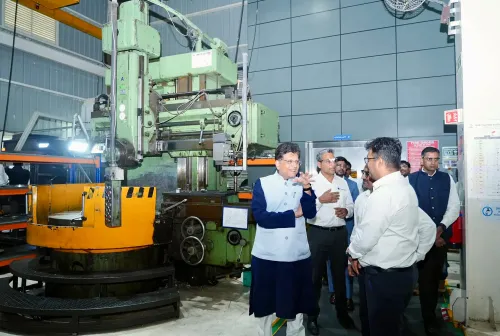
New Delhi, Dec 11 (NationPress) India is on track to emerge as a global leader in manufacturing by 2047, with the sector's contribution to the gross domestic product (GDP) expected to increase from approximately 17% to about 25%, according to a recent report.
The study conducted by the Boston Consulting Group and Z47 highlights five key sectors—electronics, defence, automotive and electric vehicles, energy, and pharmaceuticals—that could collectively create a $25 trillion industrial landscape by the year 2047.
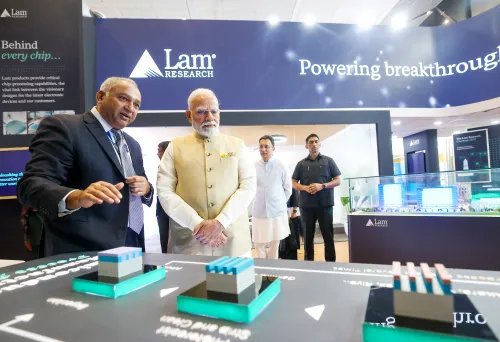
It points to a significant surge in the electronics and semiconductor markets, projecting India's semiconductor demand to rise from $33 billion in 2022 to $117 billion by 2030.
Currently, over 99% of mobile phones sold in India are manufactured domestically, a remarkable increase from just 26% in 2014-15, attributed to the effectiveness of Production Linked Incentive schemes.
“This transformation is not solely about expansion; it's about achieving strategic self-sufficiency. India is advancing beyond assembly to design, innovate, and integrate into the global value chain,” stated Ishang Jawa, Managing Director and Partner at BCG.
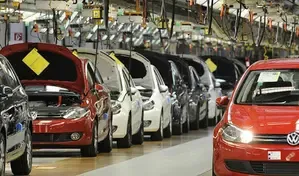
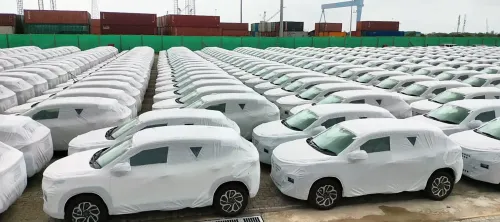
The report also underscores the rise in electric vehicle sales, which escalated from roughly 50,000 in 2016 to over 2 million by 2024, making up about 9% of the global EV inventory, and pointing to a $100 billion export potential in auto parts.
“India has a unique chance to redefine its role in global manufacturing,” emphasized Natarajan Sankar, Managing Director and Partner at BCG.
“By implementing bold policies and responding to growing demand in sectors like EVs and advanced electronics, India is laying the groundwork to lead across various industries,” he added.
Regional manufacturing hubs in defence, electric vehicles, and semiconductors located in regions such as Noida–Chennai–Hosur and Dholera are seen as vital for supplier co-location, shared laboratories, and logistics.
India has also achieved 50% of its non-fossil power capacity five years ahead of its target, according to the report.
The report emphasizes the importance of enhancing R&D and design capabilities, nurturing talent, reversing brain drain, creating world-class cluster ecosystems, and increasing private sector and startup involvement to maintain progress and establish lasting global prominence.
“Success in advanced manufacturing and deep-tech is crucial for realizing the vision of Viksit Bharat 2047,” stated Sudipto Sannigrahi, Managing Director at Z47.
Sannigrahi called on policymakers to engage PhD talent across India and the Indian diaspora in the US, alongside targeted policies to help deep-tech startups accelerate their path to revenue.
Point of View
I see India's manufacturing sector poised for a transformative leap. The commitment to strategic self-reliance and innovation reflects a clear vision. The focus on diversified sectors like electronics and electric vehicles positions India favorably on the global stage, making it a pivotal player in the future of manufacturing.
NationPress
19 Sept 2026
Frequently Asked Questions
What is the current share of manufacturing in India's GDP?
Currently, manufacturing contributes approximately 17% to India's GDP.
Which sectors are highlighted as key growth areas?
The key sectors identified are electronics, defence, automotive and electric vehicles, energy, and pharmaceuticals.
What is the projected growth of India's semiconductor demand?
India's semiconductor demand is expected to grow from $33 billion in 2022 to $117 billion by 2030.
How has the domestic production of mobile phones changed?
Over 99% of mobile phones sold in India are now produced domestically, compared to just 26% in 2014-15.
What is the significance of electric vehicle sales in India?
Electric vehicle sales have surged from approximately 50,000 in 2016 to over 2 million by 2024, representing about 9% of the global EV stock.