How is India Enhancing Its Anti-Smuggling Enforcement Through International Agreements?
Synopsis
India is on a mission to combat smuggling through enhanced international cooperation. With numerous agreements in place and advanced technologies being deployed, the country is poised to disrupt illicit networks effectively. This bold approach addresses serious economic and security threats, ensuring that enforcement evolves with the times.
Key Takeaways
42 mutual customs agreements signed, with 21 more under negotiation.
Shift from event-based seizures to network-based disruption .
AI and technology play a critical role in enforcement.
Significant seizures in recent months highlight operational success.
Global partnerships are essential for effective anti-smuggling measures.
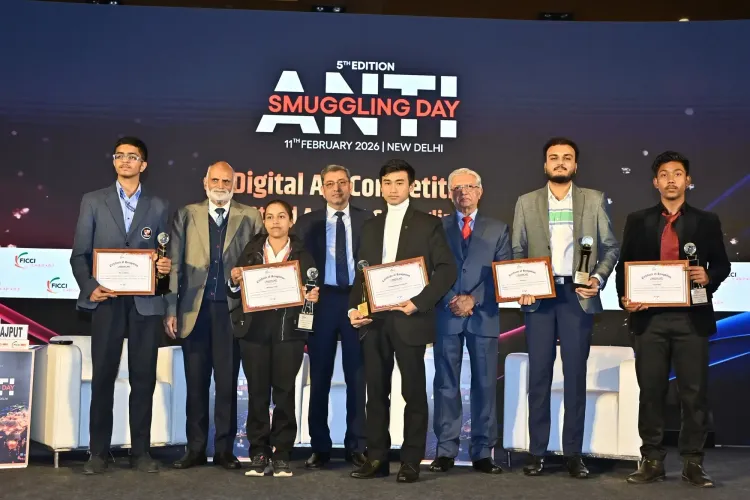
Mumbai, Feb 11 (NationPress) India has made significant advancements in its global enforcement framework against smuggling, having signed 42 mutual customs cooperation agreements and currently negotiating 21 more with key trading nations, experts communicated on Wednesday.
Mohan Kumar Singh, Member–Compliance Management at the Central Board of Indirect Taxes and Customs (CBIC), emphasized that enforcement should evolve from isolated event-based seizures to a more integrated approach focused on disrupting networks, as stated by FICCI.
During a FICCI CASCADE event, he remarked that enforcement strategies need to target financial flows, logistical support, and international connections that enable illicit ecosystems.
Singh highlighted that smuggling has transitioned into an organized, technology-driven economic crime posing direct threats to national security and economic stability.
In light of recent announcements from the Union Budget, he noted that the implementation of AI-driven image analytics and expanded container scanning at major ports will significantly enhance enforcement capabilities, while reforms in GST and customs are aimed at improving compliance and curbing incentives for illegal trade.
He pointed out the successful enforcement efforts in the initial three quarters of the ongoing financial year, with seizures including approximately 500 kilograms of gold, nearly 150 million sticks of illicit cigarettes, over 20 metric tonnes of red sanders, and around 120 kilograms of cocaine.
Moreover, seizures at airports comprised about 50 kilograms of heroin, nearly 350 kilograms of amphetamines, and close to 3,700 kilograms of hydroponic cannabis.
Singh noted that today's smuggling networks are not only commodity-agnostic but also technologically sophisticated, employing traditional concealment methods alongside digital anonymity, complex financial schemes, and cross-border collaboration.
“Customs serves as the primary line of defense at our country’s borders. By utilizing risk-based inspections, advanced cargo screening, non-intrusive examination systems, and AI-driven analytics, we are effectively identifying suspicious shipments before they reach the domestic market,” he added.
Anil Rajput, Chairman of FICCI CASCADE, stressed the necessity for robust partnerships among compliant nations to foster legal trade, exchange intelligence, and decisively penalize illicit operators.
He concluded that intelligence-led enforcement, financial investigations, coordinated inter-agency actions, and international collaboration are vital to counter the evolving smuggling tactics.
Point of View
The nation is clearly prioritizing its security and economic integrity. The shift towards a network-based disruption approach reflects an understanding of the complexities of modern smuggling operations. By fostering international partnerships and leveraging technology, India is setting a precedent for comprehensive enforcement strategies.
NationPress
23 Sept 2026
Frequently Asked Questions
What are mutual customs cooperation agreements?
These agreements facilitate collaboration between countries to enhance customs operations, share intelligence, and combat smuggling effectively.
How is technology being utilized in anti-smuggling efforts?
India is employing AI-driven analytics, advanced cargo screening, and image analytics to identify suspicious consignments before they reach the market.
What recent successes has India achieved in smuggling enforcement?
In the current financial year, India has seized significant quantities of illicit goods, including gold, cigarettes, and various drugs.