India's new producer price index framework to sharpen inflation data: Experts

Synopsis
India has replaced its decade-old WPI framework with a new producer price index ecosystem — expanding the commodity basket by 260 items and shifting to a 2022-23 base year. The timing is pointed: May wholesale inflation has already jumped to 9.68%, led by a 30.33% surge in fuel and power costs, with experts warning that West Asia tensions and a potential El Niño could keep the pressure elevated through FY27.
Key Takeaways
The government launched the Output PPI (OPPI) , Trial Input PPI (IPPI) , and Service PPI (SPPI) on 15 June , alongside a revised WPI series with 2022-23 as the base year.
The revised WPI expands the commodity basket from 697 to 957 items and shifts weight calculation to Gross Value of Output (GVO) .
Annual wholesale price inflation rose to 9.68% in May , up from 8.26% in April, driven by Fuel and Power inflation of 30.33% .
CareEdge Ratings projects WPI to average 7.8% in FY27 , assuming Brent crude at around $90 per barrel .
PHDCCI says WPI and PPI will run in parallel for five years to ensure a smooth transition.
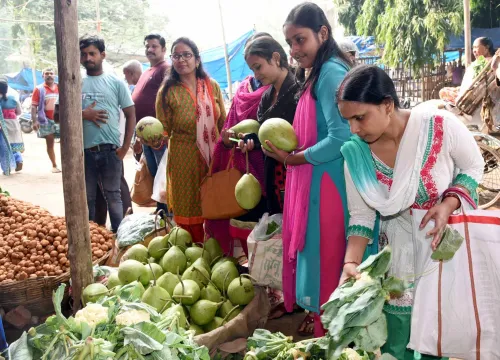
Food inflation remained relatively moderate at 4.49% in May, though El Niño risks could push it higher.
India's inflation measurement architecture underwent a significant overhaul on Monday, 15 June, as the government rolled out a new producer price index (PPI) framework that economists and industry leaders say will bring the country's statistical system in line with global standards. The new framework introduces the Output Producer Price Index (OPPI), the Trial Input Producer Price Index (IPPI), and Service Producer Price Indices (SPPI), alongside a revised Wholesale Price Index (WPI) series anchored to a 2022-23 base year.
What the New Framework Covers
Rajani Sinha, Chief Economist at CareEdge Ratings, described the introduction of the output PPI, trial input PPI, and services PPI as 'a positive step towards aligning domestic price indices with international practices.' Rajeev Juneja, President of the PHD Chamber of Commerce and Industry (PHDCCI), called it an important modernisation initiative that would bring India's inflation statistics closer to globally accepted standards.
According to PHDCCI, the parallel publication of both the WPI and PPI over the next five years will strengthen inflation analysis, improve industry-level monitoring, and facilitate a smoother transition to the new framework. Notably, the revised structure expands the commodity basket from 697 to 957 items, shifts weight calculation to Gross Value of Output (GVO), and lays the foundation for a comprehensive producer price ecosystem across the country.
May Wholesale Inflation Spikes to 9.68%
Alongside the framework announcement, government data showed that annual wholesale price inflation climbed to 9.68% in May, up sharply from 8.26% in April. The primary driver was a surge in Fuel and Power inflation, which accelerated to 30.33%. Manufactured Products inflation rose to 7.48%, while food inflation remained comparatively contained at 4.49%.
'While there has been an uptick in inflation across all major groups, the increase is notable for fuel and power and manufactured goods. This reflects the impact of the West Asia crisis on wholesale prices,' Sinha said. Shashwat Singh of Bajaj Broking identified crude petroleum, natural gas, and mineral oils as the sharpest contributors within the Fuel and Power category.
Energy Risks and the Road Ahead
Sinha projected WPI inflation to average around 7.8% in FY27, assuming Brent crude averages around $90 per barrel. She cautioned that food inflation risks remain elevated given the higher probability of an El Niño event this year. She noted that global energy prices have cooled following recent positive developments in West Asia, though the situation remains fluid.
'So far, oil marketing companies and the government have absorbed much of the rise in crude prices. However, the future trajectory of domestic crude oil prices will depend on evolving global factors,' Sinha added. Singh echoed this caution, flagging that persistent cost-push pressure from fuel and energy inputs remains a near-term risk amid ongoing geopolitical uncertainties, even as stable retail inflation continues to support consumer demand.
Why the WPI Overhaul Matters
The old WPI series used 2011-12 as its base year — a framework that had grown increasingly misaligned with India's current production and trade structures. The shift to 2022-23 as the base year, combined with the expanded commodity basket and GVO-based weighting, is intended to produce price signals that more accurately reflect where value is actually created in the economy. This is particularly significant for policymakers at the Reserve Bank of India (RBI), who rely on producer-level price data to assess upstream inflationary pressures before they feed through to consumer prices. With a more granular and internationally comparable dataset now in development, India's capacity to anticipate and respond to inflation cycles is set to improve.
Point of View
Coinciding with a 9.68% WPI print and a 30.33% fuel inflation reading, risks overshadowing the reform's long-term significance with short-term alarm. The more important question is whether the new services PPI will eventually displace WPI as the RBI's upstream price signal — something the central bank has long sought but never had the data infrastructure to act on. The five-year parallel-run period is prudent, but it also means the full benefit of this overhaul will not be felt until well into the decade.
NationPress
14 Sept 2026
Frequently Asked Questions
What is India's new producer price index (PPI) framework?
The new PPI framework, launched on 15 June, introduces three new indices — the Output PPI (OPPI), Trial Input PPI (IPPI), and Service PPI (SPPI) — alongside a revised WPI series using 2022-23 as the base year. It expands the commodity basket from 697 to 957 items and shifts to Gross Value of Output (GVO)-based weighting, aligning India's inflation statistics with international standards.
Why has India replaced the old WPI base year?
The previous WPI used 2011-12 as its base year, which had grown misaligned with India's current economic structure. The new 2022-23 base year better reflects present-day production patterns, trade flows, and sectoral weights, producing more accurate upstream price signals for policymakers.
What drove the spike in wholesale inflation in May 2025?
Annual WPI inflation rose to 9.68% in May, up from 8.26% in April, primarily due to a 30.33% surge in Fuel and Power prices, driven by sharp increases in crude petroleum, natural gas, and mineral oils. Analysts attribute the rise largely to the impact of the West Asia crisis on global energy markets.
What is the WPI inflation outlook for FY27?
CareEdge Ratings Chief Economist Rajani Sinha projects WPI inflation to average around 7.8% in FY27, assuming Brent crude averages approximately $90 per barrel. She flagged food inflation as an additional upside risk, citing the higher probability of an El Niño event this year.
How long will the old WPI and new PPI run in parallel?
According to PHDCCI, the WPI and the new PPI framework will be published in parallel for the next five years to ensure a smooth transition and allow industry, analysts, and policymakers to calibrate to the new series before the older index is phased out.