How Have India’s Textiles Exports Grown by 4.6% in the Last Four Fiscal Years?
Synopsis
India's textile and apparel exports have experienced impressive growth, showcasing resilience in the face of global challenges. With substantial government backing, the sector is geared for further expansion in international markets, benefiting artisans and boosting the economy.
Key Takeaways
India's textile and apparel exports have shown significant growth.
Government initiatives are focused on enhancing competitiveness.
PM MITRA Parks aim to create integrated textile infrastructure.
The PLI Scheme promotes investment in MMF textiles.
Support for traditional artisans is a priority for sustainable development.
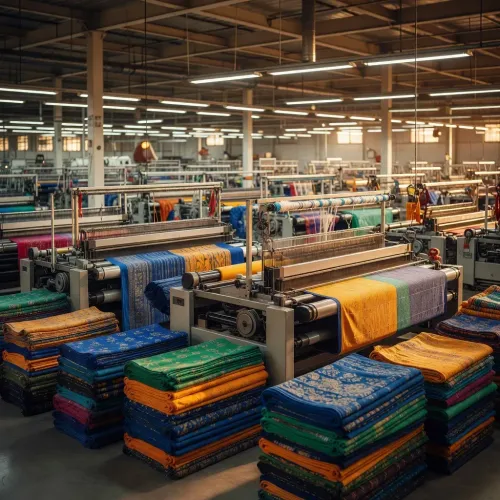
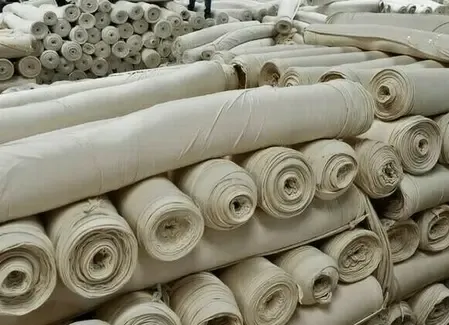
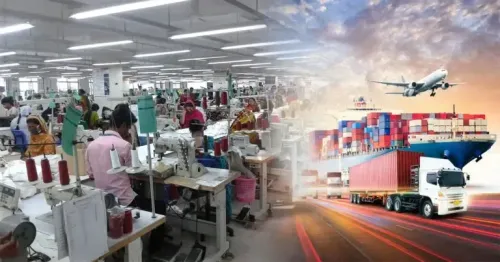
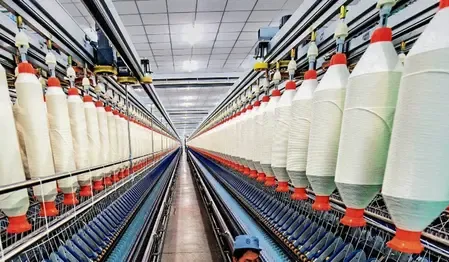
New Delhi, Dec 16 (NationPress) India's textile and apparel exports, which encompass handicrafts, experienced a 4.6% CAGR growth from $31.58 billion in 2020–21 to $37.75 billion by 2024–25. This growth was observed in over 100 countries during the same timeframe, as reported to Parliament on Tuesday.
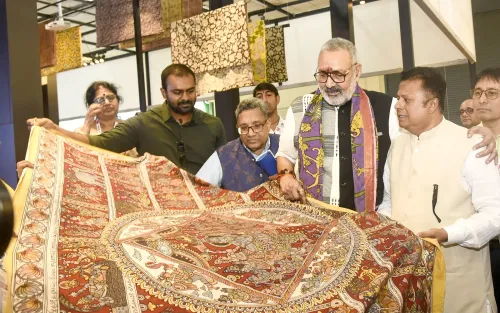
Union Textiles Minister Giriraj Singh informed the Rajya Sabha that in spite of the global supply-chain shifts following the pandemic, India's export performance has displayed remarkable resilience, primarily attributed to the increase in ready-made garments, cotton, and man-made fibre (MMF) textiles, carpets, and handicrafts.
He remarked, "The government has adopted a multi-faceted approach to boost global competitiveness throughout the entire value chain, including high-value segments, while modernizing the domestic textile industry."
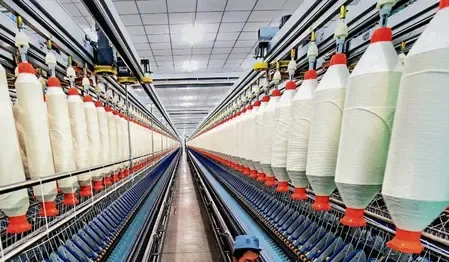
Moreover, he mentioned that the government has sanctioned seven 'PM MITRA Parks' with an investment of Rs 4,445 crore to establish integrated textile infrastructure. Additionally, the PLI Scheme for Textiles (Rs 10,683 crore) has been introduced to encourage MMF apparel, fabrics, and technical textiles, which has been liberalized in October 2025 to attract broader investment.
The National Technical Textiles Mission (Rs 1,480 crore) is dedicated to supporting R&D, innovation, and market development. Programs like SAMARTH and Silk Samagra-2 (Rs 4,679.86 crore) aim to enhance skilling, upgrade technology, and develop the sector.
Furthermore, the government has established the Export Promotion Mission, executed via NIRYAT PROTSAHAN and NIRYAT DISHA, to improve trade finance, market access, branding, and compliance, alongside a Credit Guarantee Scheme for Exporters, which offers a 100% credit guarantee, especially benefiting MSMEs, as stated by the minister.
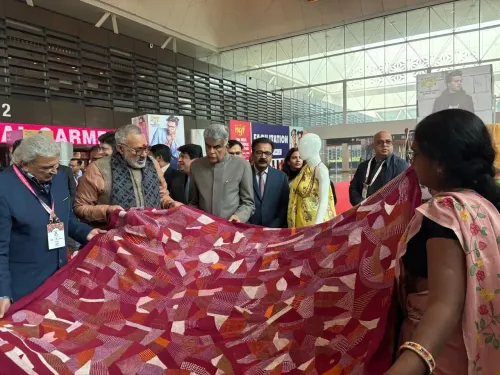
To support the livelihoods of traditional artisans, the ministry is actively implementing the National Handloom Development Programme and Raw Material Supply Scheme, providing assistance for raw materials, upgraded looms, solar lighting, worksheds, design innovation, marketing support, concessional credit, and social security.
Under the Hathkargha Samvardhan Sahayata, as of October 31, 2025, 32,248 weavers have received upgraded looms and accessories, along with 302 electronic jacquards.
Market access is further bolstered through the India Handmade e-commerce portal and the onboarding of approximately 1.50 lakh weavers and artisans on GeM, allowing direct sales to government buyers, as highlighted by the minister.
Point of View
It’s crucial to recognize that India’s textile sector is not just about numbers; it’s about livelihoods and cultural heritage. The government’s strategic initiatives aim to empower traditional artisans while ensuring competitiveness on a global scale. The commitment to modernizing this sector reflects a balanced approach towards economic growth and preservation of traditional crafts.
NationPress
19 Sept 2026
Frequently Asked Questions
What is the CAGR growth of India's textile exports?
India's textile exports have experienced a 4.6% CAGR growth from $31.58 billion in 2020–21 to $37.75 billion by 2024–25.
How many countries are involved in India's textile exports?
India has recorded export growth in over 100 countries during the period.
What are PM MITRA Parks?
PM MITRA Parks are integrated textile infrastructure initiatives approved by the government with an investment of Rs 4,445 crore .
What is the PLI Scheme for Textiles?
The PLI Scheme for Textiles is aimed at promoting MMF apparel, fabrics, and technical textiles with an outlay of Rs 10,683 crore .
How does the government support traditional artisans?
The government supports traditional artisans through various programs like the National Handloom Development Programme and offers assistance for raw materials, technology upgrades, and social security.