Electronics Sector Applauds Government's Initiative on Design and Quality Under ECMS
Synopsis
The government's robust initiative to enhance design capabilities and quality standards through the Electronics Component Manufacturing Scheme (ECMS) has been enthusiastically welcomed by industry leaders, marking a pivotal step towards realizing India's electronics potential.
Key Takeaways
Government's commitment: The increased funding under ECMS shows a strong commitment to developing the electronics ecosystem.
Job creation: The scheme is expected to create over 14,000 jobs.
Investment exceeding targets: Approved investments have surpassed ₹61,000 crore, exceeding initial goals.
Focus on local sourcing: Emphasis on 'Designed and Made-in-India' components is crucial for demand generation.
Global competitiveness: India is becoming a credible destination for electronics design and manufacturing.
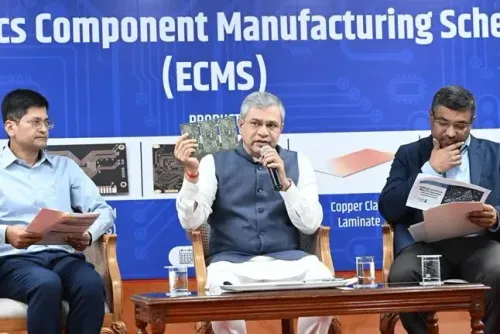
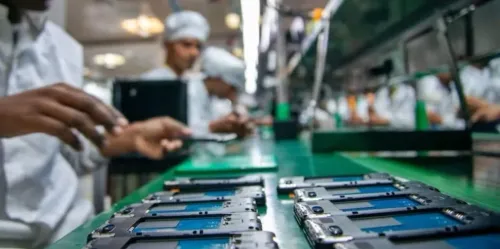
New Delhi, March 30 (NationPress) Industry leaders expressed their enthusiasm on Monday regarding the government's vigorous initiative to enhance design capabilities and quality benchmarks through the Electronics Component Manufacturing Scheme (ECMS), emphasizing its significance in advancing India's electronics ambitions.
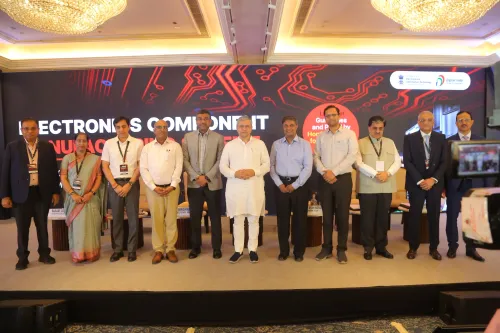
During an event organized by the India Cellular and Electronics Association (ICEA) to celebrate the fourth round of ECMS approvals, industry stakeholders remarked that the ECMS reflects a transition from policy aspirations to tangible implementation.
ICEA Chairman Pankaj Mohindroo highlighted that the increased funding under ECMS demonstrates the government's dedication to fostering a strong electronics ecosystem.
He further noted that a methodical reopening of the scheme would facilitate the growth of component manufacturing and enhance domestic value addition.
"A measured reopening of the scheme is essential for developing critical component capabilities and increasing domestic value addition," Mohindroo emphasized.
He urged that original equipment manufacturers and system companies need to actively utilize components that are "Designed and Made-in-India," stressing that fostering demand is just as crucial as ensuring supply.
Industry leaders also pointed out that India has become a viable and attractive destination for electronics system design and manufacturing.
According to Ashok Chandak, President of IESA, "The ECMS is instrumental in closing significant gaps in the value chain by facilitating component-level manufacturing, which is vital for capturing greater value and establishing resilience."
He mentioned that these investments are anticipated to create over 14,000 jobs and generate production worth ₹84,515 crore, underscoring the significant momentum being developed under the scheme.
As of now, 75 applications from 12 states across 23 product categories have received approval, including sectors such as lithium-ion cells, flexible PCBs, connectors, and display modules.
The projects are distributed across eight states, with Karnataka and Maharashtra leading in the number of projects.
Data presented at the event revealed that approved investments have surpassed ₹61,000 crore, exceeding the initial target of ₹59,350 crore.
The scheme is projected to yield production exceeding ₹4.5 lakh crore and to create more than 65,000 jobs, steadily progressing towards its overall objectives.
Point of View
The recent developments under the ECMS reflect a decisive shift in India's approach towards enhancing its electronics manufacturing capabilities. The industry's response signals optimism and a collaborative effort towards achieving the nation's ambitious targets.
NationPress
28 Sept 2026
Frequently Asked Questions
What is the Electronics Component Manufacturing Scheme (ECMS)?
The ECMS is a government initiative aimed at boosting India's electronics manufacturing sector by enhancing design capabilities and quality standards.
How many applications have been approved under ECMS so far?
So far, 75 applications across 23 product categories from 12 states have been approved under the ECMS.
What are the expected job creations from ECMS investments?
The investments under ECMS are expected to generate over 14,000 jobs.
Which states are leading in ECMS project approvals?
Karnataka and Maharashtra are currently leading in the number of project approvals under ECMS.
What is the projected production value from the ECMS scheme?
The ECMS scheme is projected to generate production worth over ₹4.5 lakh crore.