Grassroots innovation key to rural growth, says MoS Jitendra Singh at national workshop
Synopsis
At a national workshop co-hosted by NITI Aayog and NIF, MoS Dr. Jitendra Singh made the case that India's most overlooked innovators — working in villages and small towns — could be the key to closing the country's persistent regional development gap, if only government schemes could actually reach them.
Key Takeaways
Jitendra Singh addressed the National Workshop on Grassroots Innovation in New Delhi on 19 May .
He called grassroots innovators India's 'silent nation builders' with potential for decentralised growth and livelihood generation.
A surge in startups from Tier-2 and Tier-3 cities was cited as evidence of rising innovation potential beyond metros.
Integration of AI and food processing with traditional knowledge — including millet-based products — has improved incomes for local communities.
The minister flagged that many government schemes fail to reach local innovators due to disconnection from ground realities.
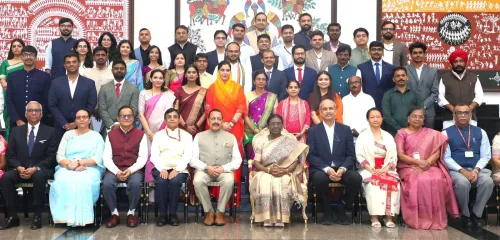
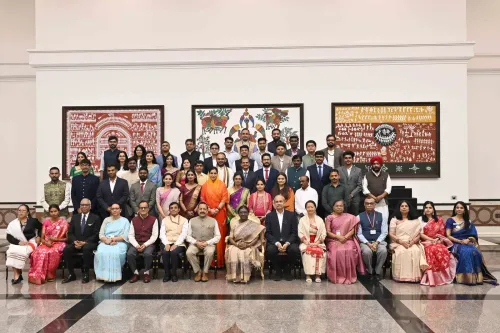
The workshop was organised by NITI Aayog with NIF and GUJCOST , drawing state ministers, scientists, and policymakers from across India.
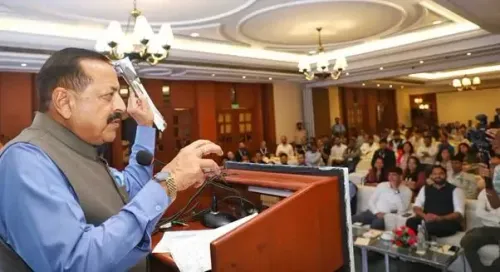
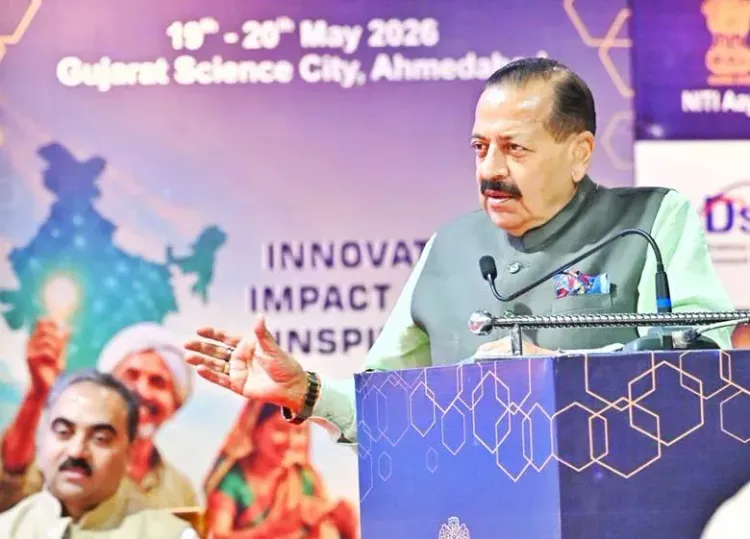
Union Minister of State for Science and Technology Dr. Jitendra Singh on Tuesday, 19 May said that empowering grassroots innovators is central to strengthening India's rural economy and narrowing regional development gaps through inclusive, innovation-led growth. His remarks came at a two-day National Workshop on Grassroots Innovation held in New Delhi, organised by NITI Aayog in collaboration with the National Innovation Foundation (NIF) and the Gujarat Council of Science and Technology (GUJCOST).
India's 'Silent Nation Builders'
Addressing state ministers, scientists, policymakers, and innovators drawn from across the country, Dr. Singh described grassroots innovators as India's 'silent nation builders.' He argued that despite operating largely outside formal institutions, these individuals possess traditional knowledge, local skills, and practical problem-solving capabilities that hold immense potential for livelihood generation, decentralised growth, and national development.
The minister called for stronger, more structured linkages between local innovators and research institutions as well as industry, so that promising ideas can be scaled into viable products and community-level solutions rather than remaining confined to villages and districts.
Rise of Tier-2 and Tier-3 Innovation Hubs
Dr. Singh pointed to a notable shift in India's startup landscape, observing that a large number of new ventures are now emerging from Tier-2 and Tier-3 cities — a trend he said reflects the growing innovation potential of smaller towns and rural India. He cited successful interventions involving millet-based products and traditional regional food items, where scientific support — including the integration of artificial intelligence and modern food processing techniques — has improved commercialisation prospects and raised incomes for local communities.
Policy Gaps and Government Schemes
The minister acknowledged a persistent structural problem: many government schemes and scientific programmes fail to adequately reach local innovators because they remain disconnected from ground realities. He stressed that bridging this disconnect requires deliberate policy design, not just funding announcements.
Dr. Singh noted that Prime Minister Narendra Modi has consistently championed grassroots innovation and community participation through flagship initiatives such as Mann Ki Baat and the PM Vishwakarma scheme, both of which aim to recognise and support traditional artisans and local entrepreneurs.
Workshop Agenda and Expected Outcomes
The two-day workshop featured technical sessions covering institutional enablers for grassroots innovation, learning exchanges with grassroots innovators themselves, community-driven innovation models, and regional and state-level innovation initiatives. Discussions are expected to focus on policy frameworks, institutional coordination, incubation support, and scalable models for expanding grassroots innovation nationwide.
With the workshop drawing participation from multiple states, the outcomes could inform the next iteration of India's national innovation policy — particularly as the government looks to reduce the concentration of economic activity in a handful of metropolitan centres.
Point of View
And most central schemes — from DST grants to startup funds — are effectively inaccessible to anyone without institutional affiliation or urban connectivity. Citing Mann Ki Baat and PM Vishwakarma as proof of political commitment is not the same as demonstrating policy reach. The harder question the workshop must answer is why, after a decade of grassroots innovation rhetoric, the commercialisation rate for NIF-documented innovations remains low and the income gains for rural innovators remain marginal. Scaling intent into outcome requires procurement linkages, not just workshops.
NationPress
3 Oct 2026
Frequently Asked Questions
What was the National Workshop on Grassroots Innovation about?
The two-day workshop, organised by NITI Aayog in collaboration with NIF and GUJCOST, focused on how to support and scale grassroots innovators across India. Sessions covered institutional enablers, community-driven models, and regional innovation initiatives.
What did Dr. Jitendra Singh say about grassroots innovators?
Dr. Singh described grassroots innovators as India's 'silent nation builders,' arguing that their traditional knowledge and practical skills hold significant potential for livelihood generation and decentralised growth. He called for stronger links between local innovators, research institutions, and industry.
Why do government schemes often fail to reach grassroots innovators?
According to Dr. Singh, many government schemes and scientific programmes remain disconnected from ground realities, meaning local innovators are frequently unaware of or unable to access available support. He stressed the need for deliberate policy design to bridge this gap.
How is traditional knowledge being combined with modern technology?
The minister cited examples such as millet-based products and traditional regional food items, where scientific support — including artificial intelligence and food processing techniques — has helped improve commercialisation and raise incomes for local communities.
Which government initiatives support grassroots innovation?
Dr. Singh referenced Prime Minister Narendra Modi's Mann Ki Baat radio programme and the PM Vishwakarma scheme as initiatives that recognise and support traditional artisans and local entrepreneurs at the community level.