India Strengthens Millet Initiative with Technological and Grassroots Advances
Synopsis
Discover how India is enhancing its millet revolution with innovative technology and grassroots initiatives. Union Minister Dr. Jitendra Singh emphasizes the importance of digital outreach and collaboration with startups as millets gain international recognition.
Key Takeaways
Digital outreach is crucial for expanding millet awareness.
The CFTRI is pivotal in developing commercial technologies for millet processing.
Millets offer a sustainable nutrition option in the face of climate change.
Collaboration with startups and MSMEs is essential for growth.
The new training ecosystem aims to broaden millet adoption across India.
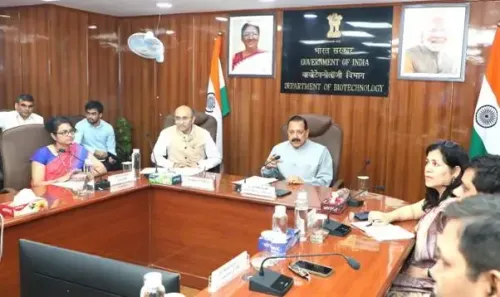
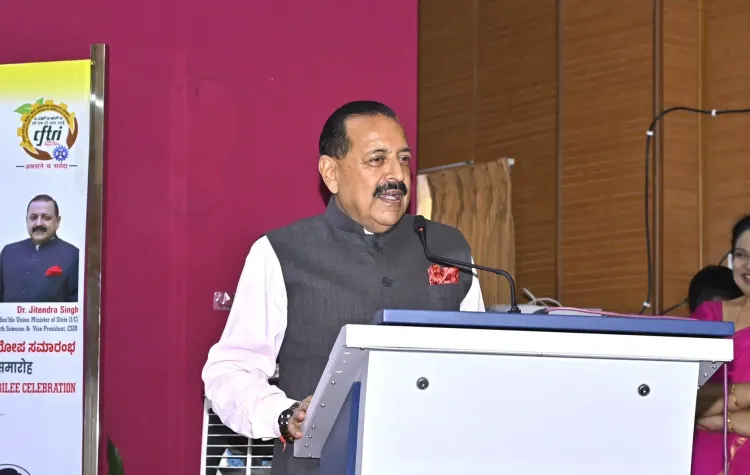
New Delhi, April 4 (NationPress) Union Minister Dr. Jitendra Singh has emphasized the need for enhanced outreach strategies, including digital communication and focused collaboration with startups and MSMEs, especially within the burgeoning sectors of ready-to-eat and 'carry-home' food items adapted for evolving urban consumption trends.
He underscored that the forthcoming phase of expansion hinges on broadening the commercial and entrepreneurial landscape surrounding these innovations.
India’s initiative to promote millets has gained a dual institutional enhancement as the government aims to bolster both technological advancements and grassroots capabilities. Dr. Jitendra Singh noted that millet recipes, crafted using Indian technology, are now featured by renowned global food chains, such as McDonald's.
During his visit to the nation's inaugural 'Centre of Excellence' for Millets at the Central Food Technology & Research Institute (CFTRI) in Mysore, Dr. Singh remarked that the innovations produced at this Centre have already penetrated international food markets, and will soon be augmented by a new residential training framework designed to extend its influence across the country.
Highlighting that institutions like CFTRI have successfully developed numerous technologies with significant commercial uptake, the Minister stated that efforts must now pivot towards enhancing market accessibility and ensuring effective last-mile delivery.
The millet facility, funded by Rs 20 crore through RKVY, incorporates cutting-edge processing technologies capable of managing all nine varieties of millets within a unified system.
With a cleaning capacity of 60–70 tonnes daily and a milling capacity of 12–15 tonnes per day, it generates a variety of value-added products, including flour, semolina (sooji and rava), and bran, while maintaining higher nutrient retention, improved shelf life, and industrial-level efficiency in a sanitized, automated setting.
He asserted that scientific advancements must transcend laboratory confines to directly benefit livelihoods, particularly through synergy with farmers, women's collectives, and small businesses.
As global focus shifts towards climate-resilient crops and sustainable nutrition, millets are becoming a key area of concentration for India's food economy.
The CFTRI model, which blends scientific inquiry, industry partnerships, and grassroots capacity development, is being presented as a framework for transforming this potential into both economic growth and improved nutritional outcomes.
Point of View
This initiative showcases India's commitment to sustainable agriculture and nutrition. The government's dual approach to technological enhancement and grassroots capacity-building reflects a strategic vision that could reshape the country's food economy and address urban dietary needs.
NationPress
15 Oct 2026
Frequently Asked Questions
What is the significance of millets in India's food economy?
Millets are recognized as climate-resilient crops that contribute to sustainable nutrition, making them a strategic focus area for enhancing India's food economy.
How is the government supporting millet production?
The government is investing in technological advancements and grassroots initiatives, including funding for processing facilities and training programs.