Dr. Jitendra Singh visits NECTAR in Shillong
Synopsis
Union Science and Technology Minister Dr. Jitendra Singh visited NECTAR in Shillong on 14 July 2026, meeting the Director General and senior faculty of the autonomous institute mandated to extend technology outreach across all eight North Eastern states.
Key Takeaways
Jitendra Singh , Union Minister of State (Independent Charge) for Science and Technology, arrived at NECTAR, Shillong on 14 July 2026 .
NECTAR (North East Centre for Technology Application and Reach) was established in 2012 under the Department of Science and Technology to serve all eight North Eastern states .
The minister was received by Director General Dr.
Arun Kumar Sharma , heads of S&T institutions, and senior faculty members.
The visit aligns with the central government's Act East Policy , which includes science and technology cooperation as a pillar of NER development.
NECTAR's mandate covers technology dissemination in agriculture, health, disaster management, and renewable energy across the North East.
Follow-up announcements on new technology projects or revised DST funding for the NER are expected to be watched closely.
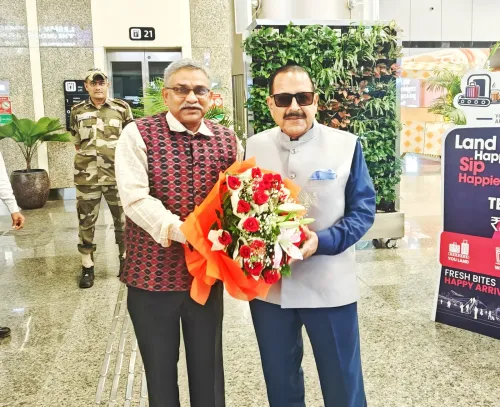
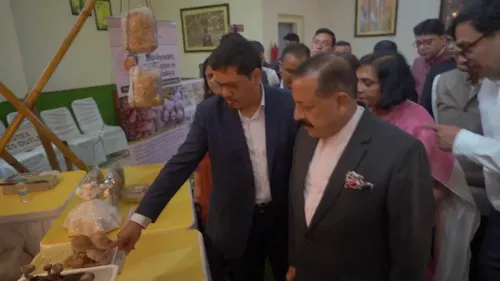
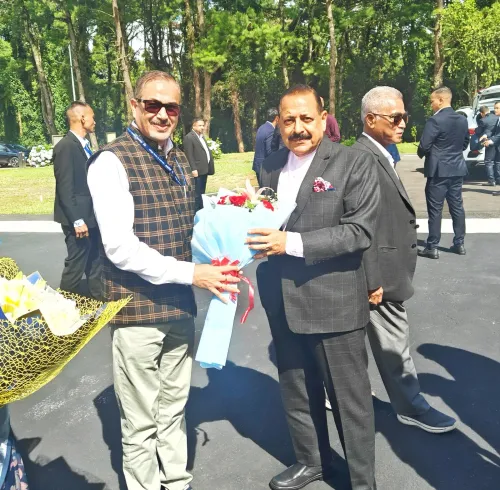
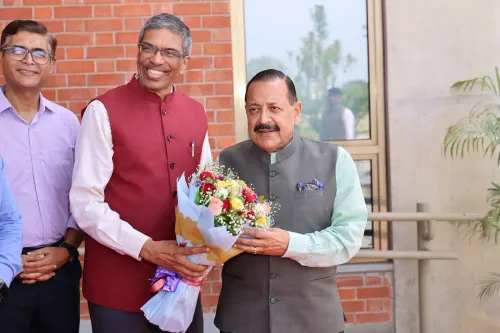
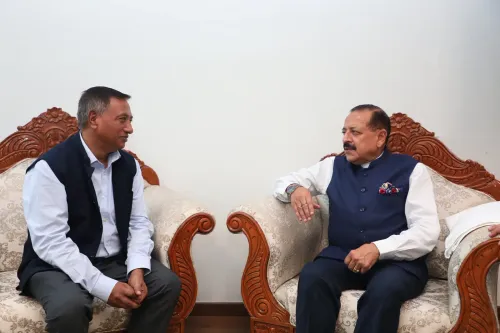
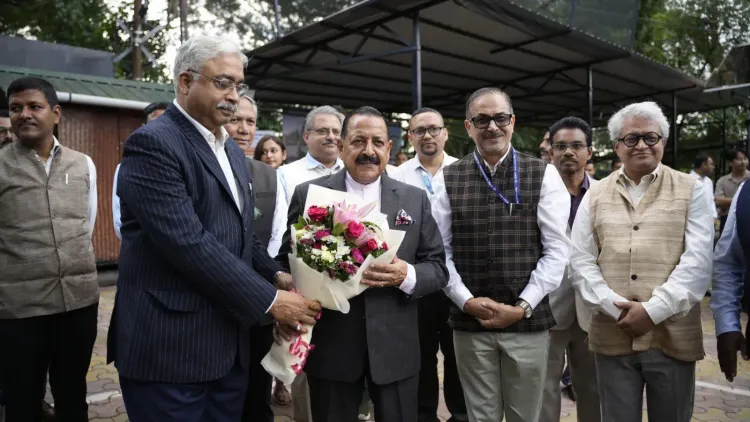
Union Minister of State (Independent Charge) of Science and Technology Dr. Jitendra Singh arrived at the North East Centre for Technology Application and Reach (NECTAR) in Shillong, Meghalaya, on Tuesday, 14 July 2026, in what marks a significant ministerial visit to one of the region's premier science and technology institutions.
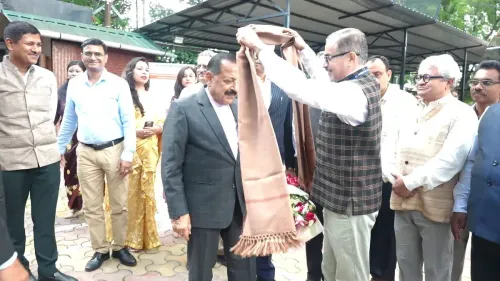
The minister was received by Director General of NECTAR Dr. Arun Kumar Sharma, along with heads of science and technology institutions and senior faculty members. Dr. Jitendra Singh acknowledged the 'warm welcome' extended to him on arrival.
Context
NECTAR is an autonomous institute established in 2012 under the Department of Science and Technology with a specific mandate to identify, adapt, and disseminate technology solutions suited to the North Eastern Region (NER). Headquartered in Shillong, it serves as a nodal agency for extending technology outreach to all eight North Eastern states — Arunachal Pradesh, Assam, Manipur, Meghalaya, Mizoram, Nagaland, Sikkim, and Tripura.
The institution bridges the gap between laboratory-developed technologies and ground-level communities across a geographically challenging and ecologically diverse region. Its work spans sectors including agriculture, health, disaster management, and renewable energy.
Policy Backdrop
The visit fits within a long-standing central government approach that treats science and technology as a key lever for reducing developmental asymmetry between the North Eastern Region and the rest of India. The Act East Policy, re-energised in 2014, explicitly includes science and technology cooperation and capacity building as instruments for NER development.
Successive five-year plans and NER-specific budgetary allocations have funded technology demonstration projects in the region. Ministerial visits to institutes like NECTAR form part of routine administrative oversight and serve as feedback loops for centrally sponsored programmes under the Department of Science and Technology.
As the minister holding independent charge of both the Ministry of Science and Technology and Earth Sciences, Dr. Jitendra Singh has consistently emphasised the role of frontier science in accelerating development in underserved and geographically remote regions of India.
Stakeholders and Impact
Communities across the eight North Eastern states stand to benefit most directly from NECTAR's work, particularly in areas where terrain and connectivity constraints limit access to mainstream development. Local S&T institutions, academic bodies, and state governments in the NER are key partners in the technology dissemination chain.
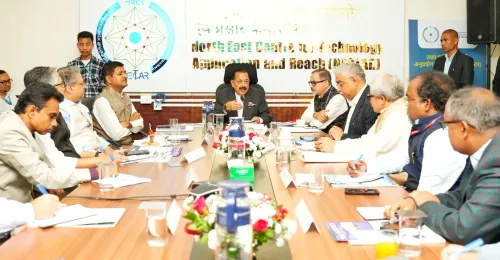
Senior faculty and institutional heads present at the reception signal that the visit is likely to involve substantive discussions on ongoing programmes, institutional priorities, and possible new technology initiatives. Such ministerial engagements often precede or accompany policy announcements or revised funding decisions.
What's Next
Observers will watch for any follow-up announcements regarding new technology demonstration projects or revised allocations under the Department of Science and Technology's NER component. Any outcomes from the minister's discussions with NECTAR leadership and institutional heads could find reflection in the next parliamentary session's policy statements or budget-related communications.
The visit underscores the central government's continued emphasis on science-led development in India's North East, with NECTAR positioned as a critical institutional vehicle for translating that intent into on-ground impact.
Point of View
But it carries symbolic and policy weight given the institution's unique mandate to serve all eight North Eastern states. Such visits typically precede or accompany decisions on funding, programme expansion, or new technology initiatives, making the timing and the seniority of the reception party worth noting. The engagement reflects the continuity of a bipartisan policy consensus — reinforced through successive governments — that science and technology investment is integral to closing the developmental gap in India's North East. The broader pattern suggests that ministerial attention to NER-focused institutions often translates into tangible allocations during subsequent budget or parliamentary cycles.
NationPress
12 Oct 2026
Frequently Asked Questions
What is NECTAR and what does it do?
NECTAR, or the North East Centre for Technology Application and Reach, is an autonomous institute set up in 2012 under India's Department of Science and Technology. It identifies, adapts, and disseminates technology solutions — in areas like agriculture, health, and renewable energy — suited to the eight states of India's North Eastern Region.
Why did Dr. Jitendra Singh visit NECTAR in Shillong?
Dr. Jitendra Singh visited NECTAR on 14 July 2026 as part of ministerial oversight of science and technology institutions in the North Eastern Region. He was received by the Director General and senior faculty, with the visit likely involving discussions on ongoing programmes and future technology initiatives.
Where is NECTAR located?
NECTAR is headquartered in Shillong, the capital of Meghalaya, which also serves as a hub for several central science and technology institutions serving the North Eastern Region.
Which states does NECTAR serve?
NECTAR is mandated to extend technology outreach to all eight North Eastern states: Arunachal Pradesh, Assam, Manipur, Meghalaya, Mizoram, Nagaland, Sikkim, and Tripura.
What is Dr. Jitendra Singh's role in India's science ministry?
Dr. Jitendra Singh holds independent charge as Union Minister of State for both Science and Technology and Earth Sciences. He also serves as Minister of State in the Prime Minister's Office and in the Ministry of Personnel.