Jitendra Singh calls mission-mode war on liver disease, Type-2 diabetes
Synopsis
India's liver epidemic and Type-2 diabetes surge are no longer just clinical concerns — they are a public health emergency hitting younger Indians than ever before. MoS Jitendra Singh's call for a mission-mode response at the InFLiMeN anniversary signals that the government is beginning to treat India's metabolic disease burden as a national priority requiring India-specific data, research, and solutions — not borrowed western frameworks.
Key Takeaways
Jitendra Singh called for a mission-mode national response to India's liver epidemic and rising Type-2 diabetes on 4 July at ILBS, New Delhi .
Liver disease, fatty liver, hypertension, dyslipidaemia, and insulin resistance are part of an interconnected metabolic nexus , according to the Ministry of Science & Technology.
India's distinct genetic profile and higher central obesity rates make its population vulnerable to metabolic disease even at lower BMI levels than global benchmarks.
The Liver & Metabolic Disease Network (InFLiMeN) , backed by DST , marked its third anniversary , focusing on collaborative research and evidence-based policy.
The minister stressed the need for Indian data and Indian research rather than relying on evidence from other populations.
Modern lifestyle factors — poor diet, disrupted sleep, stress, and pollution — are placing the liver under unprecedented stress, Singh warned.
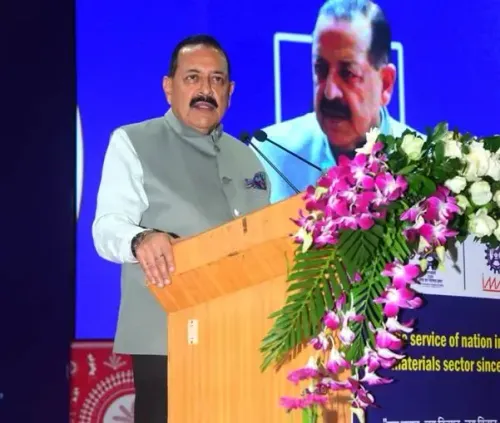
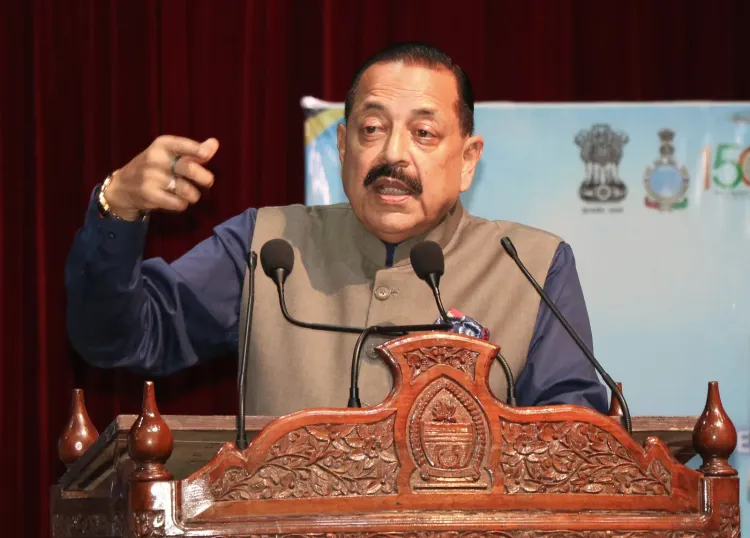
Union Minister of State for Science & Technology and Earth Sciences Dr. Jitendra Singh on Saturday, 4 July called for a mission-mode national response to India's escalating liver epidemic and the sharp surge in Type-2 diabetes, stressing that both conditions are now striking younger populations and demand an urgent pivot from curative to preventive healthcare. The minister made the remarks at the third anniversary of the Liver & Metabolic Disease Network (InFLiMeN) at the Institute of Liver & Biliary Sciences (ILBS) in New Delhi.
A Metabolic Crisis Hiding in Plain Sight
Singh described India's liver epidemic and the rise in Type-2 diabetes not as isolated conditions but as part of a deeper metabolic nexus. Disorders including fatty liver, hypertension, dyslipidaemia, and insulin resistance are closely interconnected, each predisposing individuals to the others, according to a statement from the Ministry of Science & Technology.
The minister warned that this shifting disease profile — appearing at younger ages than historically recorded — demands a corresponding shift in public health strategy: from treating illness after onset to preventing it through early detection and lifestyle modification.
Why India Faces a Distinct Vulnerability
'The country's genetic predisposition, higher prevalence of central obesity and distinct Indian phenotype make its population particularly vulnerable to diabetes, fatty liver and cardiovascular diseases, often even among individuals with relatively lower body mass index (BMI),' Singh noted.
He argued that these characteristics make it imperative to build Indian data, Indian research, and Indian solutions, rather than relying solely on clinical evidence generated in other populations and geographies.
Liver Under Stress from Modern Lifestyles
Despite being the body's most resilient and regenerative organ, the liver is increasingly under stress from unhealthy dietary habits, sedentary lifestyles, disrupted sleep patterns, chronic stress, and environmental pollution, the minister said. The cumulative burden of these factors is accelerating the progression of metabolic liver disease across age groups.
What InFLiMeN Is Doing
The Liver & Metabolic Disease Network (InFLiMeN), supported by the Department of Science & Technology (DST), was established to strengthen collaborative research, innovation, early diagnosis, and evidence-based policy interventions targeting the growing burden of liver and metabolic diseases. Singh described the network as a landmark national platform that has brought together scientific institutions, clinicians, and researchers to confront one of India's fastest-growing public health challenges.
He added that sustained scientific collaboration, combined with active public participation, would be critical to reversing the trajectory of liver and metabolic disorders in India.
The Road Ahead
With InFLiMeN completing three years, the focus now shifts to translating its collaborative research into scalable public health interventions. Experts and policymakers will need to align on a prevention-first framework that addresses both the clinical and behavioural dimensions of India's metabolic disease burden — a challenge that will only intensify as the country's urban population grows and sedentary lifestyles become more entrenched.
Point of View
But India has a long history of mission-mode health declarations that stall at the awareness stage. The real gap is not scientific recognition of the metabolic nexus — that is well-established — but the absence of a national screening infrastructure that can catch fatty liver and pre-diabetes before they become irreversible. India's public health architecture remains overwhelmingly curative; primary care centres are not equipped for metabolic surveillance. InFLiMeN's research value is real, but unless its outputs feed into district-level early detection protocols and are paired with a food environment policy — addressing ultra-processed food consumption and sedentary urban design — the minister's warning risks remaining a conference-hall headline.
NationPress
4 Jul 2026
Frequently Asked Questions
What did Jitendra Singh say about India's liver epidemic and diabetes?
MoS Dr. Jitendra Singh called for a mission-mode national response to India's liver epidemic and rising Type-2 diabetes, urging a shift from curative to preventive healthcare. He said both conditions are now appearing at younger ages and are part of an interconnected metabolic crisis.
What is InFLiMeN and what does it do?
InFLiMeN, or the Liver & Metabolic Disease Network, is a national platform supported by the Department of Science & Technology (DST) that brings together scientific institutions, clinicians, and researchers. It focuses on collaborative research, early diagnosis, and evidence-based policy to combat liver and metabolic diseases in India.
Why is India particularly vulnerable to metabolic diseases like diabetes and fatty liver?
According to Singh, India's genetic predisposition, higher prevalence of central obesity, and a distinct Indian phenotype make its population especially susceptible to diabetes, fatty liver, and cardiovascular diseases — often even at lower BMI levels than global norms. This makes India-specific research essential.
What lifestyle factors are stressing the liver, according to the minister?
Singh identified unhealthy dietary habits, sedentary lifestyles, disrupted sleep patterns, chronic stress, and environmental pollution as key factors placing the liver under increasing stress, accelerating the progression of metabolic liver disease.
Why does India need its own research on metabolic diseases?
The minister argued that India's unique genetic and phenotypic profile means clinical evidence from other populations may not accurately apply to Indian patients. He called for building Indian data and Indian solutions to address the country's specific metabolic disease burden.