Dr. Jitendra Singh releases book linking Yoga to 40% diabetes risk cut
Synopsis
Union Minister Dr. Jitendra Singh released 'Yoga and Prevention of Type 2 Diabetes' on June 17, 2026, ahead of International Day of Yoga. The book draws on India's first long-term randomised controlled trial showing yoga cuts Type 2 Diabetes risk by nearly 40 percent among prediabetic individuals.
Key Takeaways
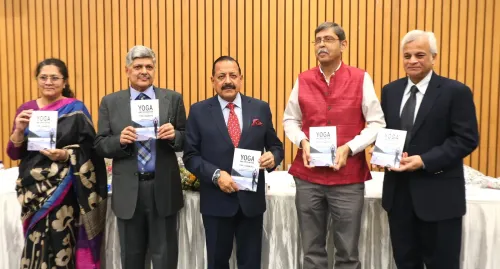
Jitendra Singh released the book 'Yoga and Prevention of Type 2 Diabetes: An Integrated Approach to Wellness' on June 17, 2026 , ahead of International Day of Yoga.
The book is edited by Professor of Endocrinology Dr.
Madhu and is grounded in the Indian Prevention of Diabetes Study (IPDS) .
The IPDS — India's first long-term multicentric randomised controlled trial on this subject — tracked nearly 1,000 prediabetic participants over three years .
A structured 40-minute daily yoga intervention combined with lifestyle measures was found to reduce the risk of Type 2 Diabetes progression by nearly 40 percent .
The theme of International Day of Yoga 2026 is 'Yoga for Healthy Ageing' , linking chronic disease prevention to healthy longevity.
The release aligns with PM Modi's decade-long push to integrate yoga into mainstream preventive healthcare frameworks in India and globally.
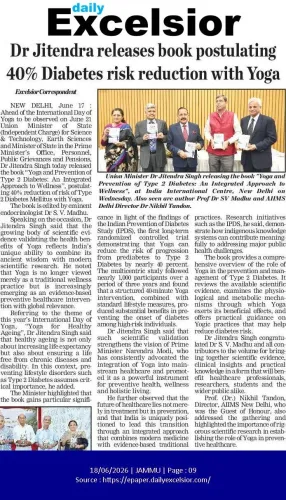
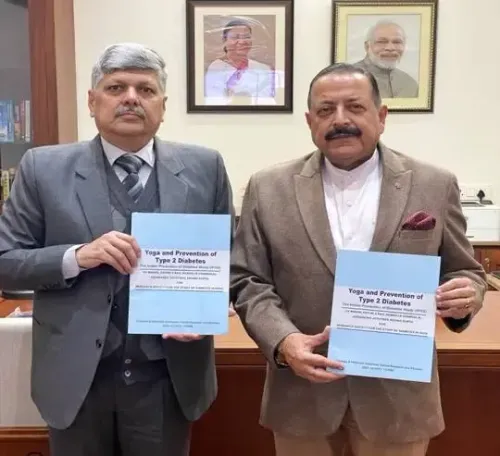
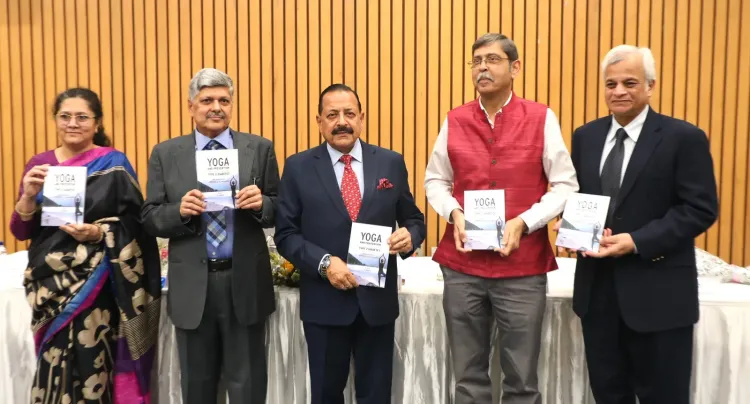
Ahead of the International Day of Yoga on June 21, Union Science and Technology Minister Dr. Jitendra Singh on Wednesday, June 17, 2026, released a book titled 'Yoga and Prevention of Type 2 Diabetes: An Integrated Approach to Wellness', which postulates a 40 percent reduction in the risk of Type 2 Diabetes Mellitus through structured yoga practice. The volume is edited by eminent Professor of Endocrinology Dr. S. V. Madhu.
Context
The book is anchored in findings from the Indian Prevention of Diabetes Study (IPDS), described as the first long-term randomised controlled trial to demonstrate that yoga can reduce the risk of progression from prediabetes to Type 2 Diabetes by nearly 40 percent. The multicentric study tracked close to 1,000 participants over three years, finding that a structured 40-minute yoga intervention combined with standard lifestyle measures produced substantial preventive benefits among high-risk individuals.
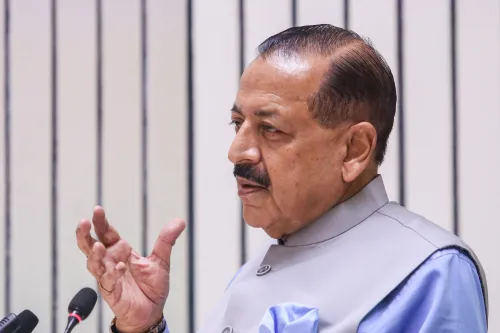
Dr. Jitendra Singh noted that there is a growing body of scientific evidence validating yoga's health benefits, and that the practice is 'no longer viewed merely as a traditional wellness practice but is increasingly emerging as an evidence-based preventive healthcare intervention with global relevance.'
Policy Backdrop
The release is timed to the International Day of Yoga, an annual observance on June 21 established by the United Nations General Assembly following a proposal by Prime Minister Narendra Modi at the UN General Assembly in 2014. This year's theme — 'Yoga for Healthy Ageing' — frames healthy ageing not merely as increased life expectancy but as a life free from chronic diseases and disability.
India has systematically pursued integration of traditional wellness practices into mainstream preventive healthcare through scientific validation studies, policy frameworks under the AYUSH Ministry, and collaborations with health research bodies. The IPDS represents a flagship example of this approach — generating randomised controlled trial evidence to support what has long been advocated as a low-cost, scalable intervention for non-communicable diseases.
Stakeholders and Impact
India carries one of the world's largest burdens of diabetes and prediabetes, making lifestyle-based prevention strategies of direct public health consequence. The IPDS findings, if incorporated into national diabetes prevention guidelines, could influence the clinical management of millions of high-risk individuals identified through programmes such as the National Programme for Prevention and Control of Cancer, Diabetes, Cardiovascular Diseases and Stroke (NPCDCS).
Dr. Jitendra Singh explicitly linked the publication to Prime Minister Modi's vision, saying it 'strengthens the vision of PM Modi, who has consistently advocated the integration of Yoga into mainstream healthcare and promoted it as a powerful instrument for preventive health, wellness and holistic living.' Endocrinologists, public health researchers, and the prediabetic population stand as the most direct stakeholders.
What's Next
With June 21 approaching, attention will turn to whether the IPDS findings are formally cited in updated national diabetes prevention guidelines or incorporated into yoga-based health modules rolled out through government wellness programmes. Any follow-up publications, policy advisories, or inter-ministerial guidelines drawing on the study's evidence base will signal how deeply the research penetrates institutional healthcare planning. The book's release sets a scientific reference point that could shape both domestic policy and India's continued international advocacy for yoga as preventive medicine.
Point of View
Not a ceremonial gesture. By anchoring the launch in a randomised controlled trial rather than anecdotal tradition, the government is building an evidence architecture that could justify mainstreaming yoga into clinical diabetes prevention protocols. This fits a broader pattern of India deploying scientific validation as diplomatic and domestic soft power, reinforcing PM Modi's decade-long effort to elevate yoga from cultural heritage to evidence-based global health tool. The key question is whether the IPDS data translates into binding clinical guidelines or remains a well-publicised proof of concept.
NationPress
16 Sept 2026
Frequently Asked Questions
What is the book released by Dr. Jitendra Singh about yoga and diabetes?
The book is titled 'Yoga and Prevention of Type 2 Diabetes: An Integrated Approach to Wellness' and is edited by Professor of Endocrinology Dr. S. V. Madhu. It is based on the Indian Prevention of Diabetes Study, which found that structured yoga practice can reduce the risk of progressing from prediabetes to Type 2 Diabetes by nearly 40 percent.
What is the Indian Prevention of Diabetes Study (IPDS)?
The IPDS is described as India's first long-term multicentric randomised controlled trial on yoga and diabetes prevention. It followed nearly 1,000 prediabetic participants over three years and found that a structured 40-minute yoga intervention combined with standard lifestyle measures significantly reduced the risk of developing Type 2 Diabetes.
What is the theme of International Day of Yoga 2026?
The theme of International Day of Yoga 2026, observed on June 21, is 'Yoga for Healthy Ageing,' which emphasises living free from chronic diseases and disability, not just longer life.
How does yoga reduce the risk of Type 2 Diabetes?
According to the IPDS findings cited in the book, a structured 40-minute daily yoga intervention combined with standard lifestyle measures produced substantial benefits in preventing the onset of diabetes among high-risk prediabetic individuals, with the study recording a nearly 40 percent reduction in risk.
Who proposed International Day of Yoga at the United Nations?
Prime Minister Narendra Modi proposed the creation of International Day of Yoga at the United Nations General Assembly in 2014, leading to its formal adoption and annual observance on June 21 from 2015 onwards.