Amitabh Kant on Starlink row: Why should India be denied the right the US claims?

Synopsis
Elon Musk mocked Mukesh Ambani as 'Dear Prime Minister Ambani' over Starlink's stalled India launch — and former NITI Aayog CEO Amitabh Kant hit back hard. His argument: the US bars BYD EVs at 100% tariffs and restricts telecom gear on security grounds without being called protectionist. Why, Kant asks, should India face a different standard for demanding the same from a foreign satcom company?
Key Takeaways
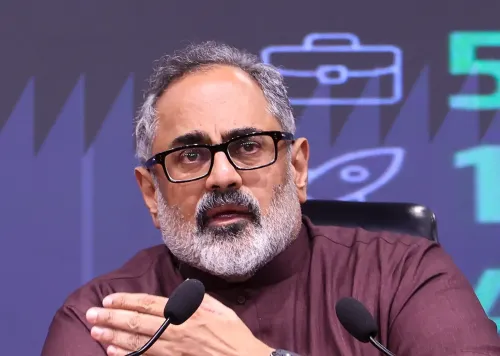
Former NITI Aayog CEO Amitabh Kant on 10 October defended India's right to impose national security conditions on Starlink .
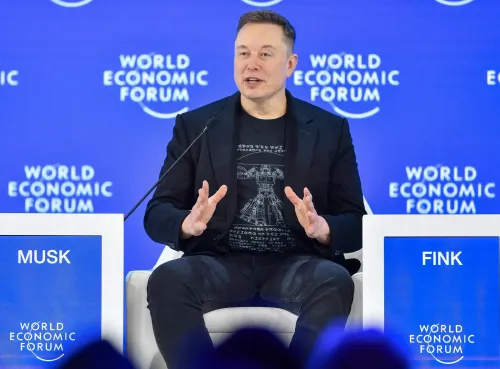
Elon Musk had mockingly addressed Mukesh Ambani as 'Dear Prime Minister Ambani' in a post on X , alleging Starlink's entry is being blocked.
Kant called Musk's post 'in extremely poor taste,' rejecting the claim that India is controlled by any single industrialist.
Kant cited US precedents: 100% tariffs on BYD EVs, telecom equipment bans, and proposed FCC restrictions on foreign testing labs.
Starlink has a licence to operate in India but still awaits security clearances before a commercial launch.
The government has dismissed allegations of a discriminatory regime as 'baseless and misconceived.'
Former G20 Sherpa and NITI Aayog CEO Amitabh Kant on Saturday, 10 October weighed in on the escalating Starlink controversy, asserting that if the United States can legitimately invoke national security to protect its economic interests, India must be accorded the same sovereign right — and any suggestion otherwise is a double standard.
Kant's Rebuttal to Musk
Kant was responding to a post by SpaceX and Tesla CEO Elon Musk on social media platform X, in which Musk took a swipe at billionaire Mukesh Ambani over Starlink's delayed commercial entry into India, sardonically addressing him as 'Dear Prime Minister Ambani.' In his own post on X, Kant called Musk's remark 'in extremely poor taste.'
'To suggest that India is controlled by one industrialist is both absurd and deeply disrespectful. India is a lively, vibrant democracy with a transparent economy and strong institutions,' Kant wrote.
India Welcomes Competition — With Conditions
Kant was categorical that India remains open to innovation, investment, and fair competition. However, he drew a firm line: 'No global corporation, however influential, can expect India to compromise its national interests or dictate its policies.' He added that what qualifies as a legitimate national security measure in the United States 'cannot suddenly become protectionism in India.'
US Practices That Mirror India's Stance
To underscore the hypocrisy Kant perceives, he cited several US regulatory precedents. Electric vehicles from Chinese automaker BYD face 100% import tariffs in the US, effectively barring them from the passenger car market. Stringent restrictions on telecom equipment have been imposed on national security grounds. The Federal Communications Commission (FCC) is also reportedly moving to bar testing laboratories in certain countries from certifying electronic devices for the American market. Kant's argument: these are not called protectionism when Washington deploys them.
Government's Position on Starlink
The Indian government has separately and firmly rejected Musk's allegations that Starlink's satellite communication services are being selectively blocked. Officials have made clear that compliance with national security norms is a non-negotiable prerequisite for every satcom licensee operating in India — without exception. While Starlink has obtained a licence to provide services in the country, it still awaits security-related clearances and additional regulatory approvals before a commercial launch can proceed. The government has described claims of a discriminatory regulatory regime as 'baseless and misconceived.'
What's Next
The row places India's satellite communication regulatory framework under renewed international scrutiny. With Starlink awaiting pending clearances and the government holding firm on security compliance, the timeline for a commercial launch in India remains uncertain. How New Delhi manages the balance between attracting foreign tech investment and enforcing sovereign norms will likely shape the terms on which other global satcom players seek to enter the Indian market.
Point of View
He puts the onus on Musk to explain why the same logic that justifies 100% BYD tariffs in America becomes unacceptable when India applies security vetting to a foreign satcom operator. What mainstream coverage underplays is that India's satcom clearance process lacks a published timeline or transparent benchmark, which creates space for exactly the kind of speculation Musk is exploiting. The government's 'baseless' dismissal may win the rhetorical round, but a clearer, rule-bound clearance framework would do more lasting damage to the protectionism narrative than any X post.
NationPress
10 Oct 2026
Frequently Asked Questions
What did Amitabh Kant say about the Starlink controversy?
Amitabh Kant, former G20 Sherpa and NITI Aayog CEO, argued on 10 October that India has the same sovereign right to protect its national security as the United States routinely exercises. He said no global corporation can expect India to compromise its national interests or dictate its policies.
What did Elon Musk post about Mukesh Ambani and Starlink?
Elon Musk posted on X addressing Mukesh Ambani as 'Dear Prime Minister Ambani,' implying that Ambani's influence is blocking Starlink's commercial entry into India. Kant dismissed the remark as 'in extremely poor taste' and called the suggestion that India is controlled by one industrialist 'absurd and deeply disrespectful.'
Why is Starlink's India launch delayed?
Starlink has obtained a licence to provide satellite communication services in India but still requires security-related clearances and additional regulatory approvals before it can commercially launch. The Indian government has made compliance with national security norms a mandatory prerequisite for all satcom licensees.
What US trade barriers did Amitabh Kant reference?
Kant cited the 100% import tariff on Chinese EV maker BYD that effectively bars it from the US passenger car market, stringent national-security-based restrictions on telecom equipment, and a proposed FCC move to bar foreign testing laboratories from certifying electronic devices for the American market.
What is the Indian government's official stance on Starlink's situation?
The government has rejected Elon Musk's allegations that Starlink is facing a discriminatory regulatory regime, calling such claims 'baseless and misconceived.' It has stated that demonstrating compliance with security norms is an absolute requirement for every satcom licensee, with no exceptions.