India's security comes first: Rajeev Chandrasekhar to Elon Musk on Starlink clearance
Synopsis
Rajeev Chandrasekhar's public reply to Elon Musk is the most direct articulation yet of why India is taking its time on satellite broadband clearances — and it goes well beyond bureaucratic delay. By linking satcom to the 26/11 attacks and Pahalgam terrorism, he frames the Starlink wait not as red tape, but as a national security imperative. The message: India wants the technology, just on its own verified terms.
Key Takeaways
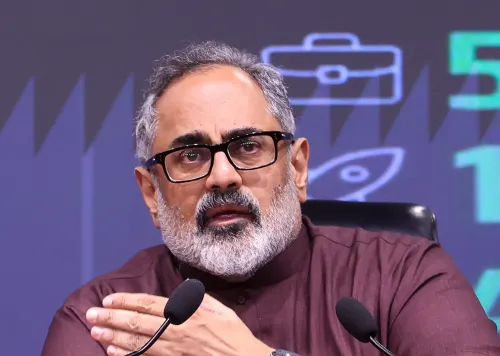
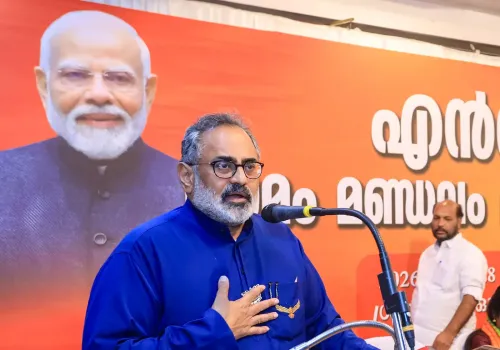
Kerala BJP President Rajeev Chandrasekhar responded to Elon Musk on X on 9 October , defending India's satellite communication security clearance process.
He said all three satellite communication service providers are at broadly the same stage of obtaining security clearance — signalling no single company is being singled out.
Chandrasekhar cited terrorism links to satcom, referencing the 26/11 Mumbai attacks and recent incidents in Pahalgam .
India's tech policy under PM Modi , he said, rests on three pillars: openness , safety and trust , and accountability .
Chandrasekhar said he has personally used Starlink and called it 'awesome technology', but maintained safety verification must precede spectrum allocation.
He clarified he is no longer in government and was speaking in a personal capacity.
Kerala BJP President Rajeev Chandrasekhar on 9 October publicly responded to billionaire Elon Musk on social media platform X, defending India's security clearance process for satellite communication services and asserting that national security must take precedence over the speed of technology adoption. His post comes amid an ongoing debate over clearances for satellite-based Internet services, including Musk's Starlink, in India.
Why Patience Is 'A Necessity'
Chandrasekhar, who described himself as someone with experience in both building India's wireless sector as an entrepreneur and shaping telecom policy, argued that the country must assess new technologies through the lens of its own interests. 'A country has to plan for itself and its interests before every new choice. That's what India is doing. Patience is unavoidable and in this case is a necessity,' he wrote.
He also clarified that he is no longer in government and was not speaking on its behalf, framing his remarks as a personal perspective informed by deep sectoral knowledge.
All Three Providers At Same Stage
Chandrasekhar noted that all three satellite communication service providers seeking to operate in India were broadly at the same stage in the security clearance process — an implicit signal that the delay was not targeted at any single company. Safety and trust, he said, had to be verified before spectrum could be allocated.
The Security Case: From 26/11 to Pahalgam
The former minister flagged specific security concerns around satellite Internet services, pointing to India's experience with terrorism and insurgency supported by hostile actors in its neighbourhood. 'From 26/11 terror attacks to recent ones in Pahalgam, satcom has been preferred communication for terrorists,' he said. He added that satellite-based voice-over-Internet services and encryption presented additional challenges — ones he described as 'not insurmountable' but requiring new capabilities and capacity.
Three Pillars of India's Tech Policy
Chandrasekhar outlined what he described as the three guiding principles of India's technology sector under Prime Minister Narendra Modi: openness (free and fair competition, no monopoly or duopoly), safety and trust (verified infrastructure and platforms), and accountability (legal accountability for every participant). He said these principles applied equally to satellite communications.
Chandrasekhar's Take on Starlink
Despite the pointed policy defence, Chandrasekhar acknowledged Starlink's technological merit. 'I have used Starlink and I think it's awesome technology and represents a new era in mobility innovation. No doubt,' he wrote. The remark underscores that India's hesitation is rooted in regulatory process rather than a rejection of the technology itself. The broader question of when satellite broadband will be cleared for commercial rollout in India remains open, with regulatory and security agencies continuing their review.
Point of View
Arms-length defence without implicating the ministry. The invocation of 26/11 and Pahalgam is deliberate framing: it shifts the Starlink debate from 'India is slow' to 'India is careful', a much stronger domestic political position. What the post does not address is the competitive dynamic — whether India's incumbent telecom players, who would face disruption from satellite broadband, have any role in the pace of clearances. That question remains conspicuously unanswered, and mainstream coverage has largely let it pass.
NationPress
9 Oct 2026
Frequently Asked Questions
Why is Rajeev Chandrasekhar responding to Elon Musk about Starlink?
Chandrasekhar posted on X to defend India's security clearance process for satellite communication services after Musk reportedly raised concerns about the pace of approvals. He argued that national security verification must precede spectrum allocation for any satellite broadband provider operating in India.
Is Starlink being specifically targeted by India's security clearance delays?
According to Chandrasekhar, no. He stated that all three satellite communication service providers seeking to operate in India are broadly at the same stage in obtaining security clearance, suggesting the process is not directed at Starlink alone.
What security concerns has India raised about satellite Internet services?
Chandrasekhar highlighted that satellite communication has been used as a preferred channel by terrorists, citing both the 26/11 Mumbai attacks and recent incidents in Pahalgam. He also noted that satellite-based voice-over-Internet services and encryption add additional security challenges that require new regulatory capabilities.
What are the three principles guiding India's technology policy according to Chandrasekhar?
He outlined openness (free and fair competition, no monopoly or duopoly), safety and trust (verified and secure infrastructure and platforms), and accountability (legal accountability for all participants). He said these principles apply to satellite communications as they do to other technology sectors.
Does Chandrasekhar support Starlink as a technology?
Yes. He said he has personally used Starlink and called it 'awesome technology' representing 'a new era in mobility innovation'. His position is that India's security verification process is a prerequisite, not a rejection of the technology itself.