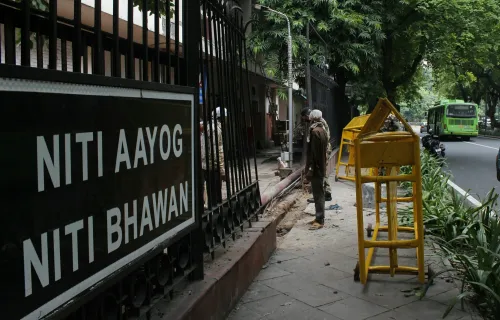
NITI Aayog Chief Ashok Lahiri Meets PM Modi After Taking Charge
Synopsis
Dr. Ashok Lahiri, newly appointed NITI Aayog Vice Chairman and BJP MLA from Bengal, met PM Modi just one day after taking charge — his first official act in office. Combined with immunologist Gobardhan Das set to join as member, two Bengalis now hold top posts in India's premier policy body, a move with clear political undertones ahead of Bengal elections.
Key Takeaways
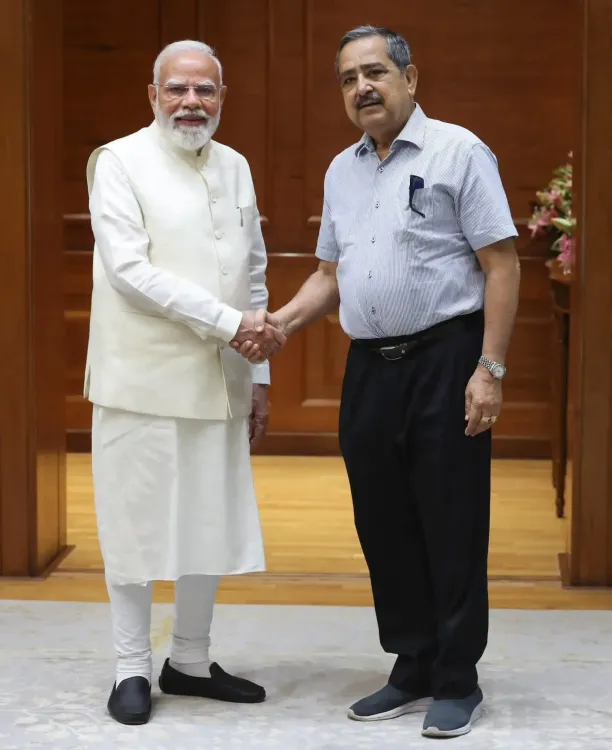
Ashok Lahiri was appointed as the new Vice Chairman of NITI Aayog and met PM Narendra Modi on April 26, 2025 , just one day after assuming charge.
Lahiri is a BJP MLA from Balurghat, West Bengal and served as India's 12th Chief Economic Adviser , with stints at the IMF, World Bank, and Asian Development Bank .
He succeeds Suman Bery , who served as NITI Aayog Vice Chairman from May 2022 .
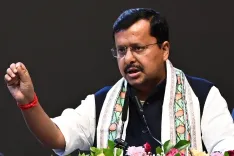
Gobardhan Das , former Director of IISER Bhopal and BJP candidate in 2021 West Bengal elections , is set to join NITI Aayog as a full member .
The appointments mark a notable rise in Bengali representation in India's top policy-making body, carrying significant political implications for the BJP's strategy in West Bengal .
Lahiri's global experience and academic credentials position NITI Aayog for a sharper focus on fiscal policy, economic reforms, and India's Viksit Bharat 2047 agenda .
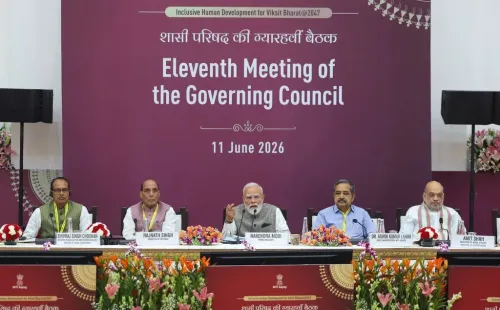
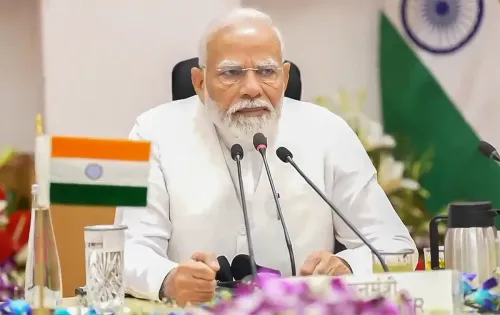
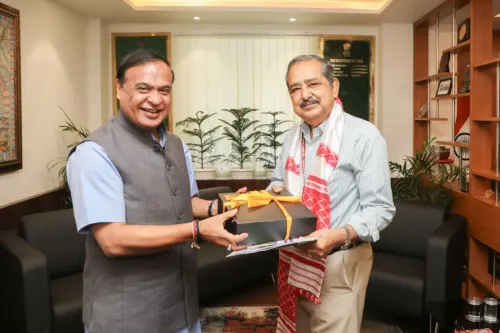
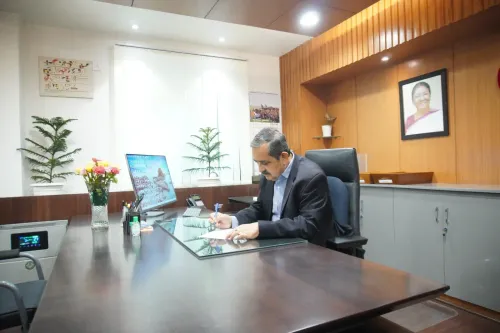
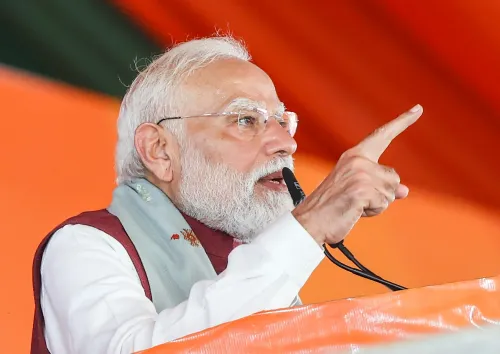
New Delhi, April 26: Dr. Ashok Lahiri, the newly appointed Vice Chairman of NITI Aayog, called on Prime Minister Narendra Modi in New Delhi on Saturday, April 26, just 24 hours after formally assuming charge of his new role. The high-level meeting marks Lahiri's first official engagement since taking over one of India's most influential policy positions, and signals an early and direct line of communication with the Prime Minister's Office.
First Meeting After Assuming Charge
Lahiri confirmed the meeting himself, posting on social media platform X (formerly Twitter): "Today, I met with the Prime Minister, Narendra Modi." The brevity of the post was in sharp contrast to the significance of the occasion — a newly installed policy chief establishing his first formal interface with the country's top executive within hours of taking office.
Lahiri succeeds Suman Bery, who had served as NITI Aayog's Vice Chairman since May 2022. Bery's tenure was marked by the post-pandemic economic recovery phase, making Lahiri's appointment particularly consequential as India navigates global economic headwinds and domestic structural reforms.
Who Is Dr. Ashok Lahiri
Lahiri brings an exceptionally distinguished career in economics and public policy to the role. He served as India's 12th Chief Economic Adviser to the Government of India, a position that places him among the country's most respected economic minds. His academic career includes tenures at the Delhi School of Economics and the National Institute of Public Finance and Policy (NIPFP).
His international exposure is equally formidable — Lahiri has worked with the World Bank, the International Monetary Fund (IMF), and the Asian Development Bank (ADB). He also served on the board of Bandhan Bank, giving him rare insight into grassroots banking and financial inclusion — a critical area for India's economic agenda.
An alumnus of Presidency University, Kolkata, Lahiri is also a sitting BJP MLA from Balurghat in the West Bengal Legislative Assembly, though he is not contesting the ongoing state elections. His dual identity as a technocrat-economist and an elected politician makes him a unique appointment in the history of NITI Aayog's leadership.
Bengal's Rising Influence in National Policy-Making
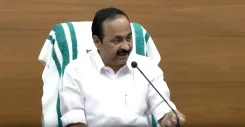
Lahiri's elevation is not an isolated event. Dr. Gobardhan Das, a prominent immunologist and former Director of the Indian Institute of Science Education and Research (IISER), Bhopal, is also set to join NITI Aayog as a full member. Das previously served as a faculty member at Jawaharlal Nehru University (JNU) and contested the 2021 West Bengal Assembly elections from Purbasthali Uttar on a BJP ticket, though he was unsuccessful.
Together, the inclusion of two prominent Bengalis — one an economist, the other a scientist — in NITI Aayog's top tier represents a deliberate political and intellectual statement. For the Bharatiya Janata Party (BJP), this can be projected as recognition of Bengal's deep intellectual and academic tradition in national governance, while simultaneously crafting a counter-narrative to the All India Trinamool Congress (AITC/TMC)'s political dominance in the state.
Strategic and Political Implications
This comes amid the BJP's sustained effort to deepen its footprint in West Bengal, a state that has historically resisted the party's electoral advances despite significant gains in the 2019 Lok Sabha elections. Elevating Bengali intellectuals to national policy bodies serves a dual purpose: it rewards loyalists and simultaneously signals to Bengal's educated middle class that the BJP values the state's intellectual capital.
Notably, NITI Aayog — which replaced the Planning Commission in January 2015 — has evolved into a critical think-tank that shapes India's long-term economic and social policy. Under Lahiri's stewardship, key areas such as fiscal consolidation, manufacturing competitiveness, agricultural reform, and India's Viksit Bharat 2047 roadmap are expected to receive renewed focus. His IMF and World Bank experience could also prove valuable as India positions itself more assertively in global economic forums.
What to Expect Next
With Lahiri now formally in place and having already met the Prime Minister, NITI Aayog is expected to accelerate its policy advisory role in the run-up to the next Union Budget cycle. Observers will watch closely to see whether his appointment brings a sharper focus on fiscal discipline, given his background as Chief Economic Adviser. His first public statements or policy papers as Vice Chairman will be closely scrutinised by economists, state governments, and industry bodies alike.
The formal induction of Dr. Gobardhan Das as a member is also anticipated shortly, which will complete the new leadership configuration of NITI Aayog under the current government's third term.
Point of View
The party sends a message that resonates beyond Delhi: Bengal's brain power is valued in New Delhi, even if the ballot box hasn't yet agreed. The parallel induction of Gobardhan Das compounds this signal. What the mainstream narrative misses is that NITI Aayog appointments are also soft power tools — and in a state where the BJP has struggled to convert intellectual sympathy into electoral wins, this is a long game being played with precision.
NationPress
16 Sept 2026
Frequently Asked Questions
Who is the new Vice Chairman of NITI Aayog in 2025?
Dr. Ashok Lahiri is the newly appointed Vice Chairman of NITI Aayog in 2025. He is a former Chief Economic Adviser to the Government of India and a BJP MLA from Balurghat in West Bengal.
Why did Ashok Lahiri meet PM Modi?
Ashok Lahiri met Prime Minister Narendra Modi on April 26, 2025, the day after assuming charge as NITI Aayog Vice Chairman. It was his first official engagement in the new role, signalling a direct line of communication with the Prime Minister's Office.
Who did Ashok Lahiri replace as NITI Aayog Vice Chairman?
Ashok Lahiri succeeded Suman Bery as NITI Aayog Vice Chairman. Bery had held the position since May 2022.
Who is Gobardhan Das and what is his role in NITI Aayog?
Dr. Gobardhan Das is a prominent immunologist and former Director of IISER Bhopal who is set to join NITI Aayog as a member. He is also a former BJP candidate from West Bengal's 2021 Assembly elections.
What is the significance of two Bengalis joining NITI Aayog?
The inclusion of both Ashok Lahiri and Gobardhan Das — both with Bengal connections and BJP affiliations — gives the party a strong narrative of recognising Bengal's intellectual leadership at the national level. It is also seen as a political counter to TMC's dominance in the state.