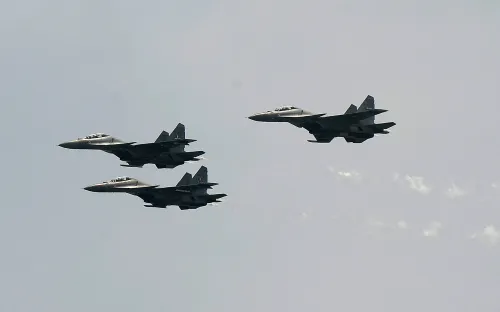
Anand Mahindra hails IAF's Kargil ingenuity after binge-watching Operation Safed Sagar
Synopsis
Mahindra Group chairman Anand Mahindra used a weekend viewing of Netflix's Operation Safed Sagar to spotlight the Indian Air Force's overlooked technical improvisations during the 1999 Kargil War — GPS-guided MiG strikes and a sanctions-era Mirage 2000 fix — and to argue India needs more such storytelling to build national pride.
Key Takeaways
Anand Mahindra publicly endorsed the Netflix series Operation Safed Sagar on 10 August 2026 , calling it moving and inspiring despite mixed reviews.
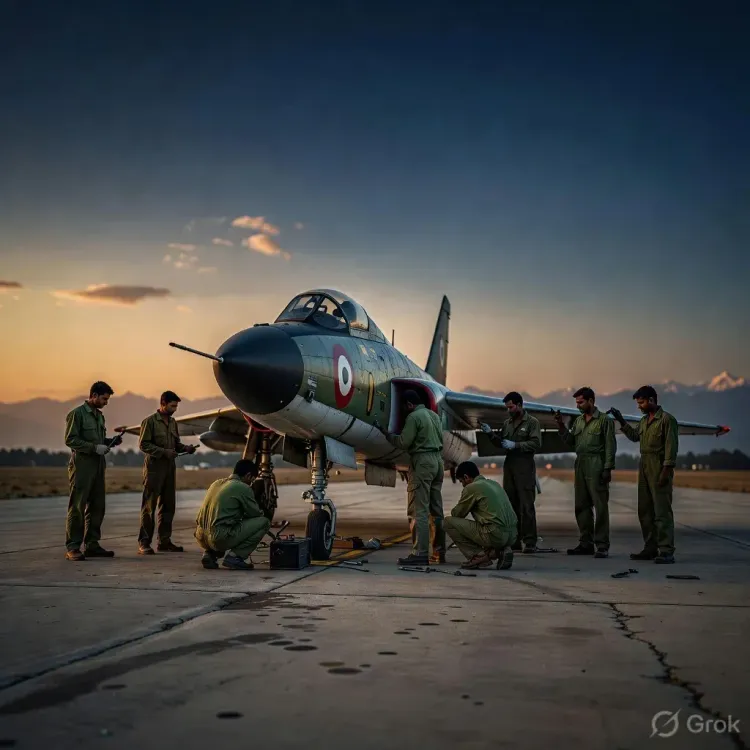
The series revealed that IAF pilots fitted commercial GPS receivers into MiG jets during the 1999 Kargil War to calculate bomb release points — a rapid field improvisation taken into combat within days.
IAF technicians also engineered a missing component for the Mirage 2000 / Litening pod / Paveway II combination themselves after 1998 nuclear-test sanctions blocked its import — what Mahindra terms 'denial-driven innovation.' Mahindra drew a direct comparison to Hollywood war films , arguing they built American national pride while Indian audiences had no equivalent domestic storytelling for decades.
He paid a 'special salute' to Squadron Leader Ajay Ahuja , an IAF officer killed during Kargil operations, whose name is less prominent in popular culture than other Kargil heroes.
The post links Kargil-era ingenuity to contemporary debates on human intelligence vs machine intelligence and India's push for defence self-reliance.
A weekend binge-watch turned into a public reckoning with a chapter of Indian military history that rarely gets its due. Mahindra Group chairman Anand Mahindra took to X on Monday, 10 August 2026, to deliver an extended, personal tribute to the Indian Air Force's role in the 1999 Kargil War — sparked by his viewing of the Netflix series Operation Safed Sagar — and to argue that stories like this one are exactly what a nation needs to build genuine pride.
What the series revealed about the IAF's Kargil campaign
Mahindra's post goes well beyond a streaming recommendation. He singles out two specific feats of improvisation that the series brought to his attention. The first: IAF pilots acquired commercial handheld GPS receivers, retrofitted them into MiG aircraft, and used the data to calculate precise release points for unguided 'dumb' bombs — conducting hurried trials, refining the technique across a handful of sorties, and taking it into live combat almost immediately. The second was the Mirage 2000 story. The IAF held the aircraft, Israeli Litening laser-designation pods, and Paveway II guidance kits — but had not yet integrated them into an established combat capability. When a critical component could not be sourced from abroad because of the sanctions that followed India's 1998 nuclear tests, IAF technicians engineered the solution themselves. Mahindra calls it 'denial-driven innovation' — a phrase that lands with particular force in an era of supply-chain fragility and technology export controls.
The Hollywood comparison that cuts deep
The sharpest passage in the post is not about the war at all — it is about memory and cultural storytelling. Mahindra writes that his generation 'grew up on a diet of Hollywood war movies which, despite often taking enormous liberties with historical accuracy, helped build American pride and self-belief while we watched as envious bystanders.' The line is a quiet indictment: not of Hollywood, but of the decades-long gap in India's own cinematic record of its conflicts. The domestic streaming boom — and the commissioning appetite that comes with it — is now beginning to close that gap, one production at a time.
A salute to Squadron Leader Ajay Ahuja
Mahindra closes with a 'special salute' to Squadron Leader Ajay Ahuja, an IAF officer killed in action during the Kargil operations. Ahuja's name is less widely known in popular culture than Param Vir Chakra awardee Vikram Batra, whose story has been told in mainstream Bollywood. The explicit mention is a deliberate act of public remembrance — and a signal that the series does the harder work of surfacing the less-celebrated heroes of that conflict.
Why a business leader's endorsement matters here
Mahindra's commentary on the series connects two threads he returns to often: the value of human ingenuity over machine dependence, and India's evolving capacity for self-reliance in technology. 'At a time when we are debating whether human intelligence will increasingly become a slave to machine intelligence,' he writes, 'it's incredibly valuable to be reminded that even in battle, where decisions are made in seconds and lives depend upon them, it's ultimately the humans behind the machines who make the difference.' Coming from the chairman of one of India's largest industrial conglomerates — a group with deep interests in defence, aerospace, and technology — the observation carries weight beyond social media sentiment. The Kargil improvisations he describes are, in his framing, an early proof-of-concept for the same spirit that now drives India's push toward defence indigenisation.
Point of View
Creating a new cultural-economy intersection between defence narrative and entertainment capital. His framing of Kargil-era improvisation as 'denial-driven innovation' deliberately echoes the language of India's current Atmanirbhar Bharat defence push — signalling that historical episodes are being actively recruited to legitimise present-day indigenisation policy. For a conglomerate with growing stakes in defence manufacturing and aerospace, Mahindra's public alignment with IAF ingenuity is also soft brand-building in a sector where government contracts reward demonstrated patriotic credibility. The post is a reminder that in India's evolving business-culture landscape, a chairman's social media feed can function simultaneously as personal commentary, policy signal, and corporate positioning.
NationPress
24 Sept 2026
Frequently Asked Questions
What is Operation Safed Sagar the Netflix series about?
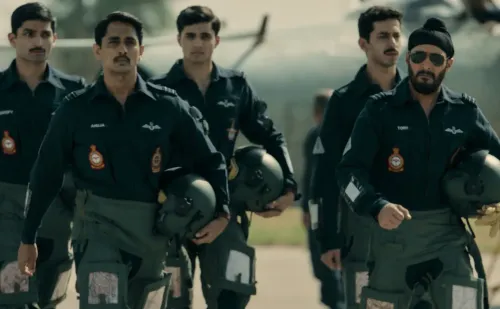
Operation Safed Sagar is a Netflix series depicting the Indian Air Force's aerial campaign during the 1999 Kargil War, including specific technical improvisations such as GPS-guided bombing from MiG aircraft and the field-engineered Mirage 2000 precision-strike capability.
What did Anand Mahindra say about Operation Safed Sagar?
Mahindra said he was 'moved and inspired' by the series and praised it for revealing the IAF's overlooked ingenuity during Kargil, specifically the GPS-MiG improvisation and the sanctions-era Mirage 2000 fix, which he called 'denial-driven innovation.'
Who was Squadron Leader Ajay Ahuja?
Squadron Leader Ajay Ahuja was an Indian Air Force officer killed in action during the Kargil War operations in 1999. Mahindra gave him a 'special salute' in his post, drawing attention to a hero less prominent in mainstream popular culture.
How did the IAF use GPS during the Kargil War?
According to the series highlighted by Mahindra, IAF pilots acquired commercial handheld GPS receivers, integrated them into MiG aircraft, and used the positional data to calculate release points for unguided bombs — refining the technique across a few sorties before deploying it in combat.
Why does Mahindra compare Kargil to Hollywood war movies?
Mahindra argues that Hollywood war films — however historically loose — built American national pride, while Indian audiences grew up without equivalent domestic storytelling about their own military conflicts. He sees series like Operation Safed Sagar as beginning to correct that deficit.