Can the Medicinal Plant Sector Propel the Viksit Bharat Vision?
Synopsis
The Ayush Minister reveals that the medicinal plant sector is crucial for India's vision of Viksit Bharat by 2047. As global interest in Ayurveda rises, the minister stresses the need for collaboration among stakeholders to empower rural communities and enhance the economy, paving the way for India to become a leading supplier of medicinal plants.
Key Takeaways
Medicinal plants are vital to India's traditional knowledge and economy.
The sector offers unique opportunities for farmers and entrepreneurs .
Government initiatives aim to empower rural communities .
Collaboration is key to making the sector globally competitive .
Scientific validation and climate resilience are essential for the future.
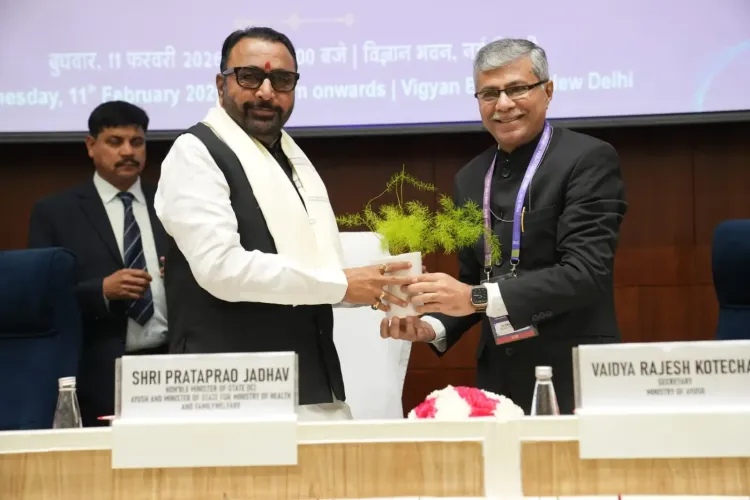
New Delhi, Feb 11 (NationPress) Medicinal plants are not just the cornerstone of India's traditional knowledge systems; they also represent a critical aspect of the nation's biological and economic legacy, stated Ayush Minister Prataprao Jadhav on Wednesday. He emphasized that the increasing global acknowledgment of Ayurveda and other Ayush systems underscores India's potential to emerge as a premier supplier of high-quality medicinal plants and plant-based wellness products.
During the inauguration of a Chintan Shivir on Medicinal Plants in New Delhi, the minister noted that this theme aligns seamlessly with the government's aspirations for Viksit Bharat by 2047 and the Atmanirbhar Bharat vision, which aims to empower rural communities with sustainable livelihoods.
He pointed out that the medicinal plants sector opens up distinctive opportunities for farmers, entrepreneurs, and researchers to work together towards a healthier, self-sufficient India.
The National Medicinal Plants Board (NMPB), under the Ministry of Ayush, hosted this one-day Chintan Shivir.
The minister commended NMPB's unwavering commitment to bolstering both backward and forward linkages, enhancing market access, and maintaining quality and authenticity throughout the supply chain.
He called on all stakeholders to persist in their collaborative efforts to cultivate a globally competitive, environmentally sustainable, and economically robust medicinal plants sector that benefits both farmers and society's health needs.
Vaidya Rajesh Kotecha, Secretary of the Ministry of Ayush, highlighted that NMPB’s silver jubilee marks not only a significant achievement but also a moment for reflection and innovation.
Kotecha stated that the next steps must prioritize scientific validation, traceability, and climate resilience to guarantee the conservation and optimal use of India's diverse medicinal flora in accordance with international standards.
The Ministry is actively working to enhance regional facilitation centers, research collaborations, and digital connections for improved coordination among stakeholders.
Emphasizing the importance of collaboration among academia, industry, and farmers, Kotecha mentioned that the outcomes of this Chintan Shivir will shape a five-year roadmap aimed at making the sector more productive, inclusive, and globally competitive.
Dr. Mahesh Kumar Dadhich, CEO of NMPB, affirmed that the Board is dedicated to fortifying the entire value chain—from cultivation to market—through innovation, stakeholder engagement, and sustainable practices.
Point of View
It is crucial to recognize that the medicinal plant sector is not only a reflection of India's rich traditional heritage but also a significant opportunity for economic growth. The emphasis on sustainability and collaboration among various stakeholders can pave the way for a robust future, aligning with national goals. This initiative deserves national attention as it has the potential to uplift rural communities while enhancing global competitiveness.
NationPress
18 Sept 2026
Frequently Asked Questions
What is the significance of medicinal plants in India?
Medicinal plants form the backbone of India's traditional knowledge systems and are essential to its biological and economic heritage.
How does the government plan to support this sector?
The government aims to empower rural communities through sustainable livelihoods, enhancing the medicinal plants sector's contribution to the economy.
What role does the National Medicinal Plants Board play?
The NMPB focuses on strengthening the supply chain, expanding market access, and ensuring quality in the medicinal plants sector.
What is the future vision for India's medicinal plants?
The vision includes scientific validation, traceability, and climate resilience to optimize the use of India’s diverse medicinal flora.
How can stakeholders collaborate effectively?
Collaboration between academia, industry, and farmers is essential to develop a productive and inclusive medicinal plants sector.