Middle East conflict to drive $800 bn capex surge in India by 2030: Morgan Stanley

Synopsis
Morgan Stanley's latest report projects a staggering $800 billion in incremental capex flowing into India over five years — with the Middle East conflict acting as an unexpected catalyst. Energy transition, data centres, and defence are set to absorb 60% of the surge, while corporate earnings could compound at over 15% annually, reshaping India's equity market valuation by FY2031.
Key Takeaways
Morgan Stanley projects $800 billion in incremental cumulative capex in India over the next five years .
Approximately 60% of this capex is expected to flow into energy transition , data centres , and defence .
India's investment rate is forecast to reach 37.5% of GDP by FY2030 .
Corporate earnings could compound at over 15% annually, with the equity market trading at roughly 10x FY2031 earnings .
The report flags concentration risk and supply-side resilience as the central policy challenges to watch.
India could emerge as a globally preferred data centre destination amid ongoing Middle East geopolitical disruption.
India is set to receive an incremental cumulative capital expenditure of $800 billion over the next five years across defence, data centres, and energy transition, driven in part by the ongoing Middle East conflict, according to a report by Morgan Stanley released on 30 April. The investment rate is projected to touch 37.5 per cent of GDP by FY2030, marking a significant structural shift in India's capital allocation landscape.
Where the $800 Billion Is Headed
According to the Morgan Stanley report, approximately 60 per cent of the incremental capex is expected to be channelled into energy transition, data centres, and defence. The remaining allocation is expected to address broader supply-side vulnerabilities exposed by the geopolitical disruption in the Middle East. The report underscores that India's medium-term capex-led growth trajectory remains intact, with real GDP growth anchored at 6.5–7 per cent.
Impact on Corporate Earnings and Equity Markets
A higher peak investment rate, the report argues, could lift profit share in GDP above its previous peak of 7 per cent — potentially reaching 8 per cent. This would translate into corporate earnings compounding at over 15 per cent over the next five years, placing the equity market at roughly 10 times FY2031 earnings. Notably, this projection assumes sustained policy support and execution on the ground — both historically contested assumptions in India's investment cycles.
Energy, Fertilisers and Defence: The Policy Response
The Morgan Stanley report outlines a multi-pronged policy response to the Middle East disruption. On energy, it predicts the government will expand the Strategic Petroleum Reserve, accelerate coal gasification and mining, and push broader electrification. On fertilisers, the medium-term strategy involves three pillars: diversifying supply sources, expanding domestic production capacity, and reducing nutrient intensity through improved agronomy and input efficiency. For defence, the conflict is expected to accelerate indigenisation and procurement timelines, reinforcing the government's existing push under the Aatmanirbhar Bharat framework.
Data Centres: India's Digital Sovereignty Play
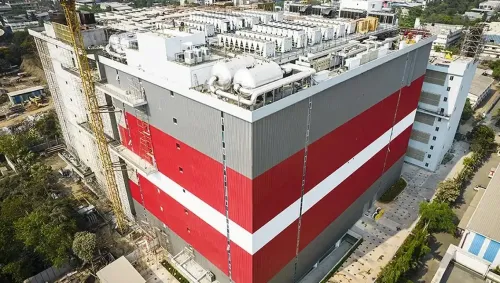
Geopolitical de-risking, combined with India's domestic policy push, is reinforcing a multi-year investment cycle in data centres, the report noted. Morgan Stanley flagged that India could emerge as a more favourable global destination for data centre investment amid the ongoing conflict. Crucially, the expansion carries meaningful second-order spillovers — across construction, electrical equipment, cooling systems, and grid capex — while supporting India's broader objective of digital sovereignty.
The Central Policy Challenge
Despite the optimistic capex outlook, the report is candid about structural risks. It identifies the central policy challenge as reducing concentration risk, strengthening domestic buffers, and improving resilience to repeated external shocks. This comes amid a global environment of persistent geopolitical volatility, where supply chains and energy flows remain susceptible to rapid disruption. How effectively India manages these vulnerabilities will determine whether the projected investment surge translates into durable growth or remains a headline projection. The next five years will serve as a critical test of India's institutional capacity to absorb and deploy capital at scale.
Point of View
But the Morgan Stanley report is really making a subtler argument: that geopolitical disruption is now a structural driver of India's investment cycle, not merely a short-term tailwind. What mainstream coverage tends to miss is the second-order dimension — data centre spillovers into grid capex and electrical equipment, or fertiliser strategy's link to agronomy reform. The harder question is whether India's institutional machinery can absorb capital at this scale without the familiar bottlenecks of land acquisition, regulatory delay, and fiscal slippage. India has seen headline capex projections before; the gap between announced and deployed capital has historically been wide. The profit-share-to-GDP projection — potentially hitting 8% — is the number equity markets should scrutinise most carefully, because it assumes both policy execution and a benign global demand environment, neither of which is guaranteed.
NationPress
19 Sept 2026
Frequently Asked Questions
What is the $800 billion capex projection for India about?
Morgan Stanley's report projects that India will see $800 billion in incremental cumulative capital expenditure over the next five years, driven by the Middle East conflict and its impact on energy, defence, and data centre investment. About 60% of this capex is expected to be allocated to energy transition, data centres, and defence.
How will the Middle East conflict boost investment in India?
The conflict is expected to prompt a strong policy response from the Indian government to address supply-side vulnerabilities in energy, fertilisers, and defence. It is also expected to make India a more attractive global destination for data centre investment as companies seek geopolitically stable locations.
What is India's projected investment rate by FY2030?
According to the Morgan Stanley report, India's investment rate is projected to reach 37.5% of GDP by FY2030, supported by the multi-year capex cycle across defence, energy transition, and digital infrastructure.
How could this capex surge affect corporate earnings and the stock market?
Morgan Stanley projects that a higher peak investment rate could lift India's profit share in GDP to around 8%, above the previous peak of 7%. This could drive corporate earnings to compound at over 15% annually, placing the equity market at roughly 10 times FY2031 earnings.
What are the key risks to this investment outlook?
The report identifies concentration risk, weak domestic buffers, and vulnerability to repeated external shocks as the central policy challenges. Execution risk — translating announced capex into deployed capital — remains a historically significant concern for India's investment cycles.