Have MP pension and gratuity rules been eased?
Synopsis
Discover the pivotal changes in pension and gratuity rules announced by the Madhya Pradesh Cabinet, aimed at simplifying processes for retirees and enhancing benefits for families. This article delves into the implications of these reforms and their potential impact on thousands of pensioners across the state.
Key Takeaways
Madhya Pradesh Cabinet has approved new pension rules to simplify processes.
Family pensions now include unmarried, widowed, and divorced daughters.
New gratuity rules will enhance payment clarity for government employees.
There is a five-year age relaxation for IT cadre recruitment.
Significant funding allocated for tribal welfare schemes.
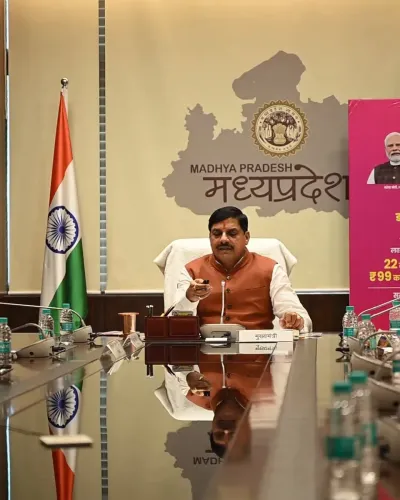
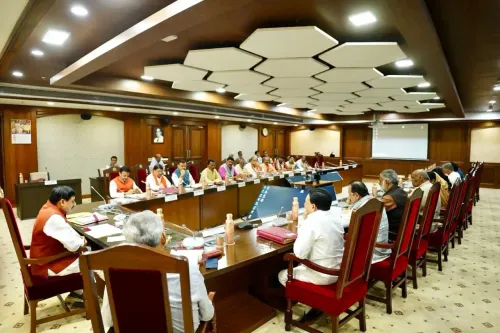
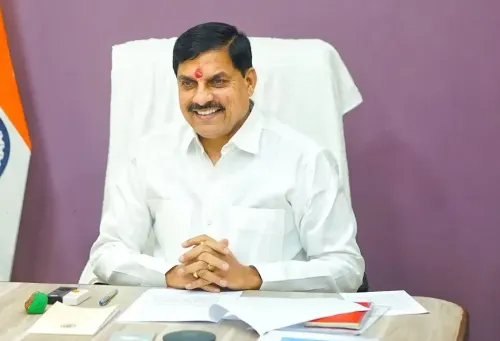
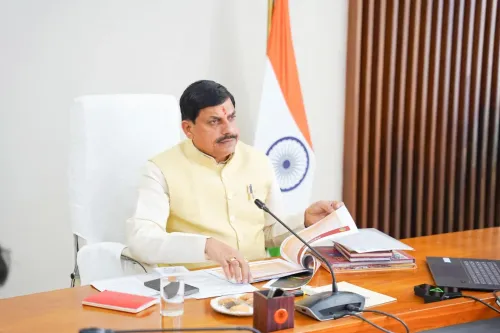
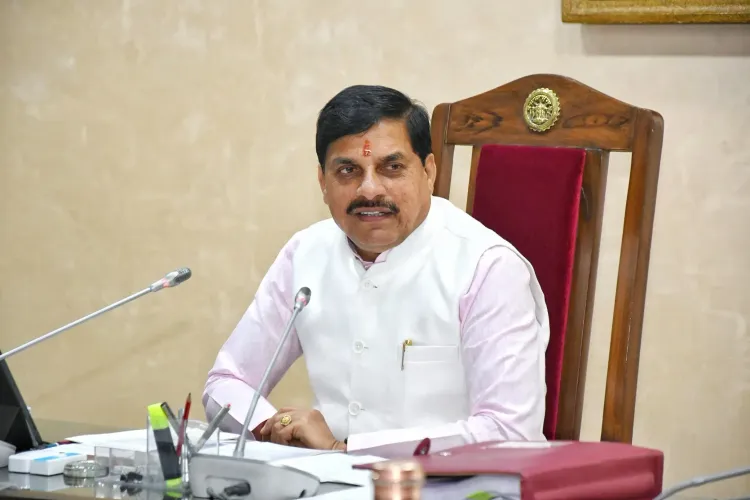
Bhopal, Feb 10 (NationPress) The Madhya Pradesh Cabinet meeting, led by Chief Minister Mohan Yadav, convened at the Secretariat on Tuesday.
The Council of Ministers has given a green light to the Madhya Pradesh Civil Services (Pension) Rules, 2026, as well as the Madhya Pradesh Civil Services (Commutation of Pension) Rules, 2026.
The Finance Department is now authorized to officially publish the approved rules.
These new rules aim to simplify processes and jurisdictions, thereby aiding pensioners.
Cases related to pensions can now be resolved in a more timely manner.
Retirees will find it easier to manage the commutation and calculation of their pension commutation value.
Notably, under Rule 44 of the Madhya Pradesh Civil Services (Pension) Rules, 2026, unmarried, widowed, and divorced daughters are now recognized as eligible for family pension.
The Council of Ministers also approved the Madhya Pradesh Civil Services (Implementation of National Pension System) Rules, 2026, and the Madhya Pradesh Civil Services (Payment of Gratuity under the National Pension System) Rules, 2026.
These regulations will take effect from April 1, 2026.
Significant new provisions include a family pension option in the event of a subscriber's death.
Additional provisions allow for voluntary retirement and the use of e-service booklets.
Previous service records with both the Central and Madhya Pradesh governments will now be consolidated.
Contributions from both the subscriber and employer during the suspension period have also been addressed.
Clear and detailed procedures have been established for the implementation of the National Pension System, covering contribution rates, calculations, and liability determinations in case of delays, along with retirement, voluntary retirement, resignation, and death provisions.
There will be a well-defined process for determining eligibility and payment of gratuity for government employees under the National Pension System.
Recovery from gratuity is allowed in the context of a departmental inquiry (post-retirement) order.
The provisions include withholding employer contributions during the departmental inquiry, suspending subscriber contributions three months prior to retirement, and conducting inquiries post-retirement, along with the state government's authority to amend and repeal rules.
The state Cabinet has also sanctioned a one-time five-year age relaxation for employees in the IT cadre of the High Court and district courts, enabling them to participate in ongoing and upcoming recruitment for the technical cadre.
Currently, the age limit stands at 40 years for unreserved categories and 45 years for reserved categories.
Furthermore, the state Cabinet has allocated Rs 7,133 crore 17 lakh for the continuation of schemes under the Tribal Affairs and Women and Child Development Departments from 2026-27 to 2030-31.
This allocation includes Rs 2,350 crore for the particularly vulnerable tribal groups (PVTG) Food Grant Scheme, Rs 1,703 crore 15 lakh for the Integrated Hostel Scheme, Rs 1,416 crore 91 lakh for the CM Rise School Scheme, and Rs 1,110 crore for the Housing Assistance Scheme, alongside scholarships for Scheduled Caste and Scheduled Tribe candidates.
Additionally, Rs 31 crore 3 lakh has been approved for the Chief Minister's Covid-19 Bal Seva Yojana under the Women and Child Development.
The Cabinet has approved Rs 366.72 billion for the electrification of 63,077 unelectrified households and 650 unelectrified government institutions as part of the Dharti Aba Tribal Village Upliftment Campaign (DA-JGUA).
This amount includes a Central government grant of Rs 220.03 billion and a state government contribution of Rs 146.69 billion.
Moreover, an estimated budget of Rs 97 billion has been approved for off-grid electrification of 8,521 households through the Madhya Pradesh Urja Vikas Nigam.
The remaining project funding (excluding the Central grant) will be provided by the state government to distribution companies as equity for constructing the electrification distribution system.
The entire cost of off-grid electrification (solar and battery) by the Madhya Pradesh Urja Vikas Nigam will be borne by the state government.
According to the approved plan, settlements with an estimated cost of up to Rs 2 lakh per household will be electrified through an online system managed by the state's electricity distribution companies, adhering to the cost ceiling set by the Union government's guidelines.
For houses on farms, smaller settlements, and remote areas where electrification costs exceed Rs 2 lakh per household, a 1 kW off-grid system (solar + battery) will be deployed by the Madhya Pradesh Urja Vikas Nigam.
Point of View
The recent decisions taken by the Madhya Pradesh Cabinet reflect a significant shift towards better support for pensioners. As a nation, we must recognize the importance of such reforms, which not only provide financial security but also uphold the dignity of our retirees. This move is a step forward in ensuring that our senior citizens receive the respect and support they deserve.
NationPress
2 Oct 2026
Frequently Asked Questions
What are the key changes in the new pension rules?
The key changes include simplified procedures for pensioners, inclusion of unmarried, widowed, and divorced daughters for family pensions, and provisions for voluntary retirement and e-service booklets.
When will the new rules come into effect?
The new rules will be effective from April 1, 2026.
How does the new gratuity payment process work?
The new gratuity payment process includes clear eligibility criteria and allows for recovery in cases of departmental inquiries.
Is there an age relaxation for job applicants in Madhya Pradesh?
Yes, the Cabinet approved a five-year age relaxation for IT cadre employees to participate in recruitment processes.
What financial provisions have been made for tribal schemes?
A total of Rs 7,133 crore 17 lakh has been approved for various tribal and women and child development schemes.