Northeast RRBs post ₹560 crore net profit in FY26, GNPA hits decade low

Synopsis
Seven northeastern Regional Rural Banks have posted a 34 per cent profit jump to ₹560 crore in FY26, while their GNPA ratio hit a 10-year low of 4.9 per cent. Serving over 887 branches across 105 districts, these banks are quietly becoming a financial backbone for one of India's most underbanked regions — and digital expansion is now the next test.
Key Takeaways
Seven northeastern RRBs reported a provisional net profit of ₹560 crore in FY 2025–26 , up 34 per cent year-on-year.
The GNPA ratio declined to 4.9 per cent — the lowest in the past 10 years .
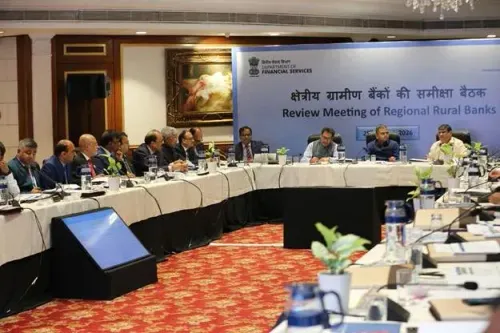
A regional review meeting was held in Agartala, Tripura , chaired by the Secretary, Department of Financial Services .
The banks collectively operate 887+ branches across 105 districts in 7 northeastern states , with over 92 per cent in rural and semi-urban areas.
Digital banking expansion and IT infrastructure support from Sponsor Banks identified as the next strategic priority.
Seven northeastern Regional Rural Banks (RRBs) recorded a provisional consolidated net profit of ₹560 crore in FY 2025–26, marking a year-on-year growth of 34 per cent, according to the Finance Ministry. The results signal a significant turnaround in the financial health of rural banking institutions serving one of India's most underbanked regions.
Asset Quality at Its Best in a Decade
The Gross Non-Performing Assets (GNPA) ratio for these banks declined to 4.9 per cent — the lowest level recorded in the past 10 years. The improvement reflects stronger credit discipline, better loan recovery mechanisms, and a more diversified lending portfolio, according to the Finance Ministry.
Key Developments from the Agartala Review Meeting
A regional review meeting of Northeast RRBs was convened under the chairmanship of the Secretary, Department of Financial Services (DFS), in Agartala, Tripura. The meeting was attended by chairpersons of all seven northeastern RRBs, senior officials from public sector banks, and representatives from the National Bank for Agriculture and Rural Development (NABARD).
The DFS Secretary underscored the pivotal role RRBs play in sustaining the rural economy of the North East, noting that their deep rural penetration and community trust are core institutional strengths. He commended the banks for improving profitability, cutting NPAs, and broadening their loan portfolios during FY26.
Digital Banking: The Next Frontier
The DFS Secretary also flagged digital banking expansion as a critical priority for northeastern RRBs going forward. He noted that Sponsor Banks have a key responsibility in providing technical support, sharing effective strategies, and ensuring RRBs have access to the necessary IT infrastructure to scale digital services across remote areas.
Network Reach Across the Region
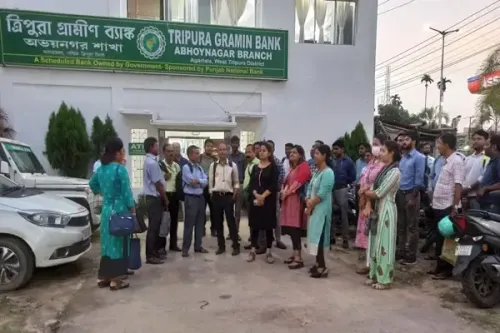
Northeastern RRBs now operate a network of over 887 branches spanning 105 districts across 7 states. Notably, more than 92 per cent of these branches are located in rural and semi-urban areas, reinforcing their mandate as last-mile financial service providers in a geographically challenging terrain.
With profitability rising and bad loans at a decadal low, the focus now shifts to whether these banks can sustain momentum by scaling digital infrastructure and deepening credit penetration across the region's underserved districts.
Point of View
And a low NPA ratio can sometimes reflect limited credit disbursement rather than superior underwriting. The real metric to watch is credit-deposit ratio: if deposits are growing but loans are not, profitability is thin and the developmental mandate is unmet. The push toward digital banking is the right call, but connectivity gaps across the Northeast mean that technology alone cannot substitute for on-ground financial literacy and last-mile infrastructure investment.
NationPress
26 Sept 2026
Frequently Asked Questions
What net profit did northeastern RRBs report in FY26?
Seven northeastern Regional Rural Banks collectively reported a provisional net profit of ₹560 crore in FY 2025–26, reflecting a 34 per cent year-on-year increase according to the Finance Ministry.
What is the current GNPA ratio of northeastern RRBs?
The Gross Non-Performing Assets ratio for these banks stands at 4.9 per cent as of FY26, the lowest level recorded in the past decade, indicating improved asset quality and credit recovery.
Where was the regional review meeting of Northeast RRBs held?
The review meeting was held in Agartala, Tripura, under the chairmanship of the Secretary, Department of Financial Services. It was attended by RRB chairpersons, public sector bank officials, and NABARD representatives.
How many branches do northeastern RRBs operate?
Northeastern RRBs operate over 887 branches across 105 districts in 7 states, with more than 92 per cent of branches located in rural and semi-urban areas.
What is the next priority for northeastern RRBs according to the government?
The Department of Financial Services Secretary identified digital banking expansion as the key next step, with Sponsor Banks expected to provide technical support and IT resources to help RRBs scale services in remote areas.