Jaishankar at UN: Harness AI potential, mitigate security risks in maritime domain
Synopsis
At a UN session on AI and maritime security, External Affairs Minister Jaishankar laid out India's dual-track position: embrace AI's transformative potential while hardwiring accountability into its deployment. His citation of the BRICS New Delhi Declaration as a governance framework signals India's intent to shape global AI norms through multilateral platforms — not just follow them.
Key Takeaways
EAM S Jaishankar co-chaired a UN session on AI and Maritime Security in New York on 26 September 2026 alongside Greek Foreign Minister George Gerapetritis .
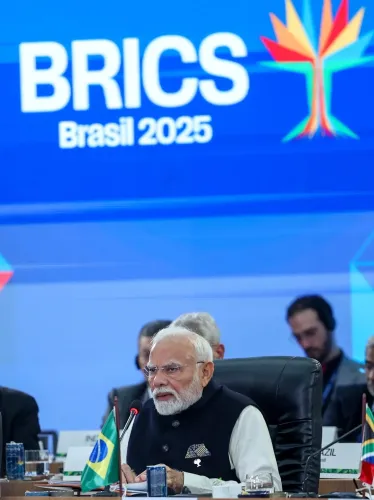
He cited the New Delhi Declaration from the 18th BRICS Summit as a framework emphasising democratic AI access , secure systems , and AI for social welfare .
Jaishankar flagged AI's dual-use risk in the maritime domain: enhancing security on one hand, enabling cyber operations and vulnerability mapping on the other.
He warned that increasing autonomy in maritime systems compresses decision-making time and complicates attribution and accountability .
He reaffirmed that the UN Charter and international law of the sea must govern state conduct as AI capabilities expand.
India positioned AI governance and maritime security as standing priorities at the United Nations .
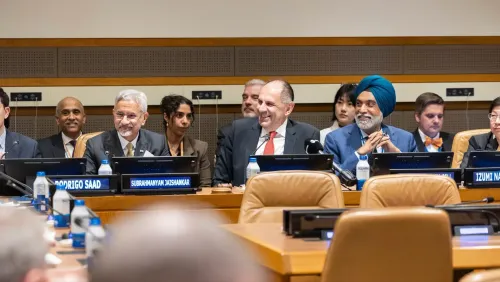
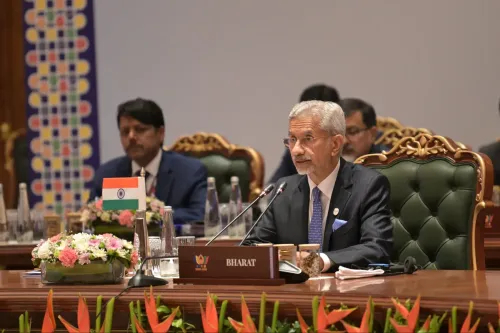
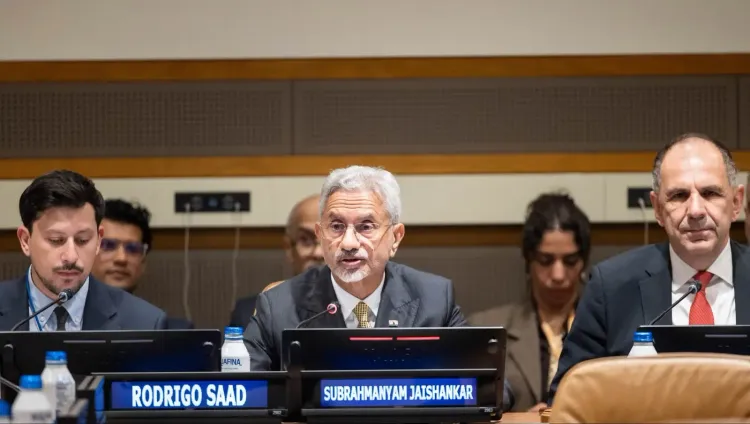
External Affairs Minister S Jaishankar on 26 September 2026 called for a balanced global approach to artificial intelligence — one that unleashes innovation while actively managing security threats — at a high-level session on the sidelines of the United Nations general meetings in New York. Jaishankar co-chaired the session titled 'AI in the Context of International Peace and Security, with an Emphasis on Maritime Security' alongside Greek Foreign Minister George Gerapetritis.
New Delhi Declaration as a Framework
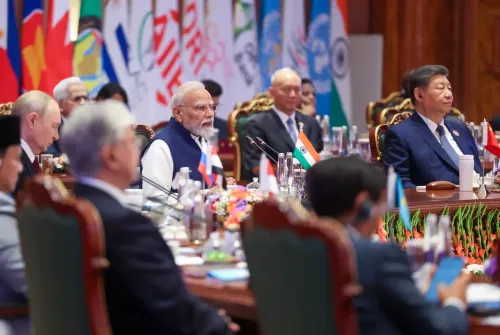
Jaishankar pointed to the New Delhi Declaration, adopted at the recently concluded 18th BRICS Summit, as a foundational reference for the international community's approach to AI governance. He noted that the declaration emphasises democratic access to AI resources, the development of secure and trustworthy systems, investment in human capabilities, and the deployment of AI for economic growth and social welfare.
The declaration's emphasis on inclusive access is significant — it signals India's consistent position that AI must not become a tool of strategic advantage for a handful of technologically advanced nations, but must serve broader development goals globally.
AI's Dual Role in Maritime Security
Underscoring the technology's transformative potential at sea, Jaishankar highlighted that AI can significantly enhance maritime domain awareness, search and rescue operations, disaster response, identification of suspicious activities, and the resilience of ports and critical infrastructure.
However, he was equally candid about the risks. AI, he noted, also enables sophisticated reconnaissance, vulnerability mapping, and cyber operations targeting vessels, communication networks, and undersea infrastructure — precisely the dual-use challenge that makes AI governance in the maritime sphere so complex.
Accountability, Attribution and Escalation Risks
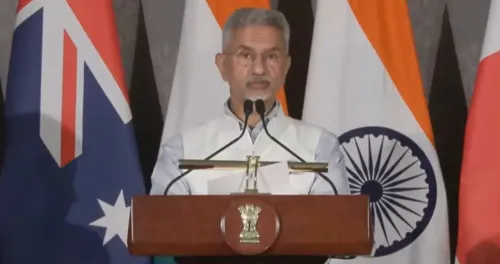
'Increasing autonomy in maritime systems raises questions of attribution, accountability and escalation, while also compressing decision-making time,' Jaishankar posted on X on Saturday. He stressed that the UN Charter, international law, and the law of the sea must remain the essential frameworks governing state conduct as AI capabilities expand in this domain.
This is a particularly pointed concern given growing contestation in the Indo-Pacific, where autonomous systems and AI-enabled surveillance are already reshaping naval doctrine among major powers.
India's Priorities at the United Nations
Jaishankar reaffirmed that both AI governance and maritime security are standing priorities for India at the UN. He called for greater transparency, confidence-building measures, capacity development, technical cooperation, and exchange of best practices to ensure AI is developed and deployed in a manner consistent with international legal principles.
This comes amid a broader global push to set guardrails around military and dual-use AI, with competing frameworks emerging from the US, EU, and China — making India's multilateral positioning through BRICS and the UN increasingly consequential. The next round of international deliberations on AI governance is expected to build on the New Delhi Declaration as a reference document.
Point of View
Rules-based framework at a moment when the US and China are each pushing rival architectures. The explicit invocation of the BRICS New Delhi Declaration in a UN forum is deliberate: it positions India as a bridge-builder between the Global South and established powers on one of the most contested technology governance questions of the decade. The maritime angle is particularly sharp — undersea cable infrastructure and autonomous naval systems are already flashpoints in the Indo-Pacific, and any escalation involving AI attribution gaps could move faster than existing diplomatic channels can handle. India's call for confidence-building measures is sensible, but the harder question — who enforces compliance and against whom — remains unanswered in Jaishankar's framing.
NationPress
26 Sept 2026
Frequently Asked Questions
What did EAM Jaishankar say about AI at the United Nations?
External Affairs Minister S Jaishankar called for harnessing AI's potential while anticipating its consequences and mitigating security risks, speaking at a UN session on AI and international peace and security on 26 September 2026 in New York. He stressed the need for democratic access to AI, trustworthy systems, and governance anchored in international law.
What is the New Delhi Declaration on AI?
The New Delhi Declaration is a document adopted at the 18th BRICS Summit that emphasises democratic access to AI resources, development of secure and trustworthy systems, investment in human capabilities, and using AI for economic growth and social welfare. Jaishankar cited it as a reference framework for the global AI governance debate at the UN.
How does AI affect maritime security according to Jaishankar?
Jaishankar noted that AI can improve maritime domain awareness, search and rescue, and port resilience, but also enables sophisticated reconnaissance, vulnerability mapping, and cyber operations against vessels and undersea infrastructure. He warned that increasing autonomy compresses decision-making time and raises difficult questions of attribution and accountability.
Why is India raising AI governance at the UN?
India has identified AI governance and maritime security as standing priorities at the United Nations. Jaishankar's remarks reflect India's broader strategy of shaping global AI norms through multilateral forums like the UN and BRICS, particularly on dual-use technologies with security implications.
What legal frameworks did Jaishankar cite for AI in the maritime domain?
Jaishankar underlined that the UN Charter, international law, and the law of the sea remain essential frameworks governing state conduct in the maritime domain. He called for greater transparency, confidence-building, capacity development, and technical cooperation to ensure AI is used consistently with these principles.