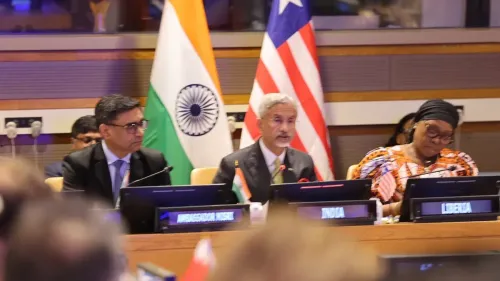
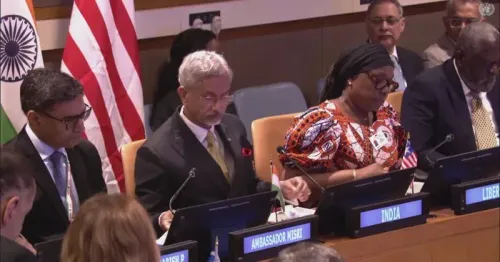
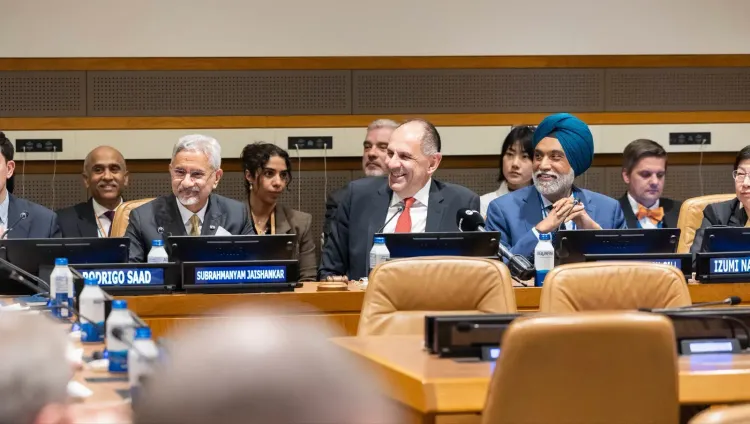
Jaishankar co-chairs UN AI & Maritime Security event with Greece FM
Synopsis
At UN High Level Week 2026, EAM Dr. S. Jaishankar co-chaired an event on AI and maritime security with Greek FM George Gerapetritis, outlining AI's dual-use risks at sea and anchoring India's position in the New Delhi Declaration and international law.
Key Takeaways
Jaishankar co-chaired a UN High Level Week event on AI and maritime security alongside Greek FM George Gerapetritis on 26 September 2026 .
AI can enhance maritime domain awareness, search and rescue, and port resilience — but also enable reconnaissance, vulnerability mapping, and cyber attacks on undersea infrastructure.
Increasing autonomy in maritime systems raises unresolved issues of attribution, accountability, and escalation while compressing decision time.
India anchored its AI stance in the New Delhi Declaration from the 2023 G20 presidency, emphasising democratic access, trustworthy systems, and social good.
Jaishankar stressed that the UN Charter, international law, and the law of the sea remain the non-negotiable framework for state conduct in AI-enabled maritime operations.
India's co-chair pairing with Greece signals a widening of its technology-security partnerships with European maritime nations.
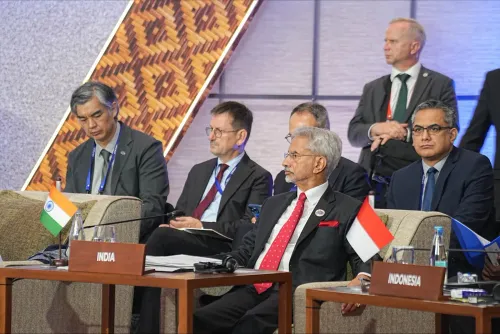
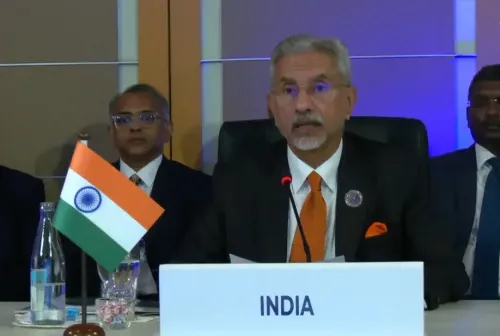
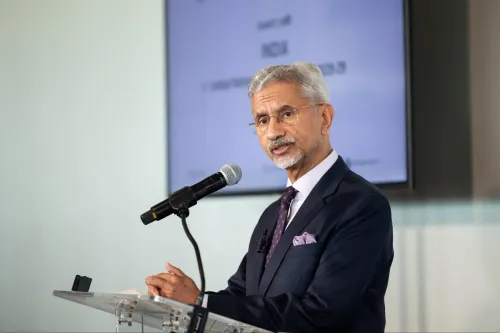
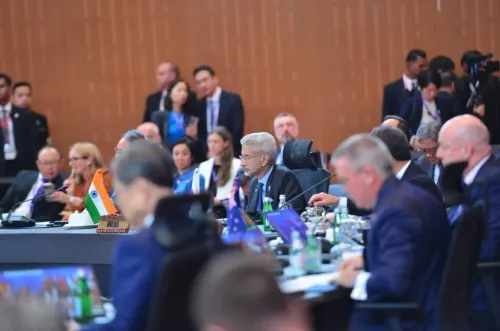
Artificial intelligence is reshaping the seas — and not always safely. At the United Nations High Level Week on Saturday, 26 September 2026, Union External Affairs Minister Dr. S. Jaishankar co-chaired a high-profile event on 'AI in the Context of International Peace and Security, with an Emphasis on Maritime Security', alongside Greek Foreign Minister George Gerapetritis, bringing one of the most consequential tech-security debates to the world's foremost multilateral stage.
The twin-edged sword AI brings to the oceans
Dr. Jaishankar laid out the opportunity with precision: AI can sharpen maritime domain awareness, accelerate search and rescue operations, bolster disaster response, flag suspicious activity at sea, and harden the resilience of ports and critical infrastructure. The promise is real. So is the peril.
In the same breath, he warned that the same technologies can enable sophisticated reconnaissance, vulnerability mapping, and cyber operations targeting vessels, communication networks, and — critically — undersea infrastructure. The subsea cables that carry nearly all global internet traffic are, by implication, squarely in the frame.
Then came the sharpest observation of the session: increasing autonomy in maritime systems compresses decision-making time while raising unresolved questions of attribution, accountability, and escalation. In plain terms — when an AI-enabled system acts, who is responsible, and how quickly could a misread trigger a crisis?
The New Delhi Declaration as India's AI anchor
India did not arrive at this debate empty-handed. Dr. Jaishankar invoked the New Delhi Declaration — the landmark document from India's 2023 G20 presidency — as the philosophical spine of the country's AI stance. The Declaration's four pillars: democratic access to AI resources, building secure and trustworthy systems, investing in human capabilities, and harnessing AI for economic growth and social good.
That framing is deliberate. India consistently positions itself as a voice for the Global South in tech governance — arguing that the benefits of AI must not be monopolised by a handful of powerful states or corporations, and that capacity-building for developing nations is non-negotiable.
International law as the non-negotiable floor
For all the novelty of the technology, Dr. Jaishankar was unambiguous about the governing framework: the UN Charter, international law, and specifically the law of the sea remain the essential rules of the road for state conduct in the maritime domain — regardless of how autonomous the systems operating there become.
He called for greater transparency, confidence-building measures, capacity development, technical cooperation, and exchange of best practices to ensure AI is developed and deployed consistent with these principles. The message to the room: innovation is welcome; impunity is not.
India-Greece pairing — and what it signals
The choice of co-chair is itself a signal. Greece, a major maritime nation, an EU and NATO member, and a country deepening bilateral ties with India in defence and technology, is not an accidental partner for this conversation. India has been systematically widening its technology-security dialogues beyond traditional groupings, and pairing with Athens at the UN underlines that strategy in blue ink.
Dr. Jaishankar closed by reaffirming that AI and maritime security remain important priorities for India at the United Nations — a declaration that carries forward India's long-standing Indian Ocean interest and its growing role in shaping global tech norms, not just consuming them.
The oceans are becoming the next theatre for the AI governance fight. India just made clear it intends to help write the rules.
Point of View
Not treaty obligation. Invoking the New Delhi Declaration positions India's G20 legacy as a living policy instrument, not an archival footnote. The emphasis on international law and the UN Charter as the floor for AI-enabled maritime conduct is also a calibrated message to major powers developing autonomous naval systems: rules apply here too. Watch for India to translate this rhetorical groundwork into concrete proposals at UNGA working groups on autonomous weapons and digital infrastructure protection.
NationPress
26 Sept 2026
Frequently Asked Questions
What did Jaishankar say about AI and maritime security at the UN?
Dr. Jaishankar outlined AI's dual-use nature at sea: it can improve maritime awareness, search and rescue, and port security, but also enable cyber attacks on vessels and undersea infrastructure. He stressed that the UN Charter and law of the sea remain the governing framework for all AI-enabled maritime conduct.
What is the New Delhi Declaration on AI?
The New Delhi Declaration is the 2023 G20 Leaders' Declaration issued during India's G20 presidency. On AI, it emphasises democratic access to AI resources, building secure and trustworthy systems, investing in human capabilities, and using AI for economic growth and social good.
Why did Jaishankar co-chair the event with Greece's Foreign Minister?
Greece is a major maritime nation and an EU-NATO member with growing bilateral ties with India in defence and technology. The pairing signals India's strategy of broadening its technology-security partnerships with European maritime states at the United Nations.
What risks of AI in the maritime domain did Jaishankar highlight?
He warned that AI can enable sophisticated reconnaissance, vulnerability mapping, and cyber operations targeting ships, communication networks, and undersea infrastructure. He also noted that growing autonomy in maritime systems compresses decision time and raises questions of attribution and escalation.
What is India's position on AI governance at the United Nations?
India advocates for democratic access to AI, responsible innovation anchored in international law, and capacity-building for developing nations. Dr. Jaishankar reaffirmed that AI and maritime security are important priorities for India at the UN, and called for transparency, confidence-building, and technical cooperation among states.