Can the Northeast's Bio-Potential Propel India's Economic Growth? Jitendra Singh
Synopsis
The Northeastern region of India, with its unique biodiversity, is on the verge of igniting the country's economic growth. Union Minister Jitendra Singh urges local farmers and entrepreneurs to tap into this potential through scientific innovations and traditional practices, paving the way towards a prosperous agro-entrepreneurial landscape.
Key Takeaways
The Northeast's biodiversity is crucial for economic growth.
Science-led initiatives can uplift rural livelihoods.
High-value plant-based industries are emerging in the region.
Government aims to create an agro-entrepreneurial hub.
Success stories like the Purple Revolution can be replicated.
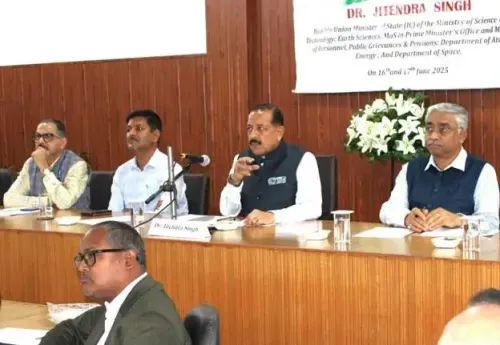
New Delhi, Oct 30 (NationPress) The Northeast, endowed with rich biodiversity and distinctive agro-climatic conditions, has the potential to catalyze India's economic growth, remarked Jitendra Singh, Union Minister of State (Independent Charge) for Science and Technology and Earth Sciences, on Thursday.
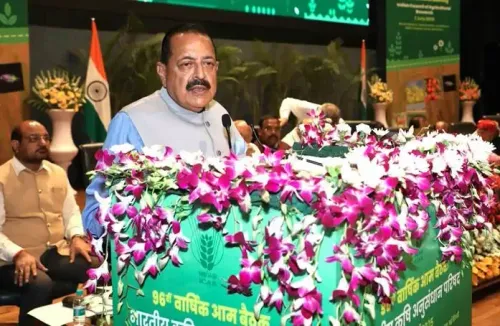
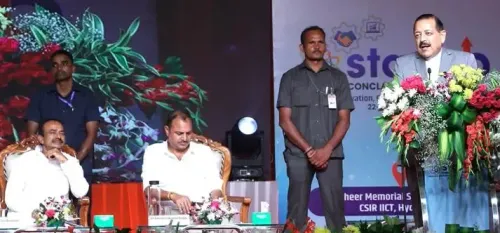
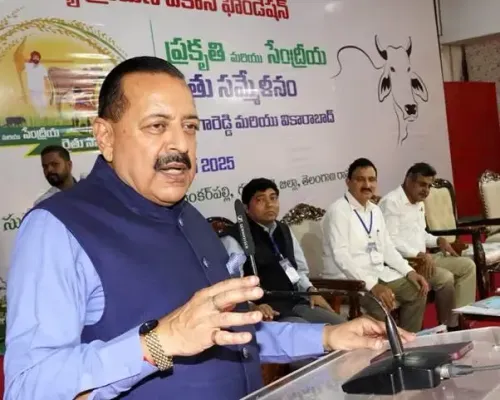
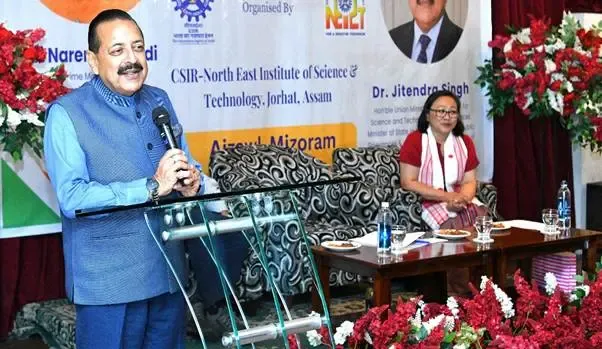
Speaking at the "Stakeholder-cum-Awareness Meet" and the Distribution of Quality Planting Materials under the CSIR–Aroma Mission and CSIR-Floriculture Mission, organized by CSIR-NEIST, Singh emphasized the transformative impact of science-led initiatives in enhancing rural livelihoods and fostering sustainable economic development in the Northeastern region.
The Minister highlighted that the Northeast is poised to become a hub for high-value plant-based industries. He stated that the government is dedicated to evolving the region into an “agro-entrepreneurial hub” by merging modern scientific methods with traditional farming.
Singh pointed to the achievements of the ‘Purple Revolution’ in Jammu and Kashmir and encouraged farmers and entrepreneurs in Mizoram and other Northeastern states to adopt this model for cultivating aromatic crops such as lavender, citronella, lemongrass, and patchouli, which have shown significant market demand and income prospects.
“The Purple Revolution illustrates how the fusion of science with local capabilities can open up new employment and entrepreneurship opportunities. This success can be mirrored in the Northeast, establishing it as a center for India's aroma and floriculture economy,” Singh asserted.
He praised CSIR-NEIST’s initiatives in equipping farmers, entrepreneurs, and youth with the skills to cultivate medicinal, aromatic, and floricultural crops.
Singh noted that projects under the CSIR-Aroma Mission and CSIR-Floriculture Mission not only boost farm income but also champion women empowerment, engage youth, and promote rural industrialization, aligning with the government’s vision for a ‘Viksit Bharat 2047’.
CSIR-NEIST has been actively involved in the Northeast, promoting the cultivation and processing of aromatic crops and high-value floriculture varieties.
The institute has generated livelihood opportunities through integrated models that combine aroma cultivation, floriculture, and apiculture, enhancing income and productivity at the grassroots.
Point of View
It's essential to recognize the vast opportunities the Northeast presents. The region's rich biodiversity and potential for agro-entrepreneurship align with national growth strategies. By leveraging science and traditional knowledge, we can not only uplift local economies but also contribute to India's overall economic progress. This initiative reflects a commitment to inclusive growth and sustainability.
NationPress
2 Oct 2026
Frequently Asked Questions
What is the significance of the Northeast in India's economy?
The Northeast is significant due to its rich biodiversity and unique agro-climatic conditions, which can drive economic growth through high-value plant-based industries.
How can local farmers benefit from scientific interventions?
Local farmers can benefit through enhanced crop yields, income diversification, and the cultivation of high-demand aromatic crops, leading to improved livelihoods.
What is the Purple Revolution?
The Purple Revolution refers to the successful cultivation of lavender and other aromatic crops in Jammu and Kashmir, showcasing the potential for similar initiatives in the Northeast.
What initiatives are being implemented in the Northeast?
The CSIR-Aroma Mission and CSIR-Floriculture Mission are key initiatives aimed at empowering farmers and promoting the cultivation of aromatic and floricultural crops.
How does this align with India's vision for 2047?
These initiatives support the government’s vision of 'Viksit Bharat 2047' by promoting rural industrialization, youth engagement, and women's empowerment.