How is Scindia Enhancing Farmers’ Incomes in the Northeast?
Synopsis
Discover how Jyotiraditya Scindia is working to revolutionize the agricultural landscape of the North Eastern states. In a recent meeting, key strategies were discussed to enhance farmers' incomes through targeted interventions and innovative solutions. Join us as we delve into this significant initiative that promises to uplift the agricultural community.
Key Takeaways
Focus on agri-horti ecosystem to uplift farmers.
Collaboration with regional leaders to identify key areas for improvement.
Addressing value chain gaps is essential for farmer income enhancement.
Strategic infrastructure development is crucial for export readiness.
Product-specific strategies will yield sustainable outcomes.
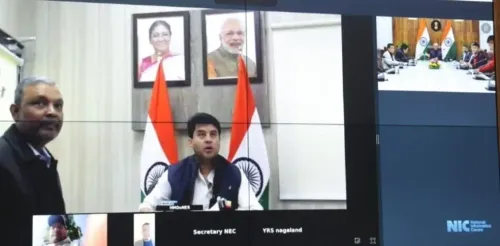
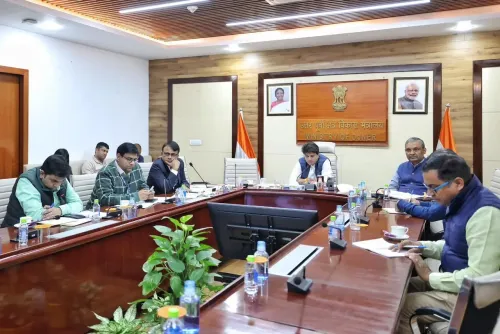
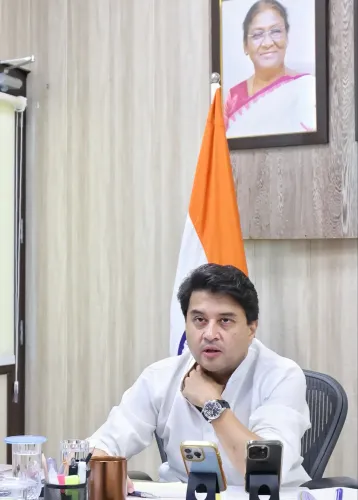
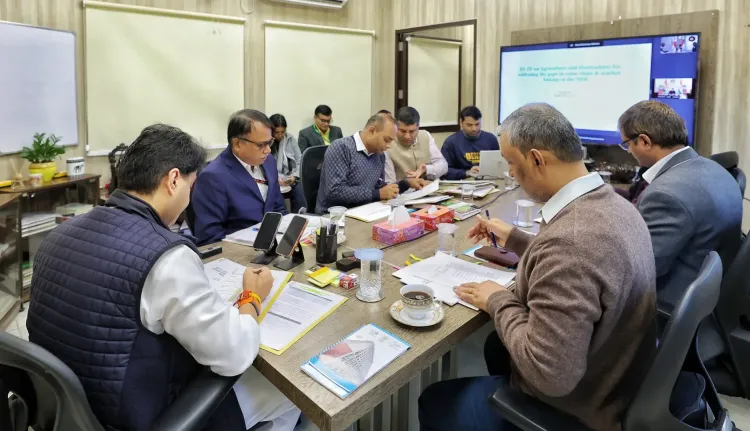
New Delhi, Dec 24 (NationPress) Jyotiraditya Scindia, the Minister for the Development of the North Eastern Region, convened a crucial meeting on Wednesday to formulate a strategy aimed at enhancing the agriculture and horticulture ecosystem in the North Eastern states, thereby increasing farmers’ incomes.
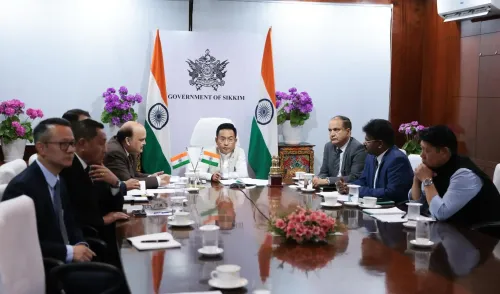
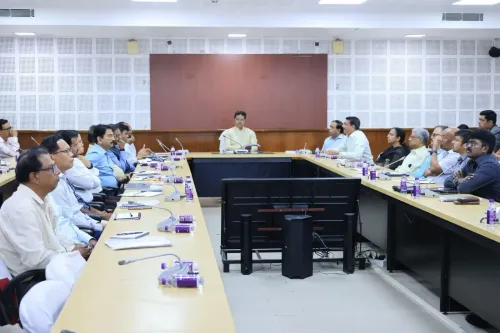
The minister took part in a high-level task force gathering focused on agriculture and horticulture, which was led by Sikkim Chief Minister Prem Singh Tamang in the capital. Also present were the Chief Minister of Tripura, Manik Saha, Agriculture Ministers from Assam, Arunachal Pradesh, and Sikkim, alongside senior officials from the ministry.
The task force explored the necessity of addressing significant gaps in the value chain and market linkages throughout the North Eastern Region. Discussions concentrated on fortifying the agri-horti ecosystem by harnessing the region's intrinsic strengths, with specialization, quality, and distinctiveness serving as the key selling points for agri-horti products from the North East Region, as stated in an official release.
Identifying ways to diminish post-harvest losses and reduce marketing and logistics expenses surfaced as vital areas to enhance overall value realization for farmers. The meeting also addressed the need to systematically identify existing obstacles across production, post-harvest, processing, marketing, and logistics segments of the value chain, prioritizing necessary interventions and designing appropriate investment mechanisms.
The significance of establishing a clear roadmap that transitions from foundational interventions to comprehensive value chain integration was also discussed. This includes crafting a strategic infrastructure map to boost export readiness, identifying priority commodities for each state, and fostering cluster-based development for each selected product to ensure scalability, efficiency, and market alignment, according to the statement.
A blueprint-driven approach was suggested, starting with the selection of a single product and covering its end-to-end value chain through well-defined short-term, medium-term, and long-term plans with product-specific targets and investment requirements. This method also emphasized evaluating the number of farmers involved per product across the North Eastern Region and assessing how these farmers would benefit on both a product-wise and state-wise basis. After implementing these interventions, the focus will shift to measuring the resulting increase in farmers’ incomes, as articulated in the statement.
The task force reiterated that a targeted, product-specific, and cluster-oriented strategy would yield measurable and sustainable outcomes, strengthen market connections, mitigate inefficiencies throughout the value chain, and secure long-term income growth for farmers across the North Eastern Region, the statement concluded.
Point of View
The meeting led by Jyotiraditya Scindia is a pivotal step towards addressing the challenges faced by farmers in the North East. By focusing on a product-specific approach and enhancing market linkages, the government is demonstrating a commitment to improving the agricultural ecosystem, which is essential for sustainable development in the region.
NationPress
20 Sept 2026
Frequently Asked Questions
What was the main agenda of the meeting?
The main agenda was to develop a strategy for strengthening the agri-horti ecosystem in the North Eastern states to boost farmers' incomes.
Who attended the meeting?
Attendees included Jyotiraditya Scindia, Chief Minister of Sikkim Prem Singh Tamang, Chief Minister of Tripura Manik Saha, Agriculture Ministers from Assam, Arunachal Pradesh, Sikkim, and senior ministry officials.
What are the key focus areas discussed?
Key focus areas included addressing value chain gaps, reducing post-harvest losses, and lowering marketing and logistics costs.
What is the proposed approach for product development?
A blueprint-based approach was proposed, emphasizing end-to-end value chain management for selected products.
How will the success of these interventions be measured?
Success will be measured by assessing the increase in farmers' incomes following the implementation of the proposed strategies.