NSO 80th Round survey: India's public healthcare access rises, insurance coverage triples

Synopsis
India's NSO 80th Round health survey reveals a sweeping shift: government insurance coverage has nearly tripled in rural areas, median outpatient costs at public facilities are zero, and institutional deliveries have crossed 95% in rural India — marking one of the most comprehensive documented improvements in public healthcare access in recent years.
Key Takeaways
The NSO 80th Round survey covered 1,39,732 households across rural and urban India, with findings released on 29 April 2025 .
Median out-of-pocket expenditure per hospitalisation stands at ₹11,285 ; over half of public-facility hospitalisations cost only ₹1,100 .
Median OOPE for outpatient care at public facilities is zero , reflecting widespread free access to essential services.
Government health insurance coverage under PM-JAY and state schemes nearly tripled — from 12.9% to 45.5% in rural areas and 8.9% to 31.8% in urban areas.
Institutional deliveries rose from 90.5% to 95.6% in rural areas between 2017–18 and 2025 .
Over 1.84 lakh Ayushman Arogya Mandirs are now operational, expanding primary healthcare reach nationwide.
The National Statistical Office (NSO)'s 80th Round household health survey has recorded substantial gains in access to public healthcare across India, alongside a sharp expansion in government-financed insurance coverage, the Ministry of Health and Family Welfare announced on Wednesday, 29 April 2025. The survey, which analysed responses from 1,39,732 households — including 76,296 in rural areas and 63,436 in urban areas — offers one of the most comprehensive snapshots of India's healthcare landscape in recent years.
Out-of-Pocket Costs: What the Numbers Show
According to the survey, the median out-of-pocket expenditure (OOPE) per hospitalisation stood at ₹11,285, while over half of all hospitalisations in public facilities incurred costs of only ₹1,100. Officials noted that a small number of high-cost cases push up the mean figure, indicating that elevated healthcare expenditure is not widespread but concentrated in specific cases requiring specialised treatment.
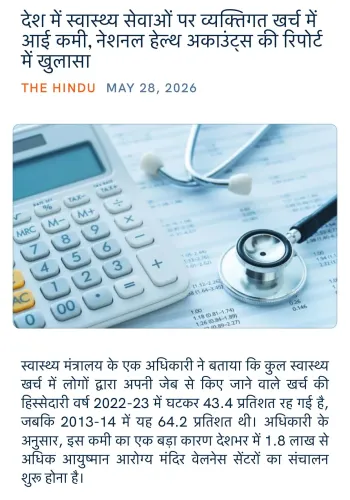
Notably, for non-hospitalisation (outpatient) care, the median OOPE at public health facilities is zero, reflecting that a large proportion of citizens are accessing essential healthcare services entirely free of cost. The government attributed this to the Free Drugs Service Initiative (FDSI) and Free Diagnostics Initiative (FDI), both launched in 2015, which have ensured availability of free medicines and diagnostic services even in remote areas.
Insurance Coverage Expands Sharply
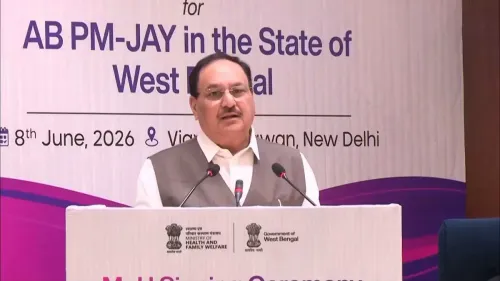
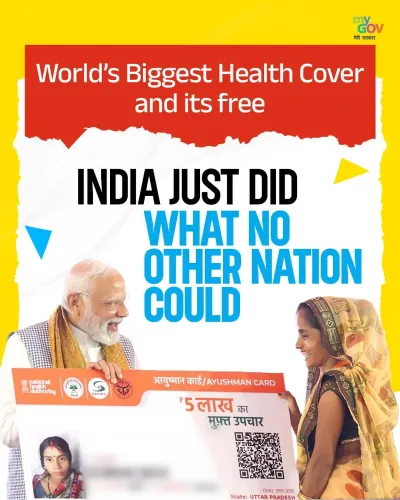
Financial risk protection has expanded significantly, driven by the rapid scaling up of government-financed health insurance under Ayushman Bharat – Pradhan Mantri Jan Arogya Yojana (PM-JAY) and various state schemes. The percentage of population covered under these schemes has nearly tripled — from 12.9% to 45.5% in rural areas and from 8.9% to 31.8% in urban areas. The survey also recorded a declining trajectory of out-of-pocket expenditure among the bottom two consumption quintiles, suggesting that economically weaker sections are deriving the greatest benefit from government interventions.
Health-Seeking Behaviour and Public Facility Use
Health-seeking behaviour has strengthened considerably. The proportion of population reporting ailments (PPRA) nearly doubled — rising to 12.2% in rural areas from 6.8% in 2017–18, and to 14.9% in urban areas from 9.1%. Analysts note this rise likely reflects greater awareness and improved access rather than a deterioration in public health. Utilisation of public outpatient services in rural areas also increased from 28% in 2014 to 35% in 2025.
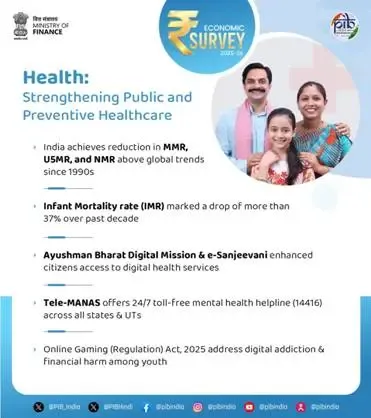
Over 1.84 lakh Ayushman Arogya Mandirs (AAMs) across the country have significantly expanded the scope of comprehensive primary healthcare, delivering preventive, promotive, and curative services closer to communities. These centres are also reportedly leveraging digital health innovations to improve access.
Maternal and Child Health Outcomes Improve
The survey highlights continued progress in maternal and child health. Institutional deliveries increased from 90.5% in 2017–18 to 95.6% in 2025 in rural areas, and from 96.1% to 97.8% in urban areas — a trend that public health experts have long identified as a key indicator of systemic healthcare improvement.
What This Means Going Forward
The survey's findings indicate that India's multi-pronged approach — combining insurance expansion, free drug and diagnostic services, and primary care infrastructure — is beginning to reflect measurable outcomes at the household level. The challenge ahead, according to health policy observers, will be sustaining these gains while addressing the residual burden on households that still face high costs in specialised care segments.
Point of View
But the more telling data point is the zero median OOPE for outpatient care — it suggests the free drugs and diagnostics architecture is actually working at scale, not just on paper. That said, the survey's own caveat about high-cost outliers pushing up the mean is a reminder that catastrophic health expenditure remains a live risk for households needing specialised care. The near-doubling of ailment reporting is also worth watching carefully: it could reflect genuine improvement in health-seeking behaviour, or it could signal that the burden of non-communicable diseases is rising faster than the system's capacity to absorb it. The institutional delivery numbers are genuinely impressive, but the harder question — quality of care at those facilities — is not captured here.
NationPress
19 Sept 2026
Frequently Asked Questions
What did the NSO 80th Round household health survey find?
The NSO 80th Round survey found significant improvements in public healthcare access across India, including a near-tripling of government health insurance coverage, a median hospitalisation cost of ₹11,285, and zero median out-of-pocket expenditure for outpatient care at public facilities. The survey covered 1,39,732 households across rural and urban India.
What is the median out-of-pocket cost for hospitalisation in India according to the survey?
The median out-of-pocket expenditure per hospitalisation is ₹11,285, according to the NSO 80th Round survey. Over half of hospitalisations in public facilities cost only ₹1,100, with high-cost cases being limited to specialised treatment scenarios.
How has Ayushman Bharat PM-JAY coverage changed?
Government-financed health insurance coverage under PM-JAY and state schemes has nearly tripled — from 12.9% to 45.5% in rural areas and from 8.9% to 31.8% in urban areas, according to the survey released on 29 April 2025.
What progress has been made in maternal health in India?
Institutional deliveries increased from 90.5% in 2017–18 to 95.6% in 2025 in rural areas, and from 96.1% to 97.8% in urban areas, reflecting continued improvement in maternal healthcare access across the country.
What are Ayushman Arogya Mandirs and how many are operational?
Ayushman Arogya Mandirs (AAMs) are primary healthcare centres delivering preventive, promotive, and curative services at the community level. Over 1.84 lakh AAMs are currently operational across India, and they are reportedly leveraging digital health tools to further improve access.