OECD pegs India growth at 6.3% in FY27, 6.4% in FY28 despite global shocks
Synopsis
India is set to be the standout in a bruised global economy, with the OECD projecting 6.3% FY27 and 6.4% FY28 growth even as the West Asia conflict reshapes the world outlook. The catch: rising food inflation may force the RBI into a 25 bps hike, and energy-shock cushioning will widen the fiscal deficit beyond the budgeted glide path.
Key Takeaways
OECD projects India to grow 6.3% in FY27 and 6.4% in FY28 .
China's growth seen easing from 5.0% in 2025 to 4.3% in 2027.
RBI expected to hike policy rate by 25 bps by end-Q1 FY27 to anchor inflation within the 4% band.
Non-food bank credit grew 15.9% year-on-year in March 2026.
Energy-shock measures to widen FY27 fiscal deficit by 0.4% of GDP beyond the budgeted 4.3% .
Public debt projected to reach 54.7% of GDP in FY28.
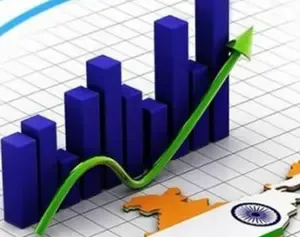
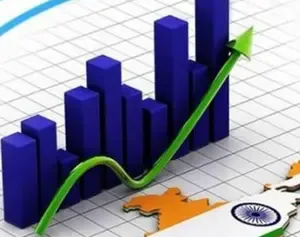
India is projected to clock 6.3 per cent GDP growth in FY27 and 6.4 per cent in FY28, the Organisation for Economic Cooperation and Development (OECD) said on Wednesday, even as the West Asia conflict drags global growth lower and pushes inflation higher. The projection, released from New Delhi, positions India as a relative outperformer in a slowing emerging-market landscape.
Global backdrop: West Asia crisis reshapes outlook
The OECD report flagged that the conflict in the Middle East has become the dominant force shaping the global economic outlook. Energy prices and the cost of other key agricultural and industrial inputs produced in the Persian Gulf economies have soared since February as production and exports have been curtailed.
‘This has been pushing up inflation, putting pressure on real incomes and economic growth. GDP growth projections have been revised down, while inflation has been revised up,’ the report noted.
China set to decelerate further
Among emerging markets, China's growth is projected to ease from 5.0 per cent in 2025 to 4.5 per cent in 2026 and 4.3 per cent in 2027. Energy-related vulnerabilities and real estate sector adjustments are expected to weigh on activity, despite mitigating factors such as a rising share of renewables in the energy mix, adequate oil reserves and gasoline price caps.
RBI's policy pivot and credit picture
The Reserve Bank of India (RBI) reduced the monetary policy rate from 6.5 per cent in January 2025 to a broadly neutral 5.25 per cent in February 2026, and average lending rates have fallen. Non-food bank credit expanded by 15.9 per cent year-on-year in March, signalling resilient credit demand.
However, headline inflation has begun to rise, driven primarily by higher food prices as favourable base effects fade. The OECD projects a temporary policy rate hike of around 25 basis points by the end of the first quarter of FY27 to keep inflation within the 4 per cent target band and anchor expectations. As price pressures recede, monetary policy is expected to ease in FY28.
Fiscal stance turns expansionary
Fiscal policy is projected to turn expansionary in FY27 to cushion the impact of higher energy prices. The FY27 budget envisaged a reduction in the fiscal deficit from 4.4 per cent of GDP in FY26 to 4.3 per cent, but mitigation measures are expected to widen the deficit by around 0.4 per cent of GDP relative to the budgeted path.
These measures will provide near-term support to household real incomes and limit the impact on consumption, but will also slow public debt reduction, which is expected to reach 54.7 per cent in FY28. Fiscal policy is expected to return to a moderate consolidation path in FY28 as energy prices stabilise and temporary support measures are phased out.
What to watch next
The next data flashpoints are the RBI's response to rising food inflation, the trajectory of Brent crude amid the West Asia escalation, and whether India's growth differential over China — now over 180 basis points — sustains through FY28.
Point of View
But the story underneath is more nuanced. India's growth premium over China is widening, yet the same West Asia shock that depresses the global outlook is forcing the RBI to potentially reverse a year-long easing cycle — a rare mid-projection pivot. The fiscal deficit slipping 40 bps above the budgeted path is the cost of shielding households from energy inflation, and it will slow the long-promised debt consolidation. The real question is whether the FY28 easing assumption holds if Brent stays elevated.
NationPress
27 Sept 2026
Frequently Asked Questions
What is the OECD's GDP growth forecast for India in FY27 and FY28?
The OECD projects India to grow at 6.3 per cent in FY27 (2026–27) and 6.4 per cent in FY28 (2027–28). The forecast positions India as a relative outperformer despite the global slowdown driven by the West Asia crisis.
Why is the OECD expecting an RBI rate hike?
The OECD expects a temporary policy rate hike of around 25 basis points by the end of Q1 FY27 to contain rising food-led inflation and keep it within the 4 per cent target band. Monetary policy is then expected to ease in FY28 as price pressures recede.
How will the West Asia conflict affect India's economy?
The conflict has pushed up global energy and key input prices since February, raising inflation and pressuring real incomes. For India, this has forced expansionary fiscal measures that will widen the FY27 deficit by about 0.4 per cent of GDP relative to the budgeted path.
What is the OECD's outlook for China's growth?
The OECD projects China's growth to ease from 5.0 per cent in 2025 to 4.5 per cent in 2026 and 4.3 per cent in 2027. Real estate adjustments and energy-related vulnerabilities are expected to weigh on activity.
What will India's fiscal deficit and public debt look like?
India's FY27 fiscal deficit, budgeted at 4.3 per cent of GDP, is likely to widen by around 0.4 per cent due to energy-shock mitigation. Public debt is projected to reach 54.7 per cent of GDP in FY28 before moderate consolidation resumes.